

Health care fraud, new payment models and AI are all in play in evolution of accountable care
Health care fraud, new payment models and AI are all in play in evolution of accountable care

Overhead swallows roughly 60% of the typical practice's revenue, and most of it sits in a few line items. These nine moves pull real money off that number without touching the exam room — and the biggest lever is the one most owners are slowest to open.

The top news stories in medicine today.

RFK Jr. says California and Minnesota have to prove the legitimacy of claims before the money flows.
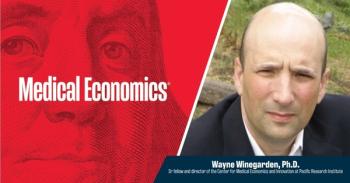
Health care economist Wayne Winegarden, Ph.D., makes the case that fixing Medicare payment, not restricting MSOs, is the way to keep independent practices open.

New survey data shows why real-time support — not personalization or speed — is what actually keeps members loyal to their health plan

We don't treat that here

A new KFF Health Tracking Poll finds most voters believe Medicare and Medicaid fraud comes from the billing side of care, doctors’ offices and hospital systems, rather than from the patients who receive it.

Perceptions, policies and prices all are factors in the future of direct primary care, advocates say

The 2026 Medicare Advantage raise is a pause, not a trend. When rates tighten in 2027, these basics will separate a shared savings check from a shortfall.

Gentherm's ThermAffyx Patient Safety System integrates active warming with anti-slip securement in a single Class II platform, targeting hypothermia risk during the more than 3 million robotic-assisted procedures performed worldwide each year.

The top news stories in medicine today.
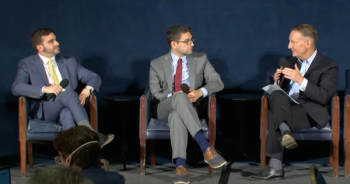
Access, AI and accountable care are part of now and the future, CMS leaders say.

What physicians need to know to begin considering malpractice liability with new artificial intelligence technology.

MultiDimension Technology's TMR1370 draws as little as 30 nanoamps, enabling more than two years of standby operation in continuous glucose monitoring devices.

Most physicians know the direct primary care pitch; whether the economics hold up once you're in it is the more difficult question to answer.

New research on whose names AI gives patients searching for care, and why many independents never make the list.

Health policy veteran and "Zen Lobbyist" author Gary Jacobs argues that the payment system, not the insurers, is behind a second straight year of double-digit ACA premium increases, and that primary care-led risk is the only durable fix.

Anagram Security founder and CEO Harley Sugarman explains how everyday AI use can expose patient data — and what physician practices can do to reduce the risk.


Actions this week involve three major health care policy bills

Greater availability of the blockbuster drugs does not mean every older patient should get them.
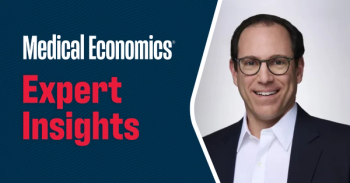
Clinicians who learn to use AI as a tool, not a replacement, will be the ones who benefit.
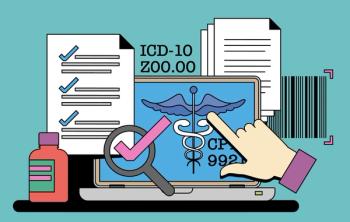
The draft 2027 Medicare Physician Fee Schedule opens five questions about the AMA's control of CPT codes, from licensing costs to who decides what a code is worth.

An study of 1,258 providers across eight health systems found daily wRVU increases of up to 4.1% among physicians who engaged most with their production and earnings data.
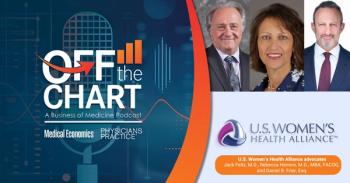
A reimbursement gap of five to 12 times for the same procedure is letting hospitals outbid private practices for their own physicians. Three U.S. Women's Health Alliance advocates explain what it costs patients and what they are asking Congress to do about it.

Fax machines are gone from billing. Prior authorization and clinical communication are still stuck in 1985.

The top news stories in medicine today.
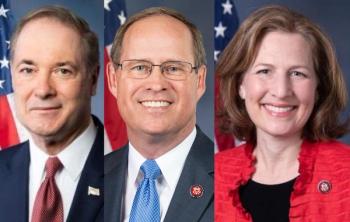
Physician lawmakers support primary care, inflation-indexed payments and new POINTS system for quality reporting.

CMS wants to cut the conversion factor, rewrite the G2211 add-on into a percentage modifier, halve payment for same-day procedures and put an expiration date on traditional MIPS.