

The top news stories in medicine this week.
The top news stories in medicine this week.

Physicians drive savings, but AI could reward the intermediaries controlling ACOs.

A simple gap between income and savings can reveal the true retirement number, and it's usually higher than families expect.
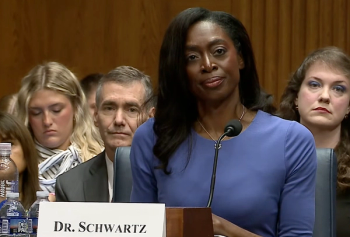
The 13-10 vote sends Trump's third CDC pick to the full Senate, where a confirmation vote may not come until September.
AI scribes have been a great tool for physicians, but they are also creating uncharted legal territory when it comes to malpractice.

Clinics and physician practices accounted for almost 30% of health care Chapter 11 filings in the first half of 2026, the one subsector climbing while the rest trended flat or down, according to a new Gibbins Advisors report.
A pediatrician at the center of the country's largest cyclospora outbreak on why the official case counts are almost certainly too low, and what most labs aren't looking for.


2027 Medicare Physician Fee Schedule at heart of Primary Care Collaborative discussion

Two 510(k) clearances expand the synthetic bone graft's indications to include pediatric and tumor-related spinal fusion cases.
Gary Jacobs argues the payment system is what makes small practices unsustainable, and that the physicians who wait it out usually end up selling to a hospital rather than choosing their own exit.

A national survey of 465 direct primary care physicians upends the $77-per-month benchmark and much of what the model was assumed to look like.


No new beds. No new staff. Just smarter decisions about where patients are treated.

The OIG's own data suggest a narrower fix than the one CMS proposed

RAND researchers put the same questions to 15 primary care physicians employed by health systems and 15 independent ones. Neither model came out ahead on all five findings.

A 2026 physician survey finds administrative hassle now drives more doctors from clinical practice than the medicine itself — and independent practices, without a back office to absorb it, feel that weight first.

‘Transparency is now the norm’ as Leapfrog Group logs data for more than 6,000 facilities nationwide.

The 510(k) clearance adds a porous 3D-printed titanium interbody with dual spike-and-screw fixation to the company's Saber cervical platform.

Multi-year guarantee annuities can outperform bonds and bank CDs — but know how they work before you buy.

The top news stories in medicine today.

Financial independence has more to do with freedom than retirement

Medicare rates, prior authorization, telehealth and Medicaid coverage all change between Sept. 14, 2026, and Jan. 1, 2028.

Physicians describe growth, challenges, patient responses as direct primary care expands.

Dan D'Orazio of Sage Growth Partners says there are just too many obstacles for the American health system to fully embrace value-based care

A pediatrician offers advice on diagnosing the illness and discussing it with patients.

Now is the time to rethink point-of-care engagement in electronic health records

Another conversion factor cut is on the table for 2027, and MGMA's Anders Gilberg breaks down why budget neutrality keeps forcing cuts in one specialty to pay for another and what the end of MIPS means for physicians.

The 510(k) clearance enables the ION-L Lumbar Facet Fixation System to work with Medtronic's StealthStation platform, adding navigation compatibility to a zero-profile fixation device.

Sports agent Leigh Steinberg, co-founder of physician branding agency MD Envoy, explains how doctors can turn their expertise into a public platform without jeopardizing their medical career.