

Nolla Health claims it has the nation’s first approval for artificial intelligence to issue initial prescriptions. Physician review comes later.
Nolla Health claims it has the nation’s first approval for artificial intelligence to issue initial prescriptions. Physician review comes later.

Medical Economics spoke with MGMA's Madison Hynes about the association's draft bill to ban automatic downcoding, the Patients First Act and AI-run prior authorization in traditional Medicare.

How practice leaders can defend physicians from 'distractions to doctoring.'
HHS finalizes price transparency updates as employers push insurance vendors to open the books.

Cash payments for GLP-1s are on the rise, according to pharmacists surveyed by Buzz Health.

Medicine has never moved this fast. How much of the next decade has already been decided, and what’s still open?

Many new doctors have limited exposure to value-based care, but once they see it in action, their interest level increases

Patients who received weekly plant-based grocery packages from a primary care clinic's food pantry for an average of 2.7 years saw dose-dependent drops in diastolic blood pressure, weight and BMI, but no significant change in hemoglobin A1c, a Mass General Brigham study found.
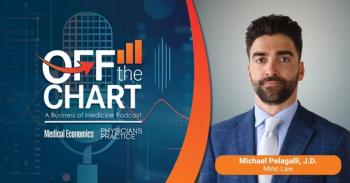
Minc Law partner Michael Pelagalli explains where a negative review becomes defamation, why HIPAA limits what physicians can say in reply and how anonymous reviewers get unmasked.
Patients are bringing more AI-generated medical advice to their appointments, but that doesn't mean you should dismiss it outright.

Health care often is expensive and it gets more costly when patients don't arrive for appointments.

Medical Economics spoke with health care attorney Tatiana Melnik, J.D., about vendor contracts, patient consent and the malpractice questions physicians could face next.

How long before every doctor has an artificial intelligence stunt double?

EBRI data show employer plans pay hospital outpatient departments about twice what physician offices receive for the same physician-administered drugs, and the commercial market has barely begun to address the gap.

Why physicians owe tax on their share of practice profit rather than the cash they take out, and how entity type, footnotes and late K-1s can change the final bill.
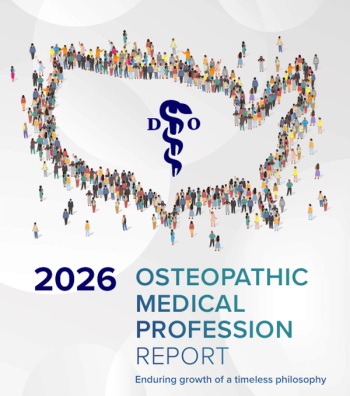
Report: Osteopathic profession leads youth movement as workforce grows across U.S. health care.

From a same-day payment cut to AI-run prior authorization in traditional Medicare, MGMA's government affairs team laid out what Washington has in store for physicians next year.

A joint lifetime income annuity and a fixed indexed annuity with an income rider both guarantee income for a surviving spouse, but they differ sharply on flexibility, cost and cash value
Look for a problem and make artificial intelligence a tool to solve it, an MGMA leader says.

An artificial intelligence vendor that keeps patient data after a contract ends can leave the practice holding the liability once the vendor's damages cap runs to zero, according to health care attorney Tatiana Melnik, J.D.

The American Medical Association and five specialty societies say casting AI as smarter than physicians diminishes their expertise, a day after the health secretary praised AI second opinions.
A multinational survey of more than 1,900 patients with type 2 diabetes or obesity, presented at the EADV Congress 2026, found nail and scalp changes that weight loss alone did not appear to explain.

Before investing in more promotion, determine whether the real constraint is positioning, referrals, capacity or patient experience.
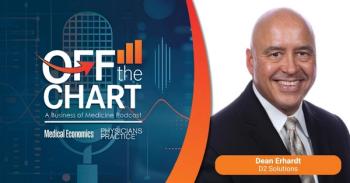
D2 Solutions President and CEO Dean Erhardt says most prior authorization rejections stem from administrative errors rather than clinical criteria, and that many patients caught in the delay don't know who to call.

The top news stories in medicine today.

Nearly 54 percent lower costs for adults with chronic disease. Four experts on why primary care still gets under 5% of health care spending.

Jon Dorenbos' NFL career ended when a team physical found an aortic aneurysm, and the care team that got him back on his feet shapes what he now tells physicians who feel stuck.

MGMA members described capping Medicare Advantage contracts and favoring commercial patients, while one Texas practice leader reluctantly called Medicare her best payer.

A Monash University study published in Nature Communications finds that an antibiotic resistance gene lets Clostridioides difficile keep forming spores tough enough to withstand hospital-grade cleaning products and high laundry temperatures.

At an MGMA Government Affairs town hall, attendees raised extrapolated audits, employer plans beyond state reach and denials with no reason codes.