Excited for the sunset of MIPS? Brace yourself for a replacement, not a repair. Here are four steps to prepare for it.
The top news stories in medicine this week.
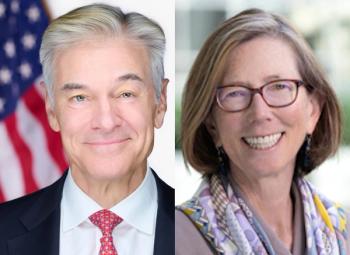
Erica Schwartz, M.D., told the Senate health committee she will never betray the science. Senators in both parties wanted to know what she would do if Health Secretary Robert F. Kennedy Jr. told her otherwise.
Erica Schwartz, M.D., President Donald Trump's third nominee in under two years to lead the Centers for Disease Control and Prevention,
Much of the hearing turned on whether Schwartz would resist Kennedy, who fired the agency's last confirmed director, Susan Monarez, less than a month into her tenure. Committee Chairman Bill Cassidy, M.D., R-Louisiana, said promoting vaccine misinformation is "evil" and asked whether Schwartz would be the director to push back on it. Sen. Maggie Hassan, D-New Hampshire, asked whether she would suspend a flu vaccination campaign if Kennedy directed it; Schwartz said she does not speak in hypotheticals, and Hassan responded that it was not hypothetical, citing internal CDC emails released last month by Sen. Bernie Sanders, I-Vermont. Schwartz said she was unaware of several Kennedy actions, including the cancellation of nearly $500 million in mRNA vaccine contracts, and declined to commit to removing CDC website language on vaccines and autism, though she said she accepts the evidence finding no link.
The CDC has lost more than 3,000 employees, over a quarter of its workforce, since early 2025 and has not had a permanent director for most of Trump's second term. The committee has not yet voted on sending the nomination to the full Senate.
CMS' proposed physician fee schedule would drop the conversion factor 1.68%, and rewrite how G2211, same-day visits and practice expense are paid.
CMS released its
Beyond the rate, CMS proposed transitioning HCPCS code G2211, the office/outpatient evaluation and management complexity add-on, from a flat payment to a modifier that would increase the associated E/M code by 16%, with a second modifier worth 32% available to practitioners in Shared Savings Program ACOs and LEAD Model ACOs. When a separately identifiable office/outpatient E/M visit is furnished the same day as a 0-, 10- or 90-day global procedure by the same physician or a physician in the same practice, the most expensive service would be paid at 100% and all others at 50%. Remote physiologic and remote therapeutic monitoring would require a separately reportable initiating visit and could only be furnished by clinical staff employed by the practice, not contractors. CMS also proposed a multi-year transition away from AMA survey data in setting practice expense RVUs, and sunsetting traditional MIPS beginning with the 2029 performance period in favor of MIPS Value Pathways.
Physician groups
Related content:
Readings past the top of the index across the Upper Midwest, an 80% jump in Toronto emergency visits, and cardiac risk that can surface days after the haze clears.
Smoke from wildfires burning in Canada and northeastern Minnesota blanketed the Upper Midwest and Northeast this week, driving Air Quality Index readings past the top of the scale. The index runs from 0 to 500, and readings above 300 are considered hazardous. Toledo, Ohio, at one point registered above 600, and sensors near Isle Royale in Michigan read from nearly 750 to more than 1,000 Thursday afternoon, according to the Environmental Protection Agency's AirNow monitoring tool. Roughly 135 wildfires were burning across northwestern Ontario as of Wednesday night, and 15 communities there have evacuated. New York Mayor Zohran Mamdani urged residents to limit time outdoors and avoid strenuous activity, and New York state said it would provide more than 100,000 N95-style masks.
Clinicians reported rapid effects. Two Toronto hospitals in the University Health Network saw an 80% increase in emergency visits potentially related to poor air quality, including shortness of breath and chest pain, said Erin O'Connor, the network's head of emergency medicine.
Alexander Rabin, M.D., a pulmonologist at Michigan Medicine, told
The American Heart Association warns that wildfire smoke
Forecasters expect a weather system to push the hottest air away and ease heat and smoke in the Northeast by Friday, while the Upper Midwest, closer to the fires, is likely to see smoke and heat linger through the weekend.