







We seem tired, unhealthy, and worse off than some of the patients asking us for help. Despite what you may think, complex and costly care didn’t zap our energy. The fatigue we feel comes from a lack of balance and connection in our own life.
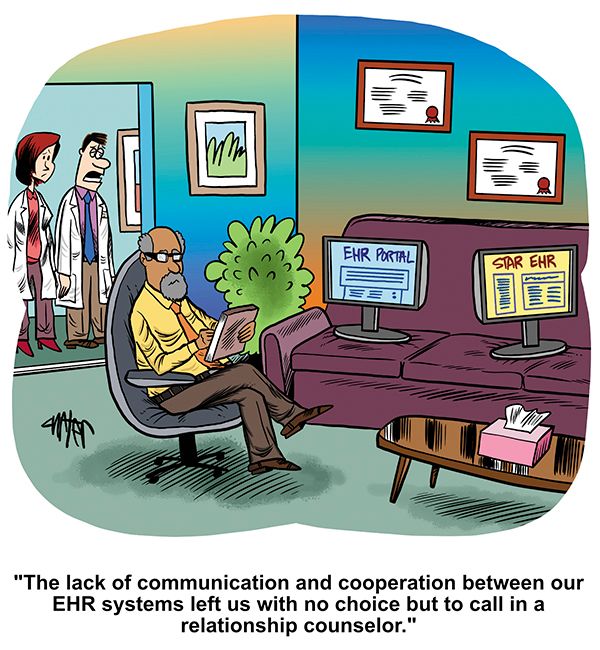
We seem tired, unhealthy, and worse off than some of the patients asking us for help. Despite what you may think, complex and costly care didn’t zap our energy. The fatigue we feel comes from a lack of balance and connection in our own life.

As physicians, we have given up control and lost the ability to do the job we were trained to do. Our focus has turned instead to serving needs that have become more demanding than those of our patients.

The EHR, like many new technologies, has capacity to improve the health and safety of our patients. So what can we do to make this happen?

If doctors are savvy about it, they have options at their disposal to get away from full-time clinical work.

Here's what you should do the next time you experience a patient in a strong emotional state.

Several strategies facilitated by technology are helping provide access to hidden capacity in our current health system.

Women physicians often detect a gender pay gap in medicine, but negotiating for equal pay is not always successful.

Change is difficult for healthcare professionals but especially difficult in a for-profit healthcare system setting-especially those systems caring for high-risk populations.

An American solution focusing on individuality and conserving resources can save the Medicare program.

While often thought of as an affliction that primarily affects men, heart disease is the leading cause of death for women in America.

While story-based tech innovation doesn’t always pan out, it sometimes does-and it usually changes everything.

Jonathan Kaplan, MD, MPH, reflects on what he learned from buying a plastic surgery practice.

Special interests keep patients in the dark, right where hospitals want them.

Doctors can use the psychological techniques of deep listening and emotional validation to help patients feel heard and understood.

If you’re feeling burned out, here are some steps to take control and move beyond burnout.
Routinely evaluating patients’ needs in the increasingly on-demand approach to healthcare is critical to success.

The occasional negative patient complaint online can actually turn out to be a good thing for your reputation.

Advocacy takes time-a rarity for physicians. But there are five simple ways to advocate for needed healthcare changes.

Many doctors think leaving full-time employment equates to arduous travel, but that doesn’t necessarily need to be the case.

Quality primary care takes time with patients, so it’s time for physicians to press for the time needed to truly make needed change.

With better support, patients may experience better care and outcomes as major health issues are identified early and averted.

Because CMS can’t and Congress won’t get rid of hospital-based facility fees, doctors and patients must take action.

Sometimes you have to look past dollars and cents and simply do what makes sense for both patients and physicians.

While CMS says it aims to allow doctors more time with patients with less documentation, its proposed E/M changes simply don’t achieve that goal.

To truly improve patient care and reduce costs, primary care is the best buy in healthcare. Here’s why.