
Patient Prism co-founder and CEO Amol Nirgudkar explains what unanswered phones cost physicians in patients and ad spending, and where AI voice agents can help today.
Patient Prism co-founder and CEO Amol Nirgudkar explains what unanswered phones cost physicians in patients and ad spending, and where AI voice agents can help today.
Minc Law partner Michael Pelagalli explains when a negative review becomes defamation, why HIPAA limits what physicians can say in reply and how anonymous reviewers get unmasked.
D2 Solutions President and CEO Dean Erhardt says most prior authorization rejections stem from administrative errors rather than clinical criteria, and that many patients caught in the delay don't know who to call.
Nearly 54 percent lower costs for adults with chronic disease. Four experts on why primary care still gets under 5% of health care spending.
Sage Growth Partners CEO Dan D'Orazio says fee-for-service revenue still outweighs the penalties meant to move hospitals and physicians off it, and he expects value-based care to make incremental gains at best.
Buzz Health President Joseph Kleiman says the prescriptions patients abandon due to cost rarely appear in a physician's workflow, and he attributes this to disconnected systems.
Anders Gilberg of MGMA explains the same-day payment proposal sitting in Medicare's 2027 fee schedule, and why practices won't know its fate until the final rule lands around Nov. 1.
Rebecca Schoon, Ph.D., who helped lead the Oregon arm of a national moral injury report, says patients can see what corporate ownership and insurer barriers are doing to their doctors.
Caroline Pearson of the Peterson Health Technology Institute says the way health care pays for clinical AI will decide whether it lowers costs or drives them up.
Health care economist Wayne Winegarden, Ph.D., says two decades of inflation-eroded Medicare payment, not corporate ownership, is what keeps pushing independent practices to sell.
Anthony Orsini, D.O., says most physicians were never trained for the conversation that follows a medical error, and that how they handle it often decides whether the case ends in court.
Lawrence Casalino, M.D., Ph.D., M.P.H., argues that as medicine consolidates, physicians are increasingly treated as interchangeable parts, and that the damage shows up in the parts of care no quality program measures.
For years, falling claims frequency quietly held malpractice premiums down, and there are early signs that's about to stop.
Fifteen years of research hasn't moved the federal rules that keep new physician-owned hospitals from opening.
Three counseling codes took effect Jan. 1 for vaccine visits that end without a shot. CMS will not pay for them and neither will most private payers.

Insurers pledged six fixes to prior authorization in June 2025. A year later, only 24% of physicians say denials are getting the specialty-matched review that was promised first.
Seventy-nine percent of independent practice leaders say technology is what keeps them independent. Only 64% trust the tools they already have. Veradigm's Aaron Ledbetter explains what sits inside that gap, and why a denied claim still takes one to two weeks to reach the physician it belongs to.
Jay Bregman of Andel says direct-to-employer purchasing takes prior authorization out of the prescription entirely, but the price a patient gets is tied to an employer's willingness to keep paying.
Shawntea Gordon of Atlas & Perpetua Healthcare Consulting says the cost most practices cut first is usually the one that was never the problem.
Joanne Frederick of Government Market Strategies argues the fix for runaway health care costs turned out worse than the problem it solved.
Nearly half of health care organizations say patient access improved this year. Fewer than one in five patients agree. Experian Health's chief operating officer explains what practices are measuring that patients are not, and why a missing cost estimate now keeps patients out of the exam room entirely.
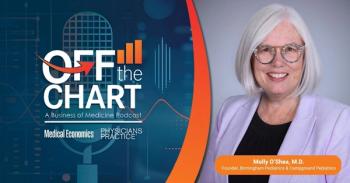
A pediatrician at the center of the country's largest cyclospora outbreak on why the official case counts are almost certainly too low, and what most labs aren't looking for.
Another conversion factor cut is on the table for 2027, and MGMA's Anders Gilberg breaks down why budget neutrality keeps forcing cuts in one specialty to pay for another and what the end of MIPS means for physicians.

Female physicians leave clinical practice at a median age of 49, compared with age 64 for their male colleagues, and the practice patterns patients value most may be part of what drives them out.
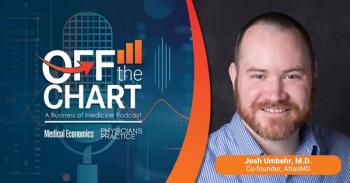
Most physicians know the direct primary care pitch; whether the economics hold up once you're in it is the more difficult question to answer.
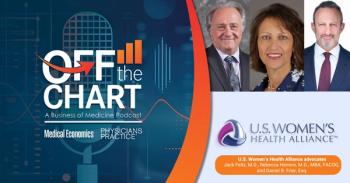
A reimbursement gap of five to 12 times for the same procedure is letting hospitals outbid private practices for their own physicians. Three U.S. Women's Health Alliance advocates explain what it costs patients and what they are asking Congress to do about it.
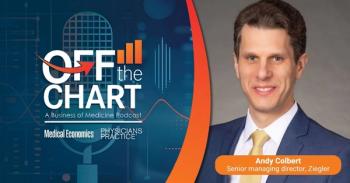
Independent medical practices face a hard question as consolidation accelerates: keep going it alone, or find a partner. Ziegler's Andy Colbert breaks down what a practice is really worth and how physicians should weigh their options.
As more physicians weigh a move to concierge or hybrid practices, health care attorney Ericka Adler, J.D., breaks down the contract and Medicare traps that can turn a panel-shrinking strategy into a legal problem.
PYA's Tynan Kugler breaks down the four forces pulling physician pay in competing directions, and why getting the underlying compensation model wrong can be expensive and legally complicated to undo.
For the first time in years, physician pay and productivity have split, and a new Medicare efficiency adjustment is about to make 2026 a hard year to benchmark, schedule and recruit.