






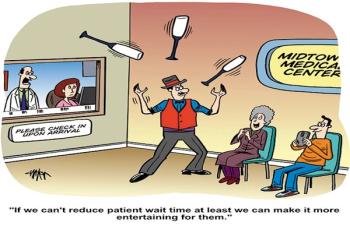
How to make patient wait time more tolerable.
How to make patient wait time more tolerable.

Three reasons why physicians are uniquely qualified to lead all types of healthcare organization to success

How can hospitals optimize the administrative arm of the hospital in order to cut costs and improve cash flow?

How concierge medicine helped me provide better care to my patients

There are communication breakdowns happening throughout the entire continuum of care. Is technology the solution?

Medicine needs to learn from Amazon that privacy has a price

Is direct primary care a solution to physician burnout?
Treating patients as consumers changes the doctor-patient relationship in ways that could harm care.

We must commit to enhancing EHRs to make them more usable for physicians

A growing number of organizations are adopting tools to bring the advances of genomic science into the physicians’ workflow, and early evidence shows its helping.

Being a doctor doesn’t guarantee you financial security

There are countless examples of technology changing the way doctors, nurses, and patients operate.

As out-of-pocket costs and patient liabilities rise, medical practices struggle to get paid for their services.

There are three areas where blockchain can be effectively applied in healthcare.
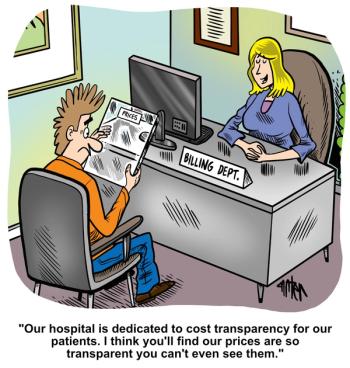
Price transparency is one thing, but this is ridiculous.

Real transparency is the single, first, and most important step toward bringing down healthcare costs and creating a competitive marketplace.

Readers react to recent articles.

There is a crisis in healthcare with respect to how its female physicians-the fastest growing and most prized talent pool-are being treated.

Why the multitasking demanded in our work is likely an under-appreciated, but substantive factor in physician burnout


Financial advice from a physician turned financial planner.

The 2019 Medical Economics Physician Writing Contest Official Rules
This year's topic is "How I became a better doctor"

Physicians are the doers of healthcare, and its time for them to take back control of medicine
Our readers speak out on recent articles.