
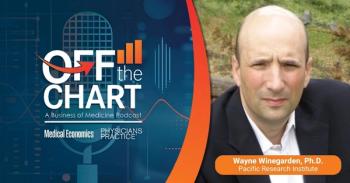
Health care economist Wayne Winegarden, Ph.D., says two decades of inflation-eroded Medicare payment, not corporate ownership, is what keeps pushing independent practices to sell.

Austin Littrell is associate editor of Medical Economics.
Health care economist Wayne Winegarden, Ph.D., says two decades of inflation-eroded Medicare payment, not corporate ownership, is what keeps pushing independent practices to sell.

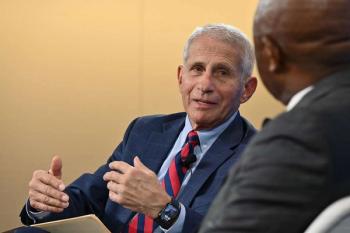
Since April, confidence in Anthony Fauci has fallen to just 50%, while Robert F. Kennedy Jr. is unchanged at 38%, in a survey fielded during the Senate contempt vote.

WalletHub scored all 50 states and Washington, D.C., on 16 vaccination metrics. The bottom 10 holds the state with the highest kindergarten exemption rate in the country, and one whose kindergarten coverage is among the highest anywhere.

WalletHub scored all 50 states and Washington, D.C., on 16 vaccination metrics.

Defamation law protects a patient's harsh opinion but not a false assertion of fact, and HIPAA blocks a practice from answering either one with the facts.



Anthony Orsini, D.O., says most physicians were never trained for the conversation that follows a medical error, and that how they handle it often decides whether the case ends in court.

A U.K. review of 27 papers found the evidence on ambient scribe risks thinner than the American adoption curve.

Researchers verified thousands of fake reviews posted by providers and clinic staff and found them longer, more clinically detailed and better received than the real thing. HIPAA leaves physicians very little room to respond.


News & Analysis
An Annenberg Public Policy Center survey of 1,904 adults found 87% are confident in their own doctor, nurse or other primary care physician, compared with 59% to 61% for the three federal health agencies.
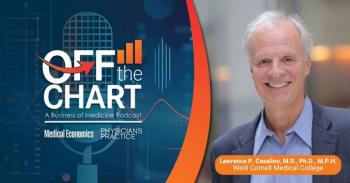
Lawrence Casalino, M.D., Ph.D., M.P.H., argues that as medicine consolidates, physicians are increasingly treated as interchangeable parts, and that the damage shows up in the parts of care no quality program measures.
The top news stories in medicine today.

News & Analysis
AAFP issued its fall COVID-19, flu and RSV recommendations Wednesday, saying it coordinated with three other societies, while the coverage rules, counseling pay and registry logic behind them have not caught up.
Interview
Medical Economics spoke with Michael Pelagalli, J.D., partner at internet defamation firm Minc Law, about where the legal line sits and what a practice should do first.

News & Analysis
A Hint Health whitepaper says direct primary care's longer visits make it the natural home for lifestyle medicine. Nearly half of practices surveyed have panels under 200.

A job posting attracting the wrong candidates, a shrinking surgeon pipeline and more than 70 days in accounts receivable traced back to unfinished credentialing.

The panel on losing staff to jobs that pay as well and ask less, and the low-cost moves that have kept their own teams in place.

Panelists said front-desk assumptions about who can afford care are wrong in both directions, and that patients under financial strain rarely say so.

A journey-mapping exercise showed one practice's physicians how small their share of the patient encounter actually was.

With reimbursement uncertain, the panel pointed to two costs a practice can still control: turnover, and the payments nobody checks against the contract.

Four practice leaders on why patients defer care they could afford, and why explaining the cost has become the practice's job rather than the insurer's.

An HHS video sent patients to a Medicare comment docket that has already drawn more than 19,000 submissions.
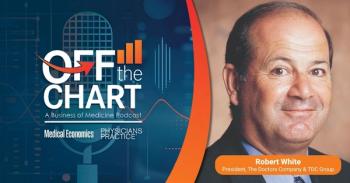
For years, falling claims frequency quietly held malpractice premiums down, and there are early signs that's about to stop.

Concierge and direct primary care sites grew 83.1% in five years, and direct primary care starts 2026 with a federal tax break it did not have before.