


Austin Littrell
Advertisement

Austin Littrell is associate editor of Medical Economics.
Articles by Austin Littrell

Andrea Greco, senior vice president of healthcare sales at CENTEGIX, explains why workplace violence is now a strategic risk for practices, and why “hoping it gets better” is no longer an option.
MedPro’s Rosemarie Aznavorian, D.N.P., RN, explains how thin staffing, financial pressure and longer waits are nudging patients toward generative AI — and what that means for primary care.

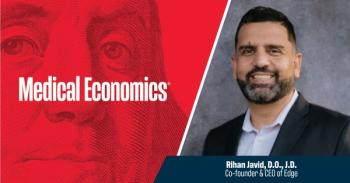
Psychiatrist and staffing leader Rihan Javid, D.O., J.D., breaks down how wage hikes, turnover and remote staffing are reshaping medical practices in 2026.

A new Hint Health survey using the Person-Centered Primary Care Measure shows DPC patients report easy access, strong relationships and high willingness to recommend their physicians.

Rihan Javid, D.O., J.D., explains how practices can rethink which roles must stay in-house — and which can safely move offsite.

Christopher Whaley, Ph.D., joins the show to explain how site-neutral payment reform could reshape Medicare reimbursement, hospital consolidation and the future of independent practice.

As consolidation and prices climb, Pacific Research Institute brief says new limits on MSOs could tilt the market further toward hospitals.
Rihan Javid, D.O., J.D., explains why practices should look inward first — and then outward to remote staffing when the local talent pool runs dry.

The top news stories in medicine this week.
Rihan Javid, D.O., J.D., says clear expectations and competitive pay still sit at the core of keeping good staff.

Richard Anderson, M.D., FACP, CEO of The Doctors Company and TDC Group, joins the show to break down the state of the industry and the top risks facing physicians in 2026.


Patients are bringing their health questions to AI, often before even scheduling a visit with their physician. Medallia's Amber Maraccini, Ph.D., M.A., explains how tools such as ChatGPT Health can either erode trust or create more space for human conversations.
Rihan Javid, D.O., J.D., argues that rigid staffing budgets are a liability in 2026 — and explains why planning for raises is cheaper than constant replacement.

The top news stories in medicine today.

Congress' new spending plan extends key Medicare telehealth flexibilities through the end of 2027.
Rihan Javid, D.O., J.D., explains how unfilled roles quietly push refills, authorizations and even billing back onto physicians.
The top news stories in medicine today.

EHR time and inbox volume aren’t drifting down on their own. These 9 workflow fixes actually stick.
Psychiatrist and staffing expert Rihan Javid, D.O., J.D., explains why chasing $1–$2 wage increases turns into an arms race practices can’t win.

Amber Maraccini, Ph.D., M.A., joins the show to discuss how patients are using AI tools before visits, and what that means for trust, communication and care.
The top news stories in medicine this week.
Rihan Javid, D.O., J.D., breaks down which practice roles turn into crisis points when they’re vacant.

Anders Gilberg, senior vice president of government affairs at MGMA, joins the show to explain how shifting federal policy decisions are affecting physician practices and what medical groups should be watching in 2026.
Rihan Javid, D.O., J.D., explains why small practices are still losing staff even when they pay more than minimum wage.

Workplace violence is a business risk: CENTEGIX’s Andrea Greco on safety and staffing in health care
CENTEGIX's health care safety trends report tracks when and where duress alerts spike — and why leaders who ignore workplace violence can’t afford to.
Advertisement
Advertisement
Advertisement
Trending on Medical Economics
1
AI system outperforms physicians on diagnostic accuracy in Microsoft study
2
Florida's dengue outbreak: What physicians need to know now
3
Pay cuts, payer AI and the staff who keep leaving: What we heard at MGMA's 100th annual conference
4
Your AI scribe is saving you time. Is it also building the case against you?
5