
A new Panacea Financial survey finds that debt, contract confusion and tax complexity keep physicians financially stuck at every career stage.
A new Panacea Financial survey finds that debt, contract confusion and tax complexity keep physicians financially stuck at every career stage.

New polling reveals a striking knowledge gap — and that health care providers remain the most trusted source of dietary guidance for those who do know. The question is how many patients you're reaching.
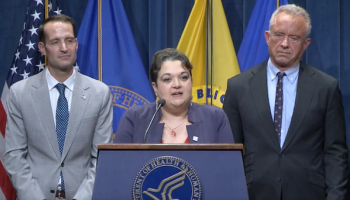
HHS announces pledges from medical schools, accrediting boards to teach more about health effects of diet.

A veteran practice administrator at the MGMA Summit digital conference laid out the disruptions ahead — from AI phone agents to payer audits — and how physician practices can get in front of them.

Company says portable immunoassay system matches central lab sensitivity, eyes partnerships in oncology drug monitoring and cardiac care

The top news stories in medicine today.

New pen injector features pull-push mechanism designed to minimize dosing errors, support scalable manufacturing for pharma partners
The world is shifting. Now is the time to trust and enhance physician leadership — and here's how to do it

Why medical groups miss budget for reasons that have nothing to do with money, and how finance professionals become strategic advisers.

Clinicians from the 19 banned countries cluster in communities that already struggle to keep physicians and nurses, a JAMA Network Open analysis finds.

Veradigm's Aaron Ledbetter, M.P.P., M.H.S.A., unpacks what the company's 2026 State of Independent Practice report reveals about why denied claims, payer complexity and administrative overload keep outrunning the tools practices are using to fight them.

Learn more about the goals, procedures and billing of the new 10-year ACCESS payment model.

The top news stories in medicine this week.
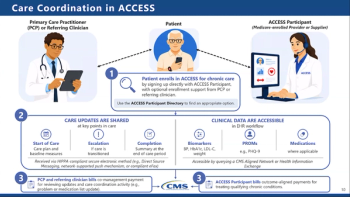
The new 10-year mix of tech, chronic condition management and primary care launches in July.

Both ends of the coding spectrum carry real financial and compliance risk. Structured self-audits are the only way to know where your practice actually stands

Most physicians are now paid through a blend of base, productivity and quality. How to read your own deal and make it work for you.

Two Physicians Foundation experts discuss why where a patient lives may shape their health more than the care they receive and what physicians can actually do about it.

An empty exam room is more than a missed appointment; it’s a breakdown in patient engagement.

One in five privately insured adults denied coverage for doctor-recommended care, survey finds

The top news stories in medicine today.

The spinal fixation system is designed to provide surgeons with a modular platform that can be customized for a wide range of patient anatomies and surgical procedures, including complex deformity and revision cases.

Payers quietly downcode claims and underpay physicians. Here are eight revenue leaks to catch before they cut your pay.

American Hospital Association asks for collaboration to implement a new policy guide addressing major issues across U.S. health care and medicine.
Clubfoot is treatable, yet too many children still go without care. Family physicians and pediatricians have a critical role in closing this gap.

AI is reshaping how doctors work, but unchecked adoption could do more harm than good


A panel of revenue cycle leaders at the MGMA Summit Digital Conference outlined where patient billing is headed and why physicians should pay attention.

Did you know that 45% of Americans misread their drug labels?

Here are 26 coding and documentation tips to save your practice time and money.

While artificial intelligence (AI) is making its way into clinical work and diagnostics, physician oversight and legislative engagement are critical to protecting the patient-physician relationship.