



Practice Management
Latest News
Advertisement
Medical Economics Insider: Save your practice
Check out our inaugural edition of our interactive publication, featuring in-depth reporting, expert insights, exclusive data, and more!

Latest Videos

Shorts
0:36
Stop using jargon: The doctor's communication trap
3 months ago
by
Anthony Orsini, DO
0:35
Why medical front offices are failing
3 months ago
by
Amol Nirgudkar

0:53
Use the widget test to craft better hospital and health system policy
3 months ago
by
Lawrence P. Casalino, M.D., Ph.D., M.P.H.
0:38
Slowing down dementia
3 months ago
by
Anna Chodos, M.D.
1:33
Should your practice join a management services organization?
3 months ago
by
Wayne Winegarden, Ph.D.
0:39
The biggest problem in health care IT
3 months ago
by
Joseph Kleiman
0:48
Why I became a doctor — and the honor of the profession
3 months ago
by
Lawrence P. Casalino, M.D., Ph.D., M.P.H.
0:56
The biggest mistake doctors make when disclosing an error
3 months ago
by
Anthony Orsini, DO
1:28
What low overhead actually looks like in direct primary care
3 months ago
by
Josh Umbehr, M.D.
0:45
How AI is fixing healthcare access
3 months ago
by
Amol Nirgudkar
Podcasts




Advertisement
More News
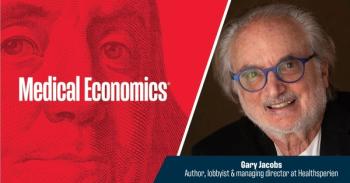
Gary Jacobs argues the payment system is what makes small practices unsustainable, and that the physicians who wait it out usually end up selling to a hospital rather than choosing their own exit.

A national survey of 465 direct primary care physicians upends the $77-per-month benchmark and much of what the model was assumed to look like.

No new beds. No new staff. Just smarter decisions about where patients are treated.

RAND researchers put the same questions to 15 primary care physicians employed by health systems and 15 independent ones. Neither model came out ahead on all five findings.

A 2026 physician survey finds administrative hassle now drives more doctors from clinical practice than the medicine itself — and independent practices, without a back office to absorb it, feel that weight first.
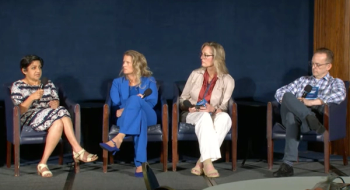
Physicians describe growth, challenges, patient responses as direct primary care expands.
Another conversion factor cut is on the table for 2027, and MGMA's Anders Gilberg breaks down why budget neutrality keeps forcing cuts in one specialty to pay for another and what the end of MIPS means for physicians.

Sports agent Leigh Steinberg, co-founder of physician branding agency MD Envoy, explains how doctors can turn their expertise into a public platform without jeopardizing their medical career.
Benefit design is quietly undermining primary care. How can doctors fight it?

Physicians have been quick to adopt AI scribes. Here’s how to integrate them the right way.
The corporate medicine crackdown is hitting the wrong target, says economist Wayne Winegarden, Ph.D.
Health care economist Wayne Winegarden, Ph.D., argues that two decades of inflation-eroded Medicare payment, not corporate ownership or management services organizations, is what is pushing independent practices to sell.

A new global survey finds up to a third of patients never start prescribed treatment, and the gaps aren't about access — they're about a healthcare model still designed around the doctor's office as the front door.
Ambulatory Surgery Center Association analyzes financial effects in a growing part of U.S. health care.

Female physicians leave clinical practice at a median age of 49, compared with age 64 for their male colleagues, and the practice patterns patients value most may be part of what drives them out.

Overhead swallows roughly 60% of the typical practice's revenue, and most of it sits in a few line items. These nine moves pull real money off that number without touching the exam room — and the biggest lever is the one most owners are slowest to open.

New survey data shows why real-time support — not personalization or speed — is what actually keeps members loyal to their health plan

A new KFF Health Tracking Poll finds most voters believe Medicare and Medicaid fraud comes from the billing side of care, doctors’ offices and hospital systems, rather than from the patients who receive it.

Perceptions, policies and prices all are factors in the future of direct primary care, advocates say

What physicians need to know to begin considering malpractice liability with new artificial intelligence technology.
Most physicians know the direct primary care pitch; whether the economics hold up once you're in it is the more difficult question to answer.

New research on whose names AI gives patients searching for care, and why many independents never make the list.

The multicenter study is evaluating whether localized cryotherapy, guided by AI-enabled imaging, can stabilize non-obstructive high-risk plaques before they trigger a heart attack.
A reimbursement gap of five to 12 times for the same procedure is letting hospitals outbid private practices for their own physicians. Three U.S. Women's Health Alliance advocates explain what it costs patients and what they are asking Congress to do about it.

CMS wants to cut the conversion factor, rewrite the G2211 add-on into a percentage modifier, halve payment for same-day procedures and put an expiration date on traditional MIPS.
Two physicians and two health system executives got candid with Chief Healthcare Executive about denials, administrative burden and what AI is actually delivering.
Advertisement
Advertisement
Trending on Medical Economics
1
Bill from a No Surprises Act author would end arbitration over out-of-network physician pay
2
On telehealth and incident-to billing: MedPAC debates physician fee schedule values
3
Electronic prior auths are coming. Here’s what physicians must ask their EHR and billing vendors
4
NPs are registering new practices at nearly 6 times the 2019 rate
5