Three health policy leaders argue that strengthening primary care payment isn't an attack on specialists — it's the fix the whole system needs.
Four primary care experts unpack a landmark report showing that investing in primary care isn't just good medicine — it's the most powerful cost-reduction strategy the U.S. isn't using.
Earlier in 2026, the Milbank Memorial Fund, the Physicians Foundation and the Robert Graham Center jointly released "
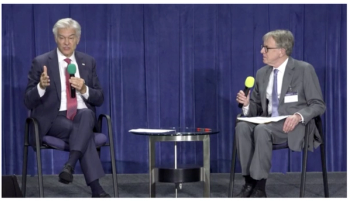
In this special episode of the Off the Chart podcast, Medical Economics Senior Editor Richard Payerchin speaks with four of the people closest to the work: Morgan McDonald, M.D., national director for population health at the Milbank Memorial Fund; Debra Lubar, Ph.D., president of the Milbank Memorial Fund; Ripley Hollister, M.D., a family physician and board member of the Physicians Foundation; and Yalda Jabbarpour, M.D., a family physician, lead author of the report and vice president and director of the Robert Graham Center.
Together, they walk through the report's most striking findings, explain why less than 5% of U.S. health care spending goes to primary care, and make the case for what needs to change.
Don’t miss our recent episodes on
Music Credits:
Crystal Grind by NISO -
A Textbook Example by Skip Peck -
Editor's note: Episode timestamps and transcript produced using AI tools.
0:00 – 0:28 | Sponsor message
0:28 – 0:41 | Cold open A preview of the episode's central framing: America's health care system isn't broken — it's just off balance.
0:41 – 1:54 | Introduction Austin Littrell introduces the episode, the report and the four guests.
1:54 – 2:18 | Guest introductions Richard Payerchin introduces each guest by name.
2:18 – 3:50 | The state of primary care today Richard asks each guest the same opening question. The answers converge on the same theme: primary care is overburdened, underreimbursed and increasingly unable to attract new clinicians.
3:50 – 6:04 | Why primary care is best positioned to lead on chronic disease Richard asks why primary care is the specialty best suited to lead the Make America Healthy Again agenda's shift toward prevention. The guests explain why prevention has always been primary care's core mission — and why the patient-physician relationship is the mechanism that makes it work.
6:04 – 8:00 | What the data shows: prevention and the trust finding The report's prevention findings — blood pressure checks, cholesterol screening, mammograms — are contextualized, with particular focus on why patients with a primary care physician are more likely to complete cancer screenings that don't even happen in the primary care office.
8:00 – 9:56 | The pediatric findings Children with a usual source of primary care have almost 50% lower odds of an avoidable emergency room visit or hospitalization. The guests discuss why the pediatric findings may be the most important in the entire report.
9:56 – 12:36 | The cost finding Richard asks each guest what finding surprised them most. The answer is consistent across all four: Adults with chronic disease who have a usual source of primary care have nearly 54% lower total health care expenditures.
12:36 – 15:14 | Where the money goes — and doesn't Primary care is preventing disease and cutting costs but receives less than 5% of U.S. health care expenditure. The guests discuss whether that number has changed, why it hasn't, and what doubling it by 2030 would actually require — including a fundamental shift away from fee-for-service.
15:14 – 16:37 | The APCM code opportunity Medicare's Advanced Primary Care Management codes are flagged as a concrete policy mechanism worth watching. The guests discuss how treating primary care services as preventive — the way Medicare treats colonoscopies — could change the financial picture for struggling practices.
16:37 – 17:27 | P2 Management Minute Keith Reynolds shares practice management tips and invites listeners to submit their own workflow ideas.
17:27 – 20:59 | The workforce problem and the employer opportunity The spending gap is fueling a workforce crisis. The guests describe what the staffing math looks like in independent practice, why where physicians train determines what specialty they choose, and what role large employers can play in purchasing health plans that prioritize primary care access.
20:59 – 23:46 | The one recommendation Richard asks each guest which of the report's seven recommendations they would implement first. All four point to the same broad answer: change how much — and how — primary care is paid.
23:46 – 24:58 | A message to primary care physicians The guests close with a direct message to the physicians listening: the data makes the case, the policy levers exist and the work being done on their behalf is real.
24:58 – 26:20 | Outro Austin thanks all four guests, points listeners to the full report at