Check out our other shows
The Financial Checkup: Lifestyle inflation: Avoid the golden handcuffs in retirement
Health care economist Wayne Winegarden, Ph.D., says two decades of inflation-eroded Medicare payment, not corporate ownership, is what keeps pushing independent practices to sell.
The Financial Checkup: Lifestyle inflation: Avoid the golden handcuffs in retirement
Thirty-three states now restrict the corporate practice of medicine to some degree, and lawmakers in several more are moving to tighten those limits. Wayne Winegarden, Ph.D., says the crackdown is aimed at the wrong target. Medicare physician payments rose 12% between 2000 and 2022 while the cost of running a practice climbed nearly 48%, and he says it is that gap, not corporate ownership, that keeps pushing independent practices to sell.
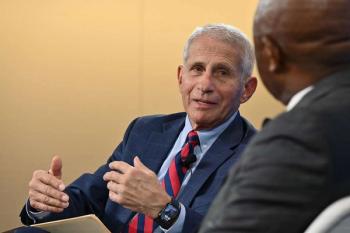
Medical Economics Associate Editor Austin Littrell sat down with Winegarden, a senior fellow in business and economics at the
Winegarden argues that inflation functions as a tax on independent practice, and that state bans on management services organizations land almost entirely on independent physicians because hospitals are typically exempt. He explains why he considers California’s Senate Bill 351 a better model than Oregon’s Senate Bill 951, what separates an MSO partnership that preserves independence from an acquisition with the paperwork rearranged, what the early evidence shows about prices after an MSO deal and why he thinks independent practice survives the next decade.
Winegarden made the same case in a February issue brief, “
Don’t miss our recent episodes on
Distant Memories by Buurd -
A Textbook Example by Skip Peck -
Editor’s note: Episode timestamps and transcript produced using artificial intelligence (AI) tools.
0:00 – 0:32 | Cold open. Winegarden on inflation as a tax on independent practice.
0:32 – 1:51 | Introduction. Austin Littrell introduces the episode and the guest.
1:51 – 3:07 | Another year of the payment gap. CMS has proposed a 2027 physician pay cut alongside a raise for hospital outpatient departments. Winegarden on the accumulation of frustration and the psychological question of whether it ever gets better.
3:07 – 4:52 | The counterfactual. If Medicare payment had tracked inflation since 2001, how much consolidation never happens. Winegarden says the exact number is not knowable, and that the problem is government policy putting a finger on the scale rather than consolidation itself.
4:52 – 7:30 | Site-neutral payment and the inflation tax. Why site-neutral passes on cost savings alone, why indexing physician pay to inflation is the harder sell and what keeping practices open would actually net out to.
7:30 – 9:58 | What counts as an independent practice. The traditional definition is a doctor-owned or controlled practice. Winegarden calls MSOs a hybrid and argues that the experimentation is the point.
9:58 – 12:32 | Partnership or acquisition. Control over decision-making is the dividing line. Winegarden on the bean counter in Pennsylvania writing rules for a patient in Oregon, and what an MSO has to deliver to be worth the affiliation.
12:32 – 13:24 | P2 Management Minute. Keith Reynolds shares practice management tips and invites listeners to submit their own workflow ideas.
13:24 – 15:05 | What happens to prices after an MSO deal. Better collections and firmer practice finances, prices still below hospital rates, and why not enough time has passed to know where the competition leads.
15:05 – 16:53 | Oregon’s law gets its first test. An independent group used the law to fight off an out-of-state staffing firm. Winegarden says the case does not complicate his argument, and that Oregon’s overly strict law is the reason the conflict looks the way it does.
16:53 – 18:07 | Why not extend the rules to hospitals. Binding hospitals with the same restrictions reduces competition. Winegarden wants more ideas in the market, not fewer.
18:07 – 20:06 | What a practice should ask before signing. Quality of life, compensation, how physicians spend their time and the risk they bear. Winegarden says there is still no evidence that fully independent practice is an inefficient way to deliver care.
20:06 – 22:19 | Does independent practice survive the decade. Winegarden says yes, and that if it does not, Medicare reimbursement and regulatory burden will be the cause rather than a better model winning.
22:19 – End | Closing thoughts and outro. Littrell thanks Winegarden and wraps the episode.