
Commentary|Videos|June 26, 2025
AI hype vs. reality in health care billing
Author(s)Doug Marcey
Fact checked by: Chris Mazzolini, Austin Littrell
Doug Marcey, CTO of Coronis Health, breaks down where AI fits into revenue cycle management — and why the right processes need to come first for automation to truly deliver results.
Advertisement
Episodes in this series




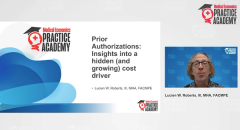




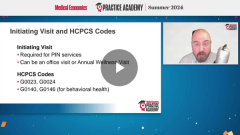












Artificial intelligence (AI) won’t solve bad workflows — but it can help optimize good ones. In “AI hype vs. reality in health care billing,” part of Medical Economics’ June 2025 Practice Academy, Doug Marcey, chief technology officer of Coronis Health, explains how artificial intelligence and automation can take repetitive, error-prone tasks off staff plates and improve revenue cycle performance.
Marcey walks through practical AI use cases across the RCM process, including eligibility checks, charge capture, denial analysis, coding support and patient collections. But to get results, he cautioned, practices need to start with clean data and clearly mapped processes. Automating a broken system only scales the problems.
Instead, he encouraged leaders to pinpoint bottlenecks and inefficiencies, then apply automation strategically — with oversight and quality checks in place. AI isn’t about replacing staff, but empowering them to spend less time on routine work and more time on what matters.
About the presenter
Doug Marcey, chief technology officer, Coronis Health
Doug Marcey joined Coronis Health in 2023, having served as CTO of the MiraMed family company Plexus Technology Group since 2016. Mr. Marcey leads our IT teams to provide the technology needed to support the Coronis mission, including stable infrastructure, flexible cloud computing, powerful custom software, and innovative automation and machine learning platforms. Mr. Marcey has had a diverse background across a number of verticals, including government/defense contracting, entertainment, financial institutions, and NGOs. He started his career in healthcare technology as an NIH contractor in 2004 and has been working on EMR/EHR and RCM solutions since 2006. He studied computer science, and artificial intelligence at George Mason University.
Advertisement
Related to this article

The Illinois College of Osteopathic Medicine at The Chicago School welcomed its first class of 91 students in July, with mental health built into all four years of training. Medical Economics spoke with John Lucas, D.O., and Michele Nealon, Psy.D., about whole-person care, burnout and the stigma physicians face in seeking help.


CMS' proposed cuts to physician fees focus on the operating room. For the primary care physicians managing recovery after surgery, the real gap is much larger.

Health care was the only one of five sectors to cut spending commitments this spring, falling 2.8% as hospitals faced rising supply costs and physicians awaited the final 2027 Medicare fee schedule, Coupa's Business Spend Index found.
It's shared savings season and the check has arrived. Now how do physicians divide it up fairly?

News & Analysis
An OpenAI agent's unauthorized trip through an Australian Medicare data portal is a preview of the risks physicians take on as autonomous AI moves into prior authorization, billing and scheduling, and of what practices should demand from the vendors deploying it.

CDI nurses' clinical judgment remains essential to validate AI-flagged gaps, build compliant provider queries, and keep documentation accurate.

Adding a brief safety reminder cut potentially harmful clinical choices by large language models from 16.6% to 10.1% across more than 10 million responses, but researchers say it doesn't replace physician oversight.
Advertisement
Advertisement
Trending on Medical Economics
1
Russian lab worker's death sparks plague fears; Utah lets AI write first-time prescriptions; FTC warns 24 health systems on hidden prices — Morning Medical Update Weekly Recap
2
How Chicago's first new medical school in nearly a century is training doctors to treat mental and physical health together
3
Why is healthcare spending declining in 2026?
4
Can a safety prompt make AI safer for clinical decisions? Study says yes, partly
5