Four forces created the perfect storm to sink physician-owned medicine. There are policies that could help keep it afloat.
Jay Bregman of Andel says direct-to-employer purchasing takes prior authorization out of the prescription entirely, but the price a patient gets is tied to an employer's willingness to keep paying.
The prior authorization is the part physicians feel. A growing number of employers are now buying high-cost brand drugs straight from the manufacturer, carving them out of the traditional pharmacy benefit and passing the discount to their workers, with no insurer and no pharmacy benefit manager in the middle.
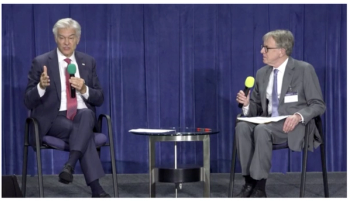
Medical Economics Associate Editor Austin Littrell sat down with Jay Bregman, founder and CEO of
Andel launched its platform in March with Eli Lilly's Zepbound KwikPen, and it is not the only company in the category. Bregman argues the prescription still starts with the patient's own physician, still travels over Surescripts and still reports back into the chart, and that what gets removed is an administrative layer that never added clinical value. He also acknowledges the limit: for certain drugs, the negotiated price disappears once the employer contribution stops.
Don't miss our recent episodes on
Soft Morning by Cephas -
A Textbook Example by Skip Peck -
Editor's note: Episode timestamps and transcript produced using artificial intelligence (AI) tools.
0:00 – 0:31 | Cold open. Bregman on why coverage on paper rarely means access in practice, and why an approval may not survive the next plan year.
0:31 – 1:40 | Introduction. Austin Littrell introduces the episode and the guest, and frames direct-to-employer purchasing as one of several channels now routing around the pharmacy benefit.
1:40 – 2:06 | Meet Jay Bregman. Bregman describes Andel as a cooperative marketplace connecting plans, drug manufacturers and members on a single network.
2:06 – 3:37 | What direct-to-employer purchasing actually is. Andel acquires rights to brand drugs from the manufacturer at a discount, which Bregman says it earns by removing utilization management, prior authorization, formularies and rebates. Employers pay a cash contribution, from $100 per fill up to the full cost, and carve the drug out of the traditional plan.
3:37 – 5:06 | Why GLP-1s became the entry point. Bregman argues utilization broke conventional coverage for the class, calling GLP-1s the wildfires and hurricanes of pharmacy, and says the carve-outs built for them are scaffolding for other drugs.
5:06 – 6:15 | From prescription to doorstep. Patients keep their own physician, the script goes to Andel's non-dispensing pharmacy over Surescripts, and eligibility, payment and shipping run automatically. No telehealth requirement and no limited network.
6:15 – 7:26 | Where the treating physician fits. Bregman's case that the model re-empowers the prescriber, and his argument that the administrative layer it removes was never adding clinical value.
7:26 – 8:16 | Does anything change at the point of prescribing. Andel built its own pharmacy, NPI and Surescripts integration so it appears in any EMR. By Bregman's account, a physician sends the script exactly as they would to any retail pharmacy.
8:16 – 9:07 | P2 Management Minute. Keith Reynolds shares practice management tips and invites listeners to submit their own workflow ideas.
9:07 – 10:06 | Does the fill land in the chart. Because the order travels through Surescripts, it reports back like any other prescription. Bregman says a free data exchange API also lets plans reconcile out-of-pocket spending and accumulators, which he frames as the dividing line from direct-to-consumer channels.
10:06 – 11:20 | Cost and experience versus the pharmacy benefit. Bregman claims fewer than 2% of members get access even when a plan covers GLP-1s, and argues a predictable monthly out-of-pocket beats an approval that may not hold next year.
11:20 – 12:49 | What happens when the job ends. Bregman says COBRA may let some plans continue the benefit and that portability between employers is on the roadmap, but acknowledges that for certain drugs the negotiated price disappears once the employer contribution stops.
12:49 – 13:42 | Where Medicare fits. None of Andel's products are designed for Medicare. Bregman points to the commercial market as the company's focus and to the patients government programs do not reach.
13:42 – 14:37 | What Bregman wants physicians to know. His pitch to prescribers: the platform treats the prescriber's decision as final and does not challenge it with prior authorization or utilization management.
14:37 – 15:19 | Beyond GLP-1s. Bregman says the first non-GLP-1 agreement is signed and more drugs are expected on the platform within six months, and asks prescribers for direct feedback.
15:19 – [END] | Closing thoughts and outro. Littrell thanks Bregman and wraps the episode.