CMS chief says outcomes-based pay can help patients while finally ending physicians' box-checking frustration.
A primary-care voucher model would pay practices upfront for predictable care and leave insurance to cover catastrophic risk, cutting administrative burden and giving physicians time back with patients.
American health care has spent decades perfecting a payment system that may be poorly matched to what primary care is actually supposed to accomplish. Insurance is fundamentally designed to pool risk. We insure against events that are uncertain and potentially financially devastating: a house fire, a major automobile accident, a catastrophic illness. Yet primary care increasingly consists of something quite different: an ongoing relationship between a patient and a care team focused on prevention, wellness, chronic-disease management, early diagnosis and relatively routine acute illness. Why are we asking an insurance company to adjudicate every one of those encounters? Perhaps the better question is not whether primary care should be "insured," but whether insurance is the right payment mechanism for primary care at all.
Consider a primary-care voucher. An employer provides an annual primary-care benefit for each employee and family member. The employee chooses a participating practice, and the practice receives a predictable annual payment for a defined package of primary-care services. Office visits, telemedicine, preventive care and routine follow-up require no additional copayment or claim submission. Traditional insurance remains responsible for hospitalization, major surgery, cancer treatment, expensive specialty care and other unpredictable, high-cost events.
In simple terms: Pay prospectively for predictable care. Insure unpredictable risk.
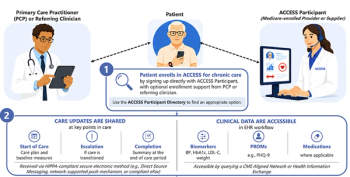
This isn't entirely theoretical. The Centers for Medicare & Medicaid Services'
For physicians, the potential transformation is substantial. Under fee-for-service, the economic unit is the encounter. The practice must continually generate, document, code, submit and collect claims. Revenue depends on volume, creating pressure to move patients through the practice as efficiently as possible.
A prospective payment changes the question. Instead of asking, "How many billable services did we provide?" the practice can ask, "How do we best care for this population?"
That could support a genuinely team-based model. Nurse practitioners and physician assistants could conduct initial triage through telemedicine. Appropriate minor illnesses could be managed remotely. Care coordinators could monitor chronic disease. Physicians could spend more time caring for complex patients, addressing diagnostic challenges and planning preventive care.
The physician's role could shift from being the producer of individual billable encounters to being the clinical leader responsible for the health of a defined population. That is much closer to why many physicians entered primary care in the first place.
There is another potentially important consequence: administrative simplification. A practice that receives prospective payment for primary care has substantially less reason to maintain an elaborate billing infrastructure dedicated to chasing individual claims.
The implications extend beyond private practice. The Government Accountability Office reported more than $100 billion in estimated improper payments across Medicare and Medicaid in 2023. Improper payments are not synonymous with fraud, but they demonstrate the enormous complexity and vulnerability associated with administering high-volume health care payments.
A prospective primary-care payment could simplify that equation. Rather than processing thousands of individual claims, the payer could verify: Is this a legitimate beneficiary? Is the beneficiary eligible? Has the beneficiary selected this practice? Is the practice qualified to provide the service? Has the annual payment already been made elsewhere?
The distinction matters. A prospective payment model could reduce opportunities to generate revenue through fictitious encounters, duplicated services or inflated utilization. That doesn't eliminate fraud. A dishonest provider could still fabricate patients or manipulate eligibility, but the payment architecture itself could make fraudulent billing more difficult. The objective should be to design a system in which the easiest way to get paid is to provide legitimate care.
There are, however, serious challenges. A flat payment could encourage practices to avoid patients who require substantially more care. That is unacceptable. Risk adjustment would therefore be essential. Practices caring for medically complex populations should receive appropriately higher payments. Otherwise, the model could reward precisely the wrong behavior.
Public programs would also remain necessary. Medicare and Medicaid beneficiaries should receive equivalent access, while low-income and uninsured individuals should receive appropriate government assistance. The market should determine who provides care, not whether someone is allowed to receive it.
Perhaps the most compelling argument is cultural. Primary care has become increasingly difficult to
A predictable revenue stream could allow practices to redesign themselves around care rather than billing. It could make room for nurses, behavioral-health professionals, dietitians and other members of the care team. It could support telemedicine without forcing every virtual interaction into a complex billing exercise. It could make independent practice financially viable for another generation of physicians.
Most importantly, it could restore something that medicine risks losing: time. Time to listen. Time to think, explain, and prevent. Time to know the patient.
The proposal isn't that insurance companies have no legitimate role in health care. They have an essential role when financial risk is unpredictable and potentially catastrophic; perhaps they don't need to be involved every time a patient needs to talk to their primary-care physician. Maybe primary care isn't something we should insure. Rather, it's something we should fund directly, pay physicians prospectively to provide, and compete to deliver well. If we can build a system in which patients have uncomplicated access, physicians have sustainable practices, nurses can practice at the top of their training, and the payment system leaves fewer opportunities for administrative waste and fraud, we may discover that the future of primary care doesn't require more insurance. It may require less insurance, and better primary care.
Daniel P. Hassett is an operations leader with experience in health care strategy, telemedicine and organizational transformation. He previously served as director of partnerships and projects for the Department of Clinical Affairs at Michigan State University's College of Human Medicine.