

News|Articles|September 18, 2026
AI leaders ask for a slowdown, and health care ignores them; Medicare's AI prior auth pilot denied 5,944 requests; 59% of health care workers plan to look for a new job — Morning Medical Update Weekly Recap
Author(s)Austin Littrell
Fact checked by: Keith A. Reynolds
Key Takeaways
- Industry leaders split on pausing frontier AI, while federal health agencies accelerate deployment via contracts and pilots despite unresolved safety and accountability questions.
- ARPA-H allocated $62.7M to develop a heart-failure monitoring agent with authority to adjust and issue prescriptions between visits, pushing regulatory boundaries for autonomous clinical actions.
The top news stories in medicine this week.
Advertisement
AI's builders ask for a slowdown as Washington speeds up medical AI
Federal contracts, Medicare pilots and talk of paying AI a share of the physician rate are moving while the industry argues over its own brakes.
The chief executives of OpenAI, Anthropic and Google DeepMind each
Federal health agencies went the other way. The Advanced Research Projects Agency for Health committed $62.7 million on Sept. 9 to build an AI agent that monitors heart failure patients between office visits and can refill, change and write prescriptions.
Officials have also discussed paying tech company AI 60% to 80% of what a physician earns for the same service, The New York Times reported Sept. 14. Models built to treat patients on their own "are not ready for prime time," American Medical Association CEO John Whyte, M.D., M.P.H., told the paper.
Related content:
Medicare's AI prior authorization pilot denied 5,944 requests in three months
Records from a Freedom of Information Act lawsuit show one vendor denied more requests than it approved, and one request went 83 days without an answer.
Two vendors in Medicare's
One vendor, Virtix, denied more requests than it approved and had to file a corrective action plan. Several hundred requests were still unanswered at the end of March against a three-day goal,
Vendors are paid for the requests they deny, and low quality scores cut their payment rates by only 5% to 10%. One provider wrote that patients were calling the office "crying in pain" while procedures waited on approvals.
CMS separately expanded its
Jennifer Brull, M.D., FAAFP, board chair of the American Academy of Family Physicians, said physicians have to be careful that "more support does not equal more care fragmentation." Comments on the CY 2027 Medicare Physician Fee Schedule closed Sept. 14.
Related content:
59% of health care workers plan to look for a new job in the next year
Their employers put the figure at 39%.
Fifty-nine percent of health care workers said they are
Among Gen Z workers the figure was 70%, followed by 64% of millennials and 49% of Gen X. The Harris Poll surveyed 1,514 full-time employees in direct patient care roles and 304 employers between June 12 and July 1.
Burnout and emotional fatigue led the reasons employers gave for departures, at 51%, up 15 points in a year. Twenty-six percent of workers said they trust their employer a great deal to support their long-term career growth.
Forty-eight percent said they are comfortable using AI in their current role, and 91% said they are proud to be health care workers.
Related content:
Advertisement
Related to this article

The Pay PCPs Act of 2026 would blend prospective per-patient payments with fee-for-service, halve beneficiary cost sharing for primary care and exempt participating physicians from MIPS.
Reactions from five leading organizations were among thousands of public comments on the draft document.
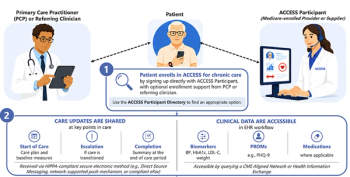
Physician groups back ACCESS Model but warn CMS against care fragmentation
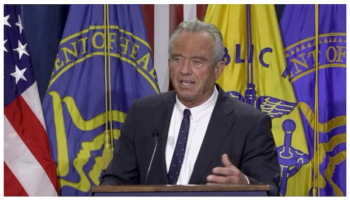
Top HHS leaders introduce ACCESS model with discussions of patient health, costs and technology.

The CBO projects about 5.2 million adults will drop off Medicaid under the new rules that begin Jan. 1. Medical Economics spoke with Pear Suite co-founder and CEO Colby Takeda about the CHW workforce states are leaning on to reach them.

New national research shows health systems and health plans still can't get provider data right — and the fallout lands squarely on physician practices

Revenue per patient is a common way to split practice profit. It’s also the wrong way.
Advertisement
Advertisement
Trending on Medical Economics
1
U.S. Preventive Services Task Force roster adds new cardiologists, radiologist, health economist
2
On National Physician Suicide Awareness Day 2026, 71% of physicians say mental health stigma persists
3
59% of health care workers plan to look for a new job in the next year, Harris Poll finds
4
Generic drugs get a legal boost from Supreme Court ruling, law firm analysis finds
5