





Payment Models
Latest News
Advertisement
Latest Videos


Shorts

Advertisement
More News
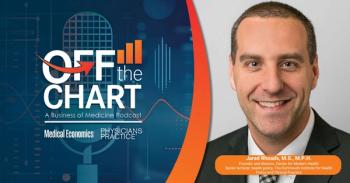
Jared Rhoads, M.S., M.P.H., joins the show with a different take on private equity.
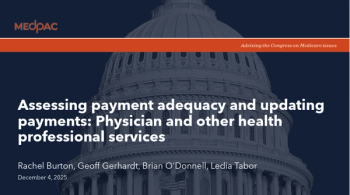
Commission staff present chair’s draft recommendation for a 0.5-point boost above current law as survey data show Medicare outperforms commercial coverage on access and wait times.

A new study reveals private equity's detrimental impact on health care, leading to staffing cuts, increased patient risks and calls for physician advocacy.

Loren Adler, fellow and associate director at the Brookings Institution’s Center on Health Policy, joins the show to discuss how payer ownership is reshaping primary care and what it means for independent physicians.

Many private medical practices across the country are facing increasing challenges as a result of many factors, most notably lower reimbursement and higher overall practice expenses, which together result in lower physician take-home compensation. Is it time to look at new options?
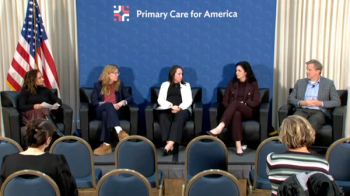
Money for doctors, quick turnaround, policy changes — and even excitement?
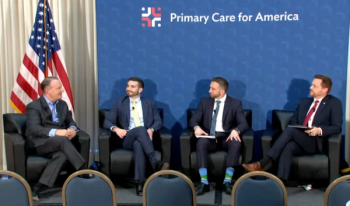
Top CMS policymakers outline benefits to primary care for Medicare spending next year.

A decade of federal initiatives strengthened care coordination, engagement and clinical quality in primary care, but fee-for-service incentives kept spending high.

Advocacy groups issue praise, some questions for next year’s physician payment rule.
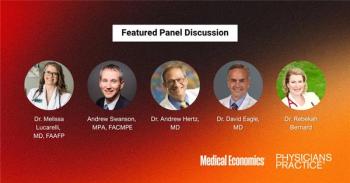
Medical Economics and Physicians Practice hosted a roundtable on the future of independence practice.

Bain & Company finds hospitals accelerating investment in primary care and value-based care, even as labor shortages and patient skepticism over AI threaten progress.
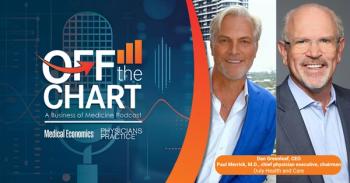
Paul Merrick, M.D., and Dan Greenleaf of Duly Health and Care join the show to discuss how independent physician groups can stay competitive, lower costs and preserve autonomy amid consolidation across the health care industry.

The administrative burdens of running a practice, from HR to billing to compliance, aren't part of delivering care.

At the MGMA Leaders Conference 2025, Jason Jobes of Norwood shares a practical blueprint for helping physician practices transition to value-based care.
Jason Jobes of Norwood says successful value-based care transitions depend less on strategy, and more on communication, alignment and expectation setting.
Jason Jobes of Norwood explains why meaningful physician engagement in value-based care starts with simple conversations, not dashboards or data dumps.
Jason Jobes of Norwood explains why meaningful physician engagement in value-based care starts with simple conversations, not dashboards or data dumps.
Jason Jobes of Norwood discusses how smaller physician groups can find success in value-based care — and why partnerships may be the key.

Compensation climbed to record levels in 2025, fueled by supply-demand imbalances and new expectations among younger physicians.
Jason Jobes of Norwood explains how practices can balance revenue maximization with compliance as regulators intensify audits and scrutiny over coding accuracy.
Jason Jobes of Norwood shares why mastering data interpretation is key to driving performance and reimbursement under VBC.
Jason Jobes of Norwood outlines why taking the right amount of financial risk — and investing in infrastructure — is essential for practices transitioning to VBC.
Jason Jobes of Norwood explains why the move toward value-based care is both necessary and challenging — and what physician practices can do to prepare.
MGMA Leaders Conference session underscores link between pay models, burnout and culture.
Direct primary care can transform rural health care and empower physicians to provide personalized care.
Advertisement
Advertisement
Trending on Medical Economics
1
Burnout skyrockets as corporate owners place profits over patients, employed docs say
2
Medicare Advantage members are losing trust in their plans — and physicians are absorbing the fallout
3
Is your ACO becoming the Blockbuster Video of value-based care?
4
Most patients view test results before hearing from a physician
5