




Policy
Latest News
Advertisement
Latest Videos


Shorts
4:28
Secretary Kennedy's seven hearings; first data on CMS' WISeR model; fruits, veggies and early-onset lung cancer — Morning Medical Update Weekly Recap
6 months ago
by
Austin Littrell
1:26
Your MIPS strategy is probably outdated
6 months ago
by
Holly Black
1:45
How to fix prior auth
6 months ago
by
Anders Gilberg
1:01
Stop typing in your EHR
6 months ago
by
Holly Black
3:37
Trump nominates new CDC director; physician burnout rates down in 2025; team-based care cuts blood pressure in high-risk populations — Morning Medical Update Weekly Recap
6 months ago
by
Austin Littrell
0:41
Stop making these MIPS compliance mistakes
7 months ago
by
Holly Black
1:18
What you need to know about MIPS in 2026
7 months ago
by
Holly Black
0:38
One congressman's plan to kick AI out of Medicare
7 months ago
by
Greg Landsman
0:33
Is RFK Jr. really anti-vaccine?
7 months ago
by
David Dodd
2:51
Measles update; Medicare Advantage payments rise; why patients are skipping care — Morning Medical Update Weekly Recap
7 months ago
by
Austin Littrell

Advertisement
More News

Survey of health care providers shows that some progress has been made, but gaps remain

WalletHub's annual ranking of all 50 states and Washington, D.C., finds the Midwest and Mountain West leading the pack, powered by strong cost-adjusted pay, affordable malpractice insurance and low burnout rates.

Medical Economics survey finds strong feelings about noncompete clauses in physician work agreements.

With the premium payment grace period ending in March 2026, a new survey finds most returning enrollees are already struggling to afford coverage.

The top news stories in medicine this week.

Can team-based models, AI integration, and policy reform sustain the profession amid workforce challenges and the industry's shift to value-based care?

Shannon Sumner, CPA, CHC, of PYA walks through the compliance risks practices can't afford to ignore and what to do before investigators come knocking.

Sightview Software's Holly Black, often called a "MIPS Geek Guru," breaks down what's changed in MIPS for 2026 and what practices can still do right now to protect their Medicare revenue.
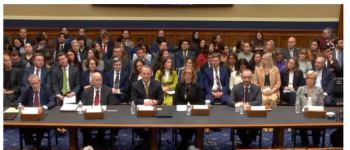
Family physicians, independent practitioners testify in House ‘Examination of U.S. Provider Landscape.’

High costs of living, expensive malpractice insurance and crowded physician markets push several Northeastern states and the District of Columbia to the bottom of WalletHub's annual ranking.


ACIP meeting this week goes on hold as various advocates blast recommendations, judge’s order.

Physicians Foundation will convene an expert panel discussion on state of research, what works and what’s needed for SDOH.

Richard E. Anderson, M.D., FACP, says the system around American medicine is shifting faster than the law, or physicians, can keep up with.

Texas 2036's Charles Miller, J.D., breaks down the market consolidation, pricing failures and coverage gaps that are making it harder than ever for independent physicians to survive.

The nonprofit safety organization ECRI's 2026 report highlights artificial intelligence, hospital closures in rural communities and a resurgence of vaccine-preventable illness among its 10 most pressing threats to patient safety.

A diverse physician workforce would improve patient care, but ‘substantial barriers’ keep medicine inaccessible for people with disabilities.

GeoVax CEO David Dodd discusses the Vaccine Integrity Project, conflicting guidance, and strategies for primary care physicians

New EBRI research reveals 6 in 10 patients face rising health care costs and deductibles—driving care delays, billing confusion, and operational challenges for independent practices

Primary care physicians should know PM&R docs ‘help people adapt.’

New pharmacy benefit manager regulations prove Congress can tackle anti-competitive practices. Hospital networks and health insurers should be next.
Richard E. Anderson, M.D., FACP, points to 50 years of evidence and says caps on noneconomic damages remain the single most effective lever physicians and medical societies can pull.
Richard E. Anderson, M.D., FACP, says rural hospitals are shedding services and the uninsured rate is climbing — and he calls it a "rolling" crisis, not an approaching one.

Vizient’s Shannon Sims, M.D., Ph.D., FAMIA, joins Kaufman Hall’s Matthew Bates, M.P.H., to explain how access, AI and team-based care are reshaping the economics of practice.
Richard E. Anderson, M.D., FACP, explains how massive jury awards ripple far beyond individual cases — and why the cultural forces driving them aren't going away.
Advertisement
Advertisement
Trending on Medical Economics
1
Blue Cross and Blue Shield of Texas leaves Medicare Advantage as UnitedHealthcare splits with Florida health systems
2
'Slightly below average' isn't good enough for physician, clinician mental health
3
The states where physician noncompetes can still be enforced in 2026
4
Why are claims being denied in 2026? 'Services not covered' now tops the list
5