Learning from leaders
Harrington, Khullar and other advocates at The Physicians Foundation and elsewhere are not alone in recognizing SDOH and the need for new solutions that go beyond simply recognizing the problem.
“There has been a growing understanding of how important these drivers of health are,” Khullar said. “But I think there has been still a challenge in integrating and meeting patients’ social needs once they are in the health care system in some way.”
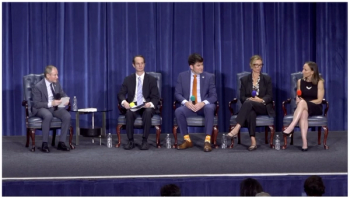
That’s a key reason for the panel discussion, said Khullar, who also is associate director of the Cornell Health Policy Center for Weill Cornell Medicine. Physicians, other clinicians, health care leaders and policy makers need to learn from people at the forefront of integrating social drivers of health into health care delivery, he said.
Khullar suggested some vital questions:
- What has been the most effective interventions in the past?
- What has been tried but hasn’t been particularly effective?
- If you could design a system, “a moonshot to move forward,” what would that look like?
SDOH — not a solo practice
Physicians, along with their office staff or the health systems that employ them, cannot do it alone, Khullar said. When systems or clinics have resources and partnerships with community organizations, those connections are valuable for physicians and support staff to match with patients in need.
“One of the challenges is that that is not always available,” Khullar said. “Often it is the case that there are communities where there are very few resources in that way. We have a system in which we're increasingly trying to get health systems to screen, for instance, for drivers of health to understand, at least at a very fundamental level, who in the community could benefit from support.
“But if there aren't actually those supports in the community, then that screening often doesn't go a very long way,” he said.
Out in the community
Those connections are not just theoretical or a benchtop experiment. The Physicians Foundation has awarded grants for pilot programs to medical schools and associations around the country. Harrington cited examples including Rush University Medical College. Cardiologist Danny Luger, MD, and medical students visit area food pantries to screen for blood pressure, blood sugar and cholesterol, part of the school’s Cardiometabolic Health Initiative.
“Food pantries serve people who lack access to healthy food they can afford, and such food insecurity itself contributes to chronic health conditions,” Luger said in a university article about the program.
In less than three years, the program has grown from a single visit to monthly clinics at four Chicago-area sites, with screenings for more than 650 people. It also has become a source of research, with findings published in Nature indicating 35% of food-insecure patients had prediabetic A1c, and 15% had a diabetic A1c level.
Where to start
Physicians can begin their efforts to address patient SDOH needs much the same way they treat other conditions: by building trust with patients to connect them with sources they need, Khullar said.
“The first principle is empathy, is trying to understand what it must be like for people who are struggling with those things and asking about them in a way that's respectful, but also helps people feel comfortable sharing that they are struggling with one of these drivers of health,” he said.
The issue is a challenge for not just for patients in need, but for physicians who want to help patients resolve needs that clearly are leading to adverse health conditions — but can’t. “I think both for the health of patients, but also for the sustainability of the workforce, this should be one of the prime issues that we're talking about as we're trying to reform the health care system,” Khullar said.