

The company says the device is roughly 30% smaller than its prior wearable and is built around research from more than 10,000 members and caregivers.
Todd Shryock is managing editor of Medical Economics.
The company says the device is roughly 30% smaller than its prior wearable and is built around research from more than 10,000 members and caregivers.

With whistleblower complaints increasingly coming from professional data analysts and the DOJ moving faster on reviews, periodic audits alone may no longer cut it.

The 510(k) clearance covers software that flags signs of the underdiagnosed condition from a standard 12-lead ECG in patients 40 and older with cardiovascular symptoms.

Sarah Nosal, MD, president of the AAFP, explains which parts of a compensation package physicians overlook, why non-competes and scope of practice need to be in writing, and why the moment before you sign is your biggest source of leverage.

A new UC Riverside study links dollar store food quality to higher rates of obesity, high blood pressure, increased cholesterol levels and type 2 diabetes.

A new JD Power study shows satisfaction with Medicare Advantage falling for the second year in a row. For primary care physicians, the numbers explain a lot about what's landing on their desks.
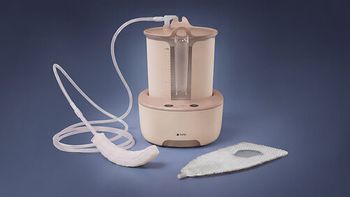
New device pairs with the company's existing external catheters to offer a full at-home management option for the estimated 13 million Americans living with urinary incontinence

CEO Casey Pittock says CMS's proposed CY2027 Physician Fee Schedule could bar third-party clinical staff from billing for remote monitoring services.

Is the U.S. still on top?
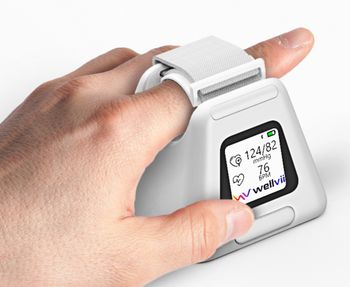
The BP Go device measures blood pressure through the finger instead of a traditional arm cuff, and Wellvii says the clearance supports its push into remote patient monitoring.

Jay Anders, M.D., chief medical officer of Medicomp Systems, says ambient AI tools reverse-engineer ICD-10 codes from billing needs instead of building them from a complete clinical picture — a gap that may create a patient safety issue.

The extravascular eVAD System avoided vascular access in a SCAI Stage D patient in São Paulo, Brazil, ahead of a planned U.S. IDE study.

Sage Growth Partners CEO Dan D'Orazio explains why fee-for-service incentives, disparate data and misaligned financial models — not a lack of technology — are keeping value-based care from taking hold.

A third straight year of survey data shows patient standards transforming into hard filters — and increasingly, it's AI doing the filtering.

Crytica Security's RDAi system installs a sub-100 KB software "Probe" inside each device to monitor for unauthorized changes, aiming to catch tampering that network-based tools alone can miss.

Three in four patients now refuse to book with a provider rated below 4 stars

The deal gives surgeons a new registration option for AR navigation, potentially expanding access for regional hospitals and ambulatory surgery centers.

Staffing at medical practices has become one of the biggest challenges they face. Dina Taylor explains why.
The preferred portfolio deal covers 3D mapping, intracardiac imaging, and both radiofrequency and pulsed field ablation technologies to expand outpatient arrhythmia care.

The next-generation implantable tibial neuromodulation device treats urgency urinary incontinence, with a limited U.S. launch planned for the fourth quarter of 2026.

Just 49% of adults can now consistently afford needed care and medications

The 510(k)-cleared, CE-marked laptop systems bring AI-powered imaging and workflow tools to point-of-care settings outside traditional imaging departments

Health care leader brings direct primary care and entrepreneurship skills to the board

A Peterson Health Technology Institute report warns that today's payment models could turn clinical AI into either a lower-cost care solution — or a new driver of health care inflation.

Structural financial incentives explain why value-based care has stalled — even as new data and payer-provider strategies show where the model is already working.

The procedure at the Hospital of the University of Pennsylvania used a faster, more maneuverable version of the company's vCLAS Ultra-Low Temperature Ablation system to treat a patient whose ventricular tachycardia had resisted radiofrequency and alcohol ablation.

Two 510(k) clearances expand the synthetic bone graft's indications to include pediatric and tumor-related spinal fusion cases.

No new beds. No new staff. Just smarter decisions about where patients are treated.

The 510(k) clearance adds a porous 3D-printed titanium interbody with dual spike-and-screw fixation to the company's Saber cervical platform.

Dan D'Orazio of Sage Growth Partners says there are just too many obstacles for the American health system to fully embrace value-based care