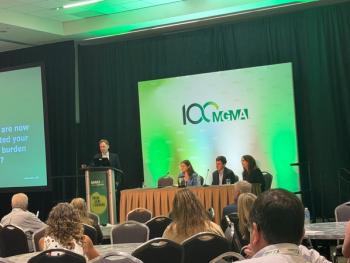
From a same-day payment cut to AI-run prior authorization in traditional Medicare, MGMA's government affairs team laid out what Washington has in store for physicians next year.
Trilliant Health's annual trends report traces primary care shortages, payment gaps and looming price caps to incentives no single stakeholder has reason to fix.
Primary care visits per 1,000 people grew at a compound annual rate of 0.7% from 2019 to 2025, while advanced imaging visits grew 4.9% a year, according to Trilliant Health's
Outpatient behavioral health visits grew 4.8% a year over the same period, and inpatient surgery fell 1.3% a year.
Federal workforce projections cited in the report put primary care physician supply on pace to meet 80.4% of demand by 2038. The
Adult psychiatry is projected to fare worst, with supply meeting 49.8% of demand.
The Brentwood, Tennessee-based analytics firm traces those gaps to a common cause. Payers, hospitals, drugmakers, brokers and physician practices each act rationally to protect their own revenue, and the combined result is a system that serves patients poorly, the report says.
"The U.S. health economy is a textbook tragedy of the commons," Allison Oakes, Ph.D., Trilliant Health's chief research officer, said in a news release. "Every stakeholder is incentivized to maximize its own revenue, and the predictable result is a healthcare system that delivers disproportionately little health for what it costs."
The 141-page report, the sixth in an annual series, is organized around six trends. Most of its analysis comes from Trilliant's national all-payer claims database, which combines commercial, Medicare Advantage, traditional Medicare and Medicaid claims through the fourth quarter of 2025.
The firm also drew on health plan price transparency files, a provider directory covering 5.2 million providers and organizations, and figures from federal agencies, KFF, the American Medical Association (AMA) and other sources.
Related content:
The U.S. has 7.8 specialists for every generalist, the second-highest ratio among Organisation for Economic Co-operation and Development (OECD) countries behind Greece. U.S. specialists earn 42% more than generalists on average, the report says.
The family medicine fill rate fell to 83.6% in the
In 2025, 89.1% of U.S. counties were partly or entirely short of primary care and behavioral health clinicians.
The U.S. had the highest rate of avoidable hospital admissions of any OECD country in 2022, at 710.3 per 100,000 people.
Adults with a usual source of primary care were more likely to get preventive screening, according to a
Mammograms happen outside the primary care office, which made that gap stand out to Yalda Jabbarpour, M.D., the analysis' lead author. Jabbarpour is a family physician and vice president and director of the Robert Graham Center.
"That just speaks to the trust that is developed when you have a primary care physician," Jabbarpour said in a
"We need to increase our investment and move it away from a fee-for-service system, a transactional system, because primary care is not a transactional model of care," she said.
Primary care depends on nurses, behavioral health staff, pharmacists, nutritionists and social workers as well as physicians, she said.
"Because we're only getting five cents on the dollar, that's not enough to support all those team members in a primary care office," she said.
In a 2023-2024 survey, 45.2% of physicians reported at least one symptom of burnout, and physicians were 82.3% more likely than other U.S. workers to experience it, according to
In a June 2026
Jabbarpour said primary care clinicians are "retiring early or leaving clinical care altogether at a young age" because "they are overburdened and under-resourced."
In Chicago, hospital-employed physicians received a blended commercial evaluation and management (E/M) rate of $239 for office visits, compared with $147 for independent physicians, according to Trilliant's analysis of price transparency data.
The gap ranged from $42 in primary care ($196 vs. $154) to $122 in urology.
Nationally, 59.4% of physicians are employed by hospitals, according to Trilliant's provider directory. In a 2022 AMA survey cited by the report, 79.5% of physicians who sold their practices to hospitals called higher reimbursement an important reason.
UnitedHealthcare's median negotiated rate for a shoulder arthroscopy with rotator cuff repair is $13,477 at hospital outpatient departments and $5,492 at ambulatory surgery centers, the report found.
For the same physician-administered drugs, commercial plans paid hospital outpatient departments an average of 102% more per unit than physician offices, according to a
"Site-of-service payment differentials unintentionally incentivize hospital ownership over independent practice," the report states.
Services such as an MRI, a lab test or a colonoscopy "are paid roughly double if they're done in a hospital versus non-hospital setting" in Medicare, Christopher M. Whaley, Ph.D., an associate professor in the Department of Health Services, Policy and Practice at the Brown University School of Public Health, said on a January episode of
"If you're a hospital or health care system, you can go out and acquire a physician practice and say, now that you're my employee, send all your referrals back to me as a hospital system where we can bill Medicare double the rate," Whaley said.
He calls site-of-care payment differences "the arbitrage opportunity within health care."
Hospitals argue the higher outpatient payments offset services that are underpaid, such as staffing emergency departments. Whaley said the better fix is to pay those services adequately.
"We're then into a landscape where we're playing policy whack-a-mole, rather than just addressing problems head on," he said.
Charles Miller, J.D., director of health and economic mobility policy for Texas 2036, said consolidation by both large health systems and large insurers is making independent practice harder to sustain.
Without stronger market reforms, "my fear is that independent physicians are going to be squeezed out, and that is not to blame either side of the current state," Miller said on a
Among Los Angeles-area hospitals, the median UnitedHealthcare negotiated rate for heart attack care is $32,858, the report found.
The hospital with the highest rate, $63,622, had the fifth-highest 30-day mortality rate of the 41 hospitals analyzed, according to the news release.
Across the four common medical diagnosis-related groups Trilliant examined in Los Angeles, correlations between negotiated rates and mortality ranged from -0.30 to 0.25. A perfect link between higher price and better quality would be -1.
The Centers for Medicare & Medicaid Services (CMS) uses more than 800 active quality measures, and 27% are directly tied to outcomes, according to the report.
The share of hospitals penalized for high readmissions has barely moved in a decade, which the report says likely reflects "that the revenue from poor quality exceeds the penalties for rendering it."
The Department of Health and Human Services
Employers had reported that they "just really had no insight into what the prices were" and "couldn't craft intelligent benefit designs to encourage their employees to go get high-value care," Miller said of the push for price transparency in Texas.
In physician offices, the share of E/M visits billed as CPT 99214 rose from 41.0% in 2018 to 52.5% in 2025, according to Trilliant's claims data.
The report says billing higher-intensity codes "without a commensurate change in clinical complexity is indicative of worsening value." It does not separately account for the
In the
In 2025, insurers denied 18% of prior authorization requests in Affordable Care Act marketplace plans, 14% in fee-for-service Medicaid and 12% in Medicare Advantage, according to KFF data cited in the report.
In a 2026 Siemens Healthineers survey cited by the report, 49% of patients said they had given themselves a test for an illness or symptom, and 17% said they had asked for a lab test based on something they learned on social media.
Direct primary care reached about 0.5% of Americans in 2025, with employers covering 60% of membership costs, according to Hint Health data in the report.
"The reason that we have modalities of delivering care that are different from the traditional primary care office is because the health care system is broken," Jabbarpour said. "It's because it's hard for patients to get in."
Clinical care accounts for an estimated 20% of what determines health outcomes, according to research the report cites. Social and economic factors, behaviors and physical environment account for the rest.
The report points to the
"We have EMTALA, we have these laws that require treatment of emergency conditions," Dhruv Khullar, M.D., M.P.P., a physician at Weill Cornell Medicine and director of the Physicians Foundation Center for the Study of Physician Practice and Leadership, said in a
"We don't have laws that require prevention or laws that help people manage chronic disease along the way," he said.
"If we're not properly investing in these upstream potential factors to reduce the adverse consequences, then we're going to pay for it one way or another," Khullar said.
From 2019 to 2025, the number of patients prescribed glucagon-like peptide-1 (GLP-1) drugs rose 719.7% in Trilliant's claims data, while bariatric surgery patients fell 32.4%.
Over the same period, patients on sodium-glucose cotransporter 2 (SGLT2) inhibitors grew 247.7% as cardiac catheterization patients declined 7.1%.
The report says novel drugs are "poised to replace surgical volume." A small group of patients was prescribed the drugs both before and after surgery, which the report says calls into question whether the medications replace procedures or supplement them.
Across the health economy, the report says, "revenue growth is a function of price – not volume – and is concealing margin erosion for most stakeholders."
Federal and state governments finance about half of U.S. health care spending and "are positioned to impose blunt unit-price constraints onto providers and manufacturers," the report says.
Vermont passed hospital price ceiling legislation the same year, and Oregon has capped state employee plan payments for in-network hospital services at 200% of Medicare since 2017, the report says.
A
CMS' mandatory
The
The share of employers who said hospital rate regulation would be very or somewhat helpful rose from 65.5% in 2023 to 82.6% in 2026, according to a purchaser survey cited in the report.
"Nature abhors a vacuum, and Federal and state government officials have concluded that price controls are the only way to control healthcare prices," Hal Andrews, Trilliant Health's CEO, said in the release.
"Unless health economy stakeholders begin to act in the interest of the commons, they should expect to be increasingly constrained by outside forces," Andrews said.
"Unless we, as a society, begin to deliberately enclose the U.S. healthcare commons with a focus on value, the government will continue to fence it in for us with a focus on cost," the report concludes.
"If you are an independent physician, get active, make your voice heard and make sure that the groups that say they are representing you are actually representing the interest that you have of maintaining that ability to practice independently," Miller said in March.