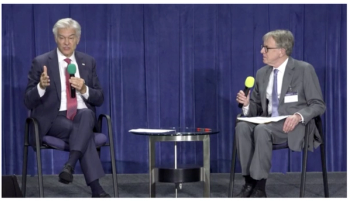
CMS chief says outcomes-based pay can help patients while finally ending physicians' box-checking frustration.

MGMA members described capping Medicare Advantage contracts and favoring commercial patients, while one Texas practice leader reluctantly called Medicare her best payer.
"They pay about a third of what we charge for office visits and about 10% of what we charge for surgeries," an attendee from Alaska said of Medicare. The comment came during a government affairs town hall Sept. 29 at the Medical Group Management Association (MGMA)
Physicians in Alaska may keep established patients who age into Medicare, the attendee said, but new Medicare patients have trouble finding anyone.
"It's really hard to find a provider as a Medicare patient in Alaska because they just don't pay enough to keep us in business," the attendee said. Commercial insurance contracting in the state is now based on Medicare, the attendee added.
An attendee who works in oncology in Portland, Oregon, said her organization now accepts only two Medicare Advantage plans. "We are going for commercial patients preferentially to Medicare," she said. "What is going to happen to these folks because no one is wanting Medicare?"
She said changes to the 340B drug pricing program will mean a $30 million difference in reimbursement for one of the hospitals where she works. Those 340B dollars help offset losses on the medical group side of oncology care, she said.
Anders Gilberg, MGMA's senior vice president of government affairs, called 340B one of the association's trickiest issues. The program has been subject to gaming by bad actors, he said, and efforts to address that also affect groups delivering care in underserved areas, including rural health clinics.
An attendee from a California cardiology group said most of the practice's patients are seniors. Medicare cuts keep coming while the cost of running the practice rises, the attendee said.
"Medicare right now is one of my best payers, which is so depressing," said an attendee from San Antonio who represents small and midsize physician-owned practices. Commercial carriers have little incentive to negotiate with practices of that size, she said, and the No Surprises Act leaves her locked into in-network rates.
The
MGMA filed 32 pages of comments built from four member work groups, Gilberg said. On the same-day cut, the association has also met with the Office of Management and Budget, the White House Domestic Policy Council and members of Congress ahead of the final rule, which he said is due Nov. 1.
The association went straight to policymakers "because sometimes a letter isn't good enough," he said.
Budget neutrality shifts payment among specialties, which matters inside groups that benchmark compensation against the fee schedule, Gilberg said. "If you're in a multispecialty practice, it could literally create tension in your practice politically as money is shifted back and forth," he said.
James Haynes, J.D., an associate director of government affairs at MGMA, said the association has been pressing Hill offices on the Patients First Act.
The bill would tie annual physician payment updates to the Medicare Economic Index. Reps. John Joyce, M.D. (R-Pennsylvania), Greg Murphy, M.D. (R-North Carolina) and Kim Schrier, M.D. (D-Washington) introduced it July 15.
"They understand the issues that everybody's facing in this room," Haynes said of the physician lawmakers behind the bill. He pointed to a House Energy and Commerce health subcommittee hearing this month on Medicare physician payment, where members of both parties discussed the need for permanent reform. The cost of a guaranteed annual update is the obstacle MGMA is still working through, he said.
David Gans, MSHA, FACMPE, retired senior fellow of MGMA, asked whether a potential Democratic majority next year would open talks on "Medicare for All." Gilberg said Medicare Advantage now enrolls 55% of beneficiaries, which gives insurers new clout in the program.
MGMA is nonpartisan, he said, but if Democrats win either chamber, he expects early attention to Medicaid cuts under which the Congressional Budget Office estimates 10 million people could lose coverage.
Gilberg's closing slide listed the final fee schedule and the elections in November, along with a possible government shutdown and a lame-duck session.
Medical Economics is in San Antonio at the MGMA Annual Conference, Sept 27-30, celebrating 100 years of MGMA, attending sessions and speaking with industry leaders. Follow our coverage on our