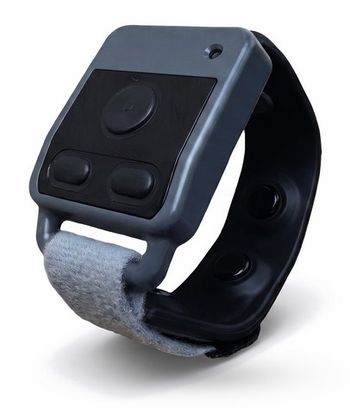
Encora X1, an FDA-cleared wrist device, uses mechanical rather than electrical neurostimulation, giving VA clinicians an option for patients who can't tolerate medication or have implanted electrical devices.
Neurostimulation system offers alternative for patients who fail standard therapies
LivaNova PLC received U.S. Food and Drug Administration approval for its aura6000 System, a neurostimulation device designed to treat moderate to severe obstructive sleep apnea in adults who cannot use standard therapies.
The FDA granted premarket approval for the device, which uses proximal hypoglossal nerve stimulation to help patients with an apnea-hypopnea index between 15 and 65 who have failed, do not tolerate or are ineligible for positive airway pressure therapy, the most common first-line treatment.
"FDA approval of the aura6000 marks a transformative moment for LivaNova and represents a major step forward for patients struggling with inadequately treated OSA," said Ahmet Tezel, the company's chief innovation officer.
The approval was supported by data from OSPREY, a multi-center randomized controlled trial. After 12 months of therapy, 65% of patients in the treatment arm were classified as responders — defined as those achieving at least a 50% improvement from baseline and an apnea-hypopnea index value below 20.
The therapy uses six electrodes placed on the proximal trunk of the hypoglossal nerve to stimulate muscles controlling the airway, reducing or eliminating airway obstruction during sleep.
LivaNova said it is developing a next-generation version of the device designed to be compatible with magnetic resonance imaging and featuring remote configuration capabilities and a rechargeable battery lasting up to 15 years. The company plans to submit a supplemental application to the FDA for the enhanced system.
The aura6000 is the first hypoglossal nerve stimulation device approved by the FDA without a contraindication or warning related to complete concentric collapse, an anatomical pattern that can complicate treatment, according to the company.
Obstructive
Neurostimulation technology has emerged as a promising option over the past decade for
Recent clinical research has expanded understanding of which patients benefit most from neurostimulation. Early studies excluded individuals with certain anatomical patterns, particularly complete concentric collapse of the airway. However, newer trials have included more diverse patient populations, with some demonstrating effectiveness across a broader range of anatomical types.
Technological refinements continue to improve these systems. Battery life has extended significantly, with some newer devices offering rechargeable batteries lasting more than a decade. MRI compatibility has become a key design consideration, allowing patients to undergo diagnostic imaging without removing their implants. Remote programming capabilities enable physicians to adjust therapy settings without requiring office visits.
The field has also seen advances in patient selection algorithms. Researchers have developed predictive models to identify candidates most likely to benefit from neurostimulation, potentially reducing the need for invasive pre-implantation testing procedures like drug-induced sleep endoscopy.
Clinical trial designs have become more rigorous, with recent studies employing randomized controlled methodologies and longer follow-up periods to establish durability of treatment effects. This stronger evidence base supports broader adoption and insurance coverage for neurostimulation therapies as viable alternatives when first-line treatments fail.