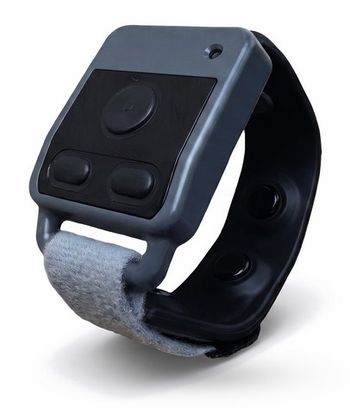
Encora X1, an FDA-cleared wrist device, uses mechanical rather than electrical neurostimulation, giving VA clinicians an option for patients who can't tolerate medication or have implanted electrical devices.
Two-year TRISCEND II data show lower mortality, quality of life gains
New data on a transcatheter tricuspid valve replacement system showed significant and sustained patient benefits including lower mortality when accounting for patient crossover, according to findings presented at the American College of
The TRISCEND II trial data on the EVOQUE system demonstrated confidence in two-year performance and showed significant and sustained near elimination of tricuspid regurgitation, improvements in health status and quality of life, no added device-related risk, and significantly lower all-cause mortality when accounting for patient crossover, Edwards Lifesciences announced.
"There is a significant patient population suffering with debilitating symptoms from tricuspid regurgitation with very limited treatment options," said Vinod Thourani, MD, FACS, FACC, Bernie Marcus Chairman, Department of Cardiovascular Surgery and Marcus Valve Center, Piedmont Heart Institute. "It's not a surprise that the sickest patients enrolled in the medical therapy control group of the randomized TRISCEND II trial opted to receive treatment with the EVOQUE system following the one-year primary endpoint."
Thourani said the analyses, including the many highly symptomatic crossover patients, showed significantly improved outcomes for all of the EVOQUE-treated patients.
The 18-month data of the TRISCEND II trial were presented at the European Society of Cardiology Congress in August 2025, showing achievement of a hard endpoint benefit for the most severe tricuspid regurgitation patients who received the EVOQUE therapy, and superior quality of life benefits, regardless of baseline tricuspid regurgitation.
"Edwards remains focused on developing innovative solutions that meet the most pressing needs of patients with structural heart disease," said Daveen Chopra, Edwards' corporate vice president, transcatheter mitral and tricuspid therapies.
The growing body of evidence on EVOQUE includes data on more than 1,000 patients in the STS/ACC TVT Registry presented at TCT last year, demonstrating consistent near elimination of tricuspid regurgitation, improved quality of life, and a positive real-world safety profile across the broad tricuspid patient population, Chopra said.
The EVOQUE system is approved in both the United States and Europe.
Tricuspid regurgitation has emerged from relative obscurity to become a major focus of structural heart disease treatment over the past five years, driven by growing recognition of the condition's prevalence and impact on patient outcomes. The tricuspid valve, long considered the "forgotten valve" of the heart, is now the subject of intense clinical and technological innovation as physicians and device developers work to address a significant unmet medical need.
The shift toward transcatheter approaches represents a fundamental change in how tricuspid regurgitation is managed. Historically, surgical repair or replacement carried prohibitive risks for many patients with severe tricuspid regurgitation, who are often elderly and have multiple comorbidities. The development of minimally invasive
Multiple therapeutic strategies have emerged in recent years, each targeting different aspects of tricuspid valve dysfunction. Repair-based approaches include edge-to-edge leaflet coaptation devices, which use clips to bring valve leaflets together, and annuloplasty systems that cinch the dilated valve ring. Replacement strategies involve deploying prosthetic valves directly into the native tricuspid position, eliminating regurgitation by substituting healthy tissue for diseased anatomy.
Clinical trial data have increasingly demonstrated that treating severe tricuspid regurgitation can reduce heart failure hospitalizations, improve functional capacity, and enhance quality of life. Registry data from thousands of real-world patients have reinforced these findings, showing consistent benefits across diverse patient populations and practice settings.
The field continues to evolve rapidly, with ongoing investigations into optimal patient selection criteria, timing of intervention, and long-term durability of various approaches. Device iterations have focused on improving deliverability, reducing complications, and expanding anatomical eligibility. As evidence matures and physician experience grows, transcatheter tricuspid interventions are becoming increasingly integrated into standard heart failure management pathways, offering hope to patients who previously had no effective treatment options.