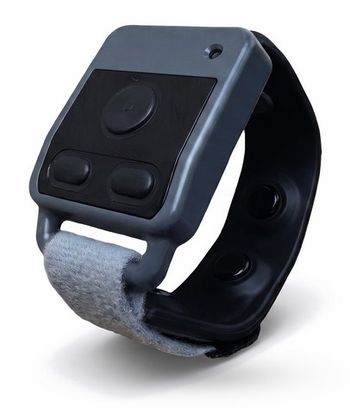
Encora X1, an FDA-cleared wrist device, uses mechanical rather than electrical neurostimulation, giving VA clinicians an option for patients who can't tolerate medication or have implanted electrical devices.
Study shows improved handling, faster ablation times with smaller catheter design
The study, published in the Journal of Cardiovascular Electrophysiology, describes significant improvements in ablation catheter performance compared to the company's first-generation vCLAS ultra-low temperature ablation catheter. Improvements include enhanced handling characteristics, better compatibility with standard laboratory practices and potential for 50% to 75% reduction in ablation time, according to the publication.
Physicians from leading ventricular ablation programs in Germany, Belgium and Canada authored the study titled "Initial Pre-Clinical Evaluation of the Augmented Ultra-Low Temperature Cryoablation Catheter for Ventricular Ablation."
The next-generation system achieves the same titratable lesion depth exceeding 10 millimeters as the first-generation technology but uses a smaller, 8.5 French-size catheter with handling characteristics equivalent to standard radiofrequency catheters, said Katia Dyrda, an electrophysiologist cardiologist at Montreal Heart Institute and lead author of the study.
"These technical advances translate into a number of clinical advantages, including potential reduction in procedure time by as much as 30 minutes compared to first-generation" ultra-low temperature ablation, Dyrda said.
The proprietary technology achieves ablation temperatures of approximately minus 170 degrees Celsius, enabling single-freeze applications that produce 5-millimeter-deep lesions in as little as 15 seconds and 12.5-millimeter-deep lesions in approximately 120 seconds in pre-clinical models, according to the published paper.
Adagio Medical, based in Laguna Hills, California, develops catheter ablation technologies for cardiac arrhythmias. Its shares trade on the Nasdaq under the ticker ADGM.
Sector advances in ventricular arrhythmia treatment
The field of ventricular tachycardia ablation has experienced substantial technological evolution in recent years, driven by the need to treat an increasingly complex patient population with better outcomes and improved procedural efficiency. Ventricular arrhythmias, particularly ventricular tachycardia, represent life-threatening conditions that affect hundreds of thousands of patients annually and are associated with high morbidity and mortality rates when left untreated.
Traditional ablation approaches using radiofrequency energy have faced limitations in creating sufficiently deep lesions to reach arrhythmogenic substrates located in the thick ventricular myocardium. This challenge has spurred innovation across multiple therapeutic modalities. Recent developments have focused on improving lesion depth, reducing procedure times and enhancing procedural safety through better visualization and catheter control.
Advances in
Imaging integration represents another significant area of progress. Enhanced three-dimensional electroanatomic mapping systems now offer higher resolution substrate characterization, enabling physicians to identify arrhythmogenic tissue with greater precision. Some systems incorporate advanced signal processing algorithms that can distinguish healthy myocardium from scar tissue and border zones where arrhythmias typically originate.
Energy delivery innovations have explored alternative ablation modalities beyond conventional radiofrequency, including pulsed-field ablation and various cryoablation approaches. These technologies aim to achieve deeper, more uniform lesions while minimizing collateral damage to surrounding structures. Some systems now offer real-time lesion depth monitoring, providing feedback that allows operators to titrate energy delivery based on individual patient anatomy.
Clinical outcomes data increasingly demonstrate that technological improvements translate into meaningful benefits, with studies reporting reduced procedure times, lower complication rates and improved long-term arrhythmia-free survival rates compared to earlier-generation systems.