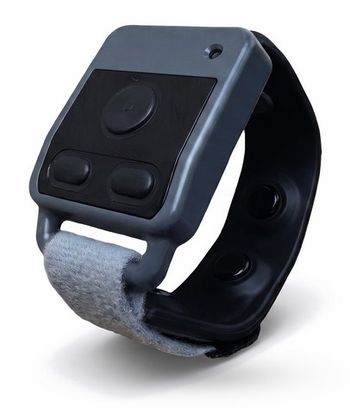
Encora X1, an FDA-cleared wrist device, uses mechanical rather than electrical neurostimulation, giving VA clinicians an option for patients who can't tolerate medication or have implanted electrical devices.
Device is intended to treat pain associated with hypertrophic bone growth, a common contributor to lumbar spinal stenosis
Allevion Medical said it has received clearance from the U.S. Food and Drug Administration for Vantage, a fully disposable, sterile system designed for minimally invasive lumbar decompression procedures.
The company said the device is intended to treat pain associated with hypertrophic bone growth, a common contributor to lumbar spinal stenosis. Vantage uses a step-based workflow — locate, dilate and decompress — to guide physicians through targeted removal of bone from structures such as the lamina and facet joints, which can narrow the spinal canal.
Allevion Medical said the system is designed to improve procedural consistency and efficiency compared with traditional decompression surgeries, which often require larger incisions and multiple instrument trays. Those approaches can increase recovery times and the risk of scar tissue formation, while also adding sterilization costs and workflow complexity.
Unlike some minimally invasive techniques that focus primarily on soft tissue removal, the Vantage system is engineered to address bony overgrowth directly. The company said its tools allow for depth-controlled bone resection while minimizing disruption to surrounding tissue.
The device also incorporates single-use illumination to provide direct visualization of the surgical site during the procedure. Additional design features include protective guards intended to reduce the risk of damage to nearby structures.
Allevion Medical said the system’s fully disposable design eliminates the need for reprocessing and additional instrumentation, potentially reducing bioburden risks and simplifying operating room logistics.
The clearance positions the company to expand its presence in the growing market for minimally invasive spine procedures, where providers are seeking technologies that improve outcomes while reducing costs and procedural complexity.
Minimally invasive
One of the most significant advances has been the shift toward smaller, muscle-sparing approaches that limit tissue disruption. These techniques often rely on tubular retractors, endoscopic access and image-guided navigation, allowing surgeons to reach the spine through incisions measured in millimeters rather than inches. As a result, many procedures that once required inpatient hospitalization are increasingly performed in outpatient or ambulatory surgical center settings.
Imaging and visualization technologies have also
Another area of progress is instrument design. Modern tools are increasingly specialized for specific procedural steps, including bone resection, soft tissue removal and implant placement. Many systems now emphasize ergonomic handling and tactile feedback, which can enhance surgeon control during delicate procedures.
There is also growing interest in workflow standardization. Step-based procedural frameworks aim to reduce variability between surgeons and improve reproducibility, which may be particularly important as more procedures shift to outpatient environments with tighter time constraints.
Finally, infection control and efficiency have become more prominent considerations. Single-use and streamlined systems are gaining attention as providers look to reduce sterilization burdens, lower the risk of contamination and improve operating room turnover times.
Together, these advances are helping redefine spine care, with a focus on precision, efficiency and patient-centered outcomes.