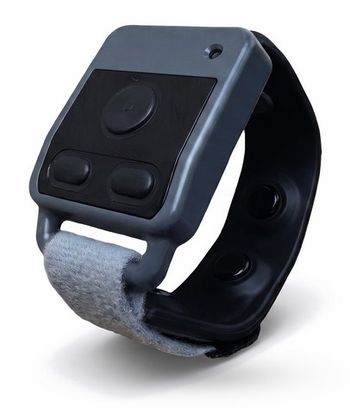
Encora X1, an FDA-cleared wrist device, uses mechanical rather than electrical neurostimulation, giving VA clinicians an option for patients who can't tolerate medication or have implanted electrical devices.
Expandable interbody fusion implant combines the company’s patient-specific OptiMesh platform with a nano-scale hydroxyapatite surface designed to support bone growth and implant integration
Spineology Inc. announced the launch of OptiMesh HA Nano, a new expandable interbody fusion implant that combines the company’s patient-specific OptiMesh platform with a nano-scale hydroxyapatite surface designed to support bone growth and implant integration.
The new device integrates a nano-thin hydroxyapatite surface treatment intended to create an ultra-hydrophilic environment at the bone-implant interface. The surface is designed to support cellular interaction, promote faster osseointegration and reduce the potential risk of infection by encouraging earlier and stronger bonding between bone and implant, the company said.
Spineology said the HA Nano surface establishes a three-dimensional bioactive area that supports rapid cellular response while maintaining the conforming, expandable characteristics of the OptiMesh implant. The company described the technology as a step forward in personalized spinal care and expandable interbody fusion innovation.
“This addition of the HA Nano technology to the OptiMesh portfolio underscores our continued commitment to innovation and patient-specific care,” said Brian Snider, chief executive officer of Spineology. “The OptiMesh platform is uniquely built on our conform and expand implant technology that adapts to individual patient anatomy. Now, Spineology delivers a first-of-its-kind solution that integrates a well-studied surface treatment, optimized to support spinal fusion goals, and promote osseointegration.”
According to the company, OptiMesh HA Nano undergoes the same ASTM testing and U.S. Food and Drug Administration clearance processes required of traditional expandable interbody implants. Spineology said the implant has demonstrated long-term structural stability when used with posterior supplemental fixation.
Spineology said OptiMesh HA Nano is the first conformable, engineered mesh interbody implant platform to incorporate nano-scale hydroxyapatite surface technology through a proprietary application process. The launch builds on the company’s focus on surface innovation aimed at supporting lumbar interbody fusion procedures.
Recent advances in
Surface engineering has become a major area of innovation. Nano-scale and micro-textured surfaces are being developed to encourage cellular adhesion and bone growth, with the goal of accelerating fusion and reducing complications. By modifying how implants interact with surrounding tissue at a microscopic level, researchers hope to promote earlier stability and more reliable long-term outcomes.
Personalization is another defining trend. Expandable and conforming implants are increasingly designed to adapt to patient-specific anatomy rather than forcing the anatomy to adapt to a fixed implant shape. This approach can improve endplate contact, optimize load distribution, and potentially reduce the risk of subsidence, particularly in patients with complex anatomy or compromised bone quality.
Materials science has also advanced. Beyond traditional titanium and polymer constructs, manufacturers are exploring hybrid designs and surface treatments that combine structural integrity with enhanced biological compatibility. These efforts are often paired with supplemental fixation strategies to maintain stability while fusion develops.
Regulatory and clinical expectations are evolving alongside these technologies. New implants are expected to meet rigorous mechanical testing standards while also demonstrating biological benefits through preclinical and clinical evidence. At the same time, spine surgeons are placing greater emphasis on technologies that fit within minimally invasive workflows and support predictable outcomes.
Taken together, these developments signal a shift toward