




AI
Latest News
Advertisement
Latest Videos

Shorts

0:38
Why trusting AI in healthcare is difficult
2 months ago
by
Marcus Bertilson
0:39
Stop firing staff. Use AI to help them.
2 months ago
by
Amol Nirgudkar
4:35
Medicaid Fraud War Room flags $203 million; nearly 10,000 UC physicians move to unionize; Fauci takes the Fifth — Morning Medical Update Weekly Recap
2 months ago
by
Austin Littrell
0:36
The "human in the loop" rule for AI
2 months ago
by
Marcus Bertilson
0:35
Why medical front offices are failing
2 months ago
by
Amol Nirgudkar

4:40
Florida pastor says ChatGPT health advice almost killed him
3 months ago
by
Austin Littrell
0:45
How AI is fixing healthcare access
3 months ago
by
Amol Nirgudkar

0:40
Patients love a grumpy doctor who picks up the phone
3 months ago
by
Josh Umbehr, M.D.

1:24
Why practices decide to stay independent
3 months ago
by
Aaron Ledbetter, M.P.P., M.H.S.A.

0:43
Why AI scribes worked when diagnostic AI didn't
3 months ago
by
Robert M. Wachter, M.D.

Advertisement
More News

Patients postpone care due to delays in prior authorizations. It’s a symptom of major changes happening in health care.
Whether you are thinking about getting an AI-powered scribing tool or already using one, you need to ask these questions

The doctor is still in, and needs to consider what artificial intelligence can and can’t do in the clinic

As AI-powered diagnostic tools multiply, primary care physicians face a pressing question: which ones are actually worth adopting — and how?
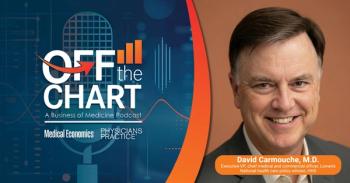
Lumeris CMO David Carmouche, M.D., makes the case that AI's biggest opportunity in primary care isn't replacing physicians, it's giving them back the time and cognitive space to actually practice medicine.
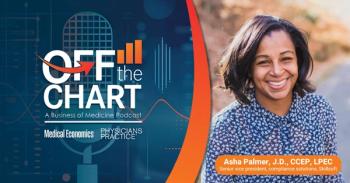
Skillsoft's Asha Palmer, J.D., explains why banning artificial intelligence (AI) doesn't stop your staff from using it — and what a practical governance plan actually looks like for smaller practices.

AI is moving from a value-add to a critical infrastructure tool

A report from the Peterson Health Technology Institute says efficiency in AI tools is still lacking.

The top news stories in medicine this week.


Skillsoft's SVP of compliance solutions, Asha Palmer, says banning AI doesn't stop staff from using it — it just means practices lose visibility over what's happening to their data.

The gap between hype and reality
A Medical Economics and Physicians Practice flash poll, sponsored by Heidi, found physicians split on AI, even as 70% are using or evaluating AI scribes in their practices.



The UCSF Department of Medicine chair says AI scribes are the right first use case for AI in health care.
The physician group is pushing for disclosure rules, FDA review, crisis-detection mandates and advertising limits on tools patients increasingly use for mental health support.

How artificial intelligence could become proactive to unlock physician time, at a time when it’s more needed than ever.
Robert Wachter, M.D., chair of the Department of Medicine at UCSF, takes us inside the AI scribe era.

Health care clinicians don't want AI running the show, but they are happy to have it help.

Whether you are thinking about getting an AI-powered scribing tool or already using one, you need to ask these questions

A new Mass General Brigham study tested 21 large language models on the full clinical workflow and found a striking gap between the AI's ability to reach a final diagnosis and its ability to reason through one.

Health care attorney Dan Silverboard, J.D., breaks down the legal risks physicians and practices face when using AI.

Access has overtaken staffing as health care's defining challenge, and physicians who don't embrace AI and team-based care risk falling behind.
Advertisement
Advertisement
Trending on Medical Economics
1
Russian lab worker's death sparks plague fears; Utah lets AI write first-time prescriptions; FTC warns 24 health systems on hidden prices — Morning Medical Update Weekly Recap
2
How Chicago's first new medical school in nearly a century is training doctors to treat mental and physical health together
3
Can a safety prompt make AI safer for clinical decisions? Study says yes, partly
4
Why is healthcare spending declining in 2026?
5