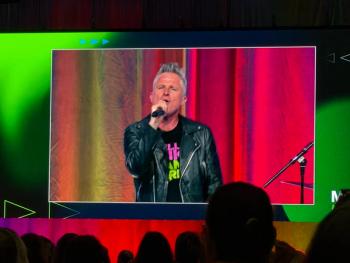
The Grammy-nominated songwriter traced his path from Belfast during the Troubles to the front of INXS, then walked practice leaders through what he says the best bands do differently.
An attorney specializing in employment law discusses artificial intelligence and noncompetes.
Legal challenges will come to employers that use
Medical Economics: Can you make any predictions about potential litigation or enforcement trends that might involve artificial intelligence in employment law and human resources?
Christopher S. Mayer, J.D.: I do think there will be challenges. And again, I'm primarily coming at this from the employment world, but I do think there will be challenges to employers who are using AI to make employment decisions. And again, that isn't always widely known. These decisions, when they're made, are done in secret, and often are done with counsel, but it does tend to leak out. So I think employees often find out if an employer is using a tool because there is some level of management involved in it, and they may share that with other folks. And so what will happen if there are these types of challenges to it?
It'll be very important that they're not putting a lot of information into a public AI tool. I mean, that will be very important, like you can't be putting private information into a public AI tool, information that's protected, as private health information, obviously, in the medical industry and medical world, that's extremely important. But if there are challenges to that, it'll be interesting, because they'll be largely based on speculation. In other words, you won't be able to find out until you sue, and you're saying that there's some sort of bias built into whatever tool they're using. To me, that's the main concern. I mean, we have seen that some AI tools have inherent biases built into them because of how they're programmed. And we saw that with (Elon) Musk’s tool, with Grok (AI program), and we've seen that with some of the others. And those can go in different directions. And without getting political about it, obviously, they can have bias, and it really depends on the information that's fed into the AI tool or that it has access to.
So that is one concern, but the bigger concern is what we already touched upon, and this could be individual claims, it could be class action, multiplaintiff employment actions where there's a disparate impact. Some sort of challenge to a large, typically large, company could be from the EEOC, but more likely from a private lawsuit to an AI-related layoff that seems to have had a disparate impact on a certain category of folks. That's inevitable. I think that's going to happen. Obviously, we touched upon ways to avoid being the target of that type of lawsuit. Just be careful, be mindful of it. But it will happen, it always does. And there are challenges already regularly to layoffs for having a disparate impact, and I think it'll be very interesting when those first cases come along, because we talked about the fear and the misinformation. So putting a case like that before a jury — I have an idea of how a jury generally might act. I don't think they're going to be happy with it, I think jurors will not like it. And so that would be a huge problem, and they're just going to assume that the employer really had a pretext and wanted to discriminate and is trying to hide behind AI to justify it. I think that's how jurors are, very straightforward and honest about these things, and they like to punish employers who want to run astray.