





AI
Latest News
May 16th 2025
By Todd Shryock
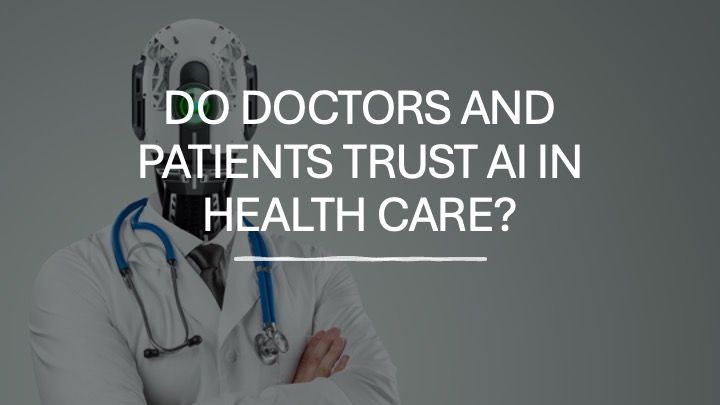
Artificial intelligence (AI) is rapidly reshaping the landscape of health care, from streamlining administrative tasks to aiding in complex clinical decision-making. Tools powered by AI are being used to interpret imaging scans, predict patient deterioration, assist in diagnosis, and personalize treatment plans. While the technology holds enormous promise for improving efficiency, accuracy, and outcomes, its success depends heavily on the trust it earns from both health care providers and patients.
Advertisement
Latest Videos


Shorts

0:30
The biggest unresolved question: Who is liable in AI malpractice?
a year ago
by
Deepika Srivastava
0:48
Will the OBBB Act change claim denials?
a year ago
by
Clarissa Riggins
0:48
Why AI could be great for patient autonomy
a year ago
by
Jeffrey A. Singer, MD
0:23
The surprising facts about AI in claims denials
a year ago
by
Clarissa Riggins

0:38
Physicians should disclose AI use to patients
a year ago
by
Michael Blackman, M.D., MBA
0:39
Why pasting medical info into ChatGPT is dangerous
a year ago
by
Kedar Mate
0:36
Insurers are using AI to wage war on medical practices
a year ago
by
Neal K. Shah

Advertisement
More News

Veradigm leverages AI to enhance real-world evidence for GLP-1 drugs, revealing insights on patient adherence, side effects, and treatment outcomes.

PCPs welcome AI as a time-saver, but new research shows that many failed to catch serious mistakes in AI-generated patient portal messages.

With one-quarter of health care spending classified as waste, AI systems built to reason—not just automate—may be key to restoring clinical capacity and operational trust.

GI Alliance partners with IKS Health to enhance revenue-cycle management with AI, streamlining operations for over 900 gastroenterologists nationwide.

Technology offers hope to physicians dragged down by prior authorizations, but there is no perfect solution.

Study warns that artificial intelligence could increase legal risk and burnout if health systems fail to support doctors.

AI-driven analytics revolutionizes primary care, enhancing chronic disease management and preventive strategies while alleviating physician burdens for better patient outcomes.

Medical Economics was on the ground in New Orleans covering the ACP Internal Medicine Meeting 2025.

AI tools are becoming more prevalent in back office operations, but they are also making inroads on the diagnostic side.
AI tools are becoming more prevalent in back office operations, but they are also making inroads on the diagnostic side.
AI tools are becoming more prevalent in back office operations, but they are also making inroads on the diagnostic side.
AI tools are becoming more prevalent in back office operations, but they are also making inroads on the diagnostic side.

Machine learning, a subfield of artificial intelligence, can sift through massive amounts of data to benefit physicians and patients.
Heather Bassett, MD, chief medical officer of Xsolis, joins the show to talk prior authorizations and how technology may be able to help.

Cybersecurity attacks and ethical AI use emerge as critical concerns for physicians.

Quoting anonymous sources, Wired reports that CMS Director Mehmet Oz, M.D., M.B.A., said CMS can save money by having AI avatars meet with patients in some circumstances.

In head-to-head comparison, artificial intelligence gave more guidance-adherent and accurate recommendations than doctors in over 20% of cases.
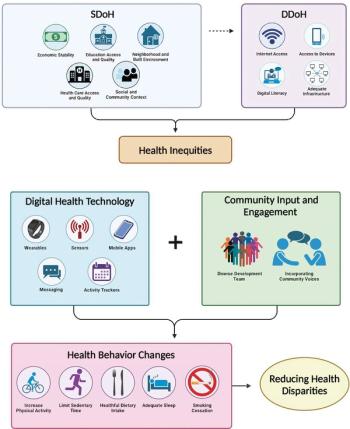
American Heart Association says physicians should consider how digital drivers of health affect patients.

Prior authorizations are a major pain point for physicians, but technology may be able to help.
Prior authorizations are a major pain point for physicians, but technology may be able to help.
Clinicians need to acquire and employ AI not as the latest “me too” thing that everyone else is using, but rather with clearly defined purposes and careful planning.
Prior authorizations are a major pain point for physicians, but technology may be able to help.
Prior authorizations are a major pain point for physicians, but technology may be able to help.
Prior authorizations are a major pain point for physicians, but technology may be able to help.

The benefits of artificial intelligence in medicine were discussed during a session at the ACP Internal Medicine Meeting 2025 in New Orleans.
Advertisement
Advertisement
Trending on Medical Economics
1
Russian lab worker's death sparks plague fears; Utah lets AI write first-time prescriptions; FTC warns 24 health systems on hidden prices — Morning Medical Update Weekly Recap
2
How Chicago's first new medical school in nearly a century is training doctors to treat mental and physical health together
3
Why is healthcare spending declining in 2026?
4
Can a safety prompt make AI safer for clinical decisions? Study says yes, partly
5