
How public LLMs store and reuse information, and why typing patient details into them could be a privacy disaster waiting to happen
How public LLMs store and reuse information, and why typing patient details into them could be a privacy disaster waiting to happen

Beyond AI darlings, the unsung materials sector is quietly outpacing the S&P 500 — and physicians may want to take notice
Two new federal programs are opening Medicare and Medicaid coverage for GLP-1 obesity drugs, and Tracy Zvenyach, Ph.D., M.S., RN, of the Obesity Action Coalition explains what it means for primary care physicians and their patients.

The premarket approval of United Therapeutics' LungFX device lets transplant programs outsource lung re-evaluation to dedicated facilities rather than building in-house EVLP capacity.
CliniComp's Sandra Johnson says cost and vendor unwillingness — not technology — are now the biggest barriers to data exchange
Primary care is a team sport, but some of the most important players are outside the physician’s office.

Can independent practices turn Medicare into a strategic advantage? How to go from liability to leverage

Urban Institute data show 46% of adults aged 18 to 64 faced unmet care needs, unpaid medical bills or medical debt, with even insured families hit hard
The number of doctors using AI tools is rapidly increasing, but for a smaller practice, does the business case make sense?

Clinical applications are climbing while hires lag behind, and Trent Cotton of iCIMS says the practices that win top talent are the ones that make hiring fast, personal and transparent.

Percentage of collections is the least informative number

The top news stories in medicine today.

Product offers ample income plus a lifetime guarantee — serving as longevity insurance

What works well when health care partners with community groups? National Academy of Medicine offers answers for Medicare.
The latest HHS-OIG findings spur audits in real time around vascular procedures — and primary care could be involved.

Don't be the richest doctor in the cemetery

Dr. Google is in...
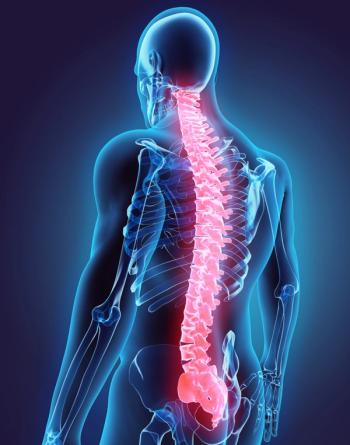
FDA clears Life Spine's VersaLift expandable interbody system, featuring a 6mm starting height for constrained anatomy

The top news stories in medicine today.

Federal prosecutors charged, settled and sentenced health care fraud at a record pace in the first half of 2026. These are the 10 most consequential cases, counted down to a record-setting finish.

New national survey data reveals the real drivers behind RN turnover — and what employers can actually do about it

Ninety physicians and other licensed medical professionals were among those charged.

EchoNext, developed by Pathway Labs, is now available on OpenEvidence after receiving FDA clearance for six indications
The phased changes end value-based pay on incident-to claims and require many clinicians to bill under their own NPI.
An Obesity Action Coalition leader discusses latest developments in treatment of obesity as a chronic disease.
In today's market, you need to do better that just emulating a call center for your patients

Artificial intelligence comes with a catch: Someone still has to make sure AI got it right, and that someone is you.

The top news stories in medicine today.
AtlasMD’s Josh Umbehr, M.D., has run a direct primary care practice since 2010. He makes the case that the economics are simpler, and the medicine is better, than most physicians realize.