Revenue per patient is a common way to split practice profit. It’s also the wrong way.
AtlasMD’s Josh Umbehr, M.D., has run a direct primary care practice since 2010. He makes the case that the economics are simpler, and the medicine is better, than most physicians realize.
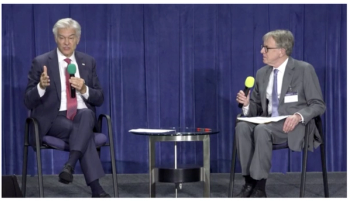
Josh Umbehr, M.D., has spent his entire career outside the insurance system. A family physician and co-founder of
His conviction traces back to an undergraduate job
"It didn't matter how good a surgeon you were in terms of how you got paid," he said. "It was really, can you play this game of coding and modifiers and submissions?"
Set against the simplicity of his father’s work as a garbage man — "You paid once a month, we picked up once a week" — health care's complexity struck him as a problem worth solving.
Medical Economics sat down with Umbehr to talk through the economics of DPC, why he thinks physicians overcomplicate it and where he sees the model heading.
The math, Umbehr said, is almost disarmingly simple — which is exactly why physicians struggle to believe it. Patients grasp it immediately, the way they would any product that's "better, faster, cheaper, easier." Doctors get hung up on the noise they've been trained to worry about: MACRA, MIPS, coding, staffing, insurance regulation.
The arithmetic he lays out for prospective DPC physicians is straightforward: 600 patients paying $50 a month over 12 months comes to $360,000. With overhead running 20% to 25%, one staff member per one to two physicians and one or two exam rooms, the doctor keeps the vast majority as salary. "Add on another 100 patients, or change your prices by $10, that's another $60,000, $70,000 right there," he said. "The math works so well that you don't have to even charge a lot to be a very successful physician in this space."
His own panel sits around 700 patients — a deliberate departure from the 200 to 400 patients concierge medicine popularized in the model's early days. Those practices, he said, often struggled to grow because their price points were unaffordable to all but a sliver of patients. Lowering the fee, he reasoned, meant more patients could be covered while still right-sizing the workload to what one physician can handle in a day.
The most counterintuitive lesson Umbehr tries to convey is that price is not the lever physicians think it is. "It's not how much you charge, it's how many patients you have," he said. A practice that charges $10 more but carries 100 fewer patients comes out behind.
He's watched the consequences play out as the movement has matured. Early DPC pioneers, uncertain the model would survive at all, maximized affordability and value. Now that the model is growing — doubling, he estimated, every two or three years — practices have more flexibility, but some are testing the edges. "We see more growth than we ever have, but we also see more closures than we ever have, too," he said. The clinics that get into trouble are usually the ones trying to earn a full income from 100 or 200 patients. It can be done, he said, but it's much harder, and slow growth is deceptively expensive: A practice that takes two years to fill needs six to eight years to make up the lost revenue.
For setting prices, he points physicians to an independent benchmark: what hospitals are paid per patient. His rough formula is panel size times the desired fee, plus 30% for overhead to leave some cushion.
In the beginning, Umbehr said, "all you need is a shoestring and a stethoscope." If he had $10,000 to outfit a new practice, he'd buy an EKG machine, a pill counter and a vitals machine, and consider the rest optional. Patients, he noted, often love the bare-bones early days because the physician handles everything personally.
He learned the value of that directly from the grumpy surgeon he once worked for. When the phone rang, and the surgeon answered it himself, patients were stunned. "I said, yeah, but he was grumpy, and they were still impressed," Umbehr said. "The best marketing is the first ring, the doctor picks it up."
A mature DPC office, in his telling, runs on roughly 700 to 1,000 square feet per physician, one full-time nurse, one exam room's worth of furniture, malpractice coverage and an electronic medical records system that automates billing — no billing department, no MACRA and MIPS reporting, no scramble to comply with the next Medicare rule change. The result is a practice where administrative work shrinks to a fraction of the day. To illustrate how marginal the overhead becomes, he offered a line that doubles as a mission statement: "We spend more on coffee in the waiting room than we spend on EKGs."
One of the model's quiet advantages, Umbehr argued, is that it dissolves the assumption that all care must occur in a single exam-room visit. With an hour to spend, a physician can consult a specialist afterward, email the patient back or use artificial intelligence (AI) tools to dig deeper. This translates into fewer referrals and, in his view, better outcomes. "Keeping the patient out of a broken system is the best thing we can do," he said.
When specialist input is needed, doctor-to-doctor telemedicine consults often handle it. He can get a dermatology consult for $30 in a day or two, he said — faster and cheaper than the staff time it takes to coordinate with a local dermatologist scheduling six months out. Cash-pay patients, somewhat ironically, become better customers in the process. Imaging is his go-to example: a CT scan that meets clinical guidelines can take one to two weeks while waiting on insurance approval, or happen the same day if the patient is paying cash.
That efficiency has drawn the attention of employers, who, Umbehr said, are increasingly turning to AtlasMD for help. "This is the most expensive year in the history of health care for employers, and next year is going to be 30% worse," he said, framing DPC as a way to preserve access to primary, urgent and specialty care while controlling cost.
Umbehr, a self-described technophile, is enthusiastic but measured about AI. He likens it to spellcheck or Grammarly and describes its core function as "decreasing the work of work" — stripping away the parts of the job that don't add value for patients. "Note-taking doesn't add value," he said. "The hourlong conversation with the patient, where you're keyed in and not typing — that's high value."
He's already seeing a concrete effect from tools like OpenEvidence: a measurable drop in referrals, because specialty questions that once required sending a patient out can now be answered quickly and shared directly with the patient, reinforcing trust. His larger argument is that the current system pits AI against physicians — using it to push doctors toward higher patient volumes, then deploying more AI to scrutinize the notes the first AI helped write. In an insurance-free model, he said, that dynamic falls away, and the focus shifts to simply making physicians as effective as possible.
The biggest misconceptions, Umbehr said, are rooted in how risk-averse physicians are and how little business training they receive. Some fear they need to be business experts to make DPC work; others worry they'll be judged for focusing on money. He rejects that framing outright, tying it back to the profession's central oath. "If we take our oath seriously — do no harm — it should mean do no financial harm," he said, pointing to patients paying insurance premiums larger than their mortgage to access medications that cost pennies.
He's equally direct about the perception that cash-pay practice means lax, give-the-patient-whatever-they-want medicine. The successful models work precisely because the physician-patient relationship makes honesty possible. "I'm the right answer machine," he said, describing how he counsels patients that he'll tell them the truth even when it disappoints them — that a cold almost never warrants antibiotics, even when a patient wants them.
Umbehr is candid that he's been predicting the collapse of insurance-based primary care since 2010 — he compares himself to physicists perpetually 10 years from cold fusion. But he believes it more now than ever. As premiums climb, he's seeing patients drop coverage mid-cycle, and when they do, he said, they're suddenly hundreds or thousands of dollars richer each month and become customers who demand maximum value and transparency.
"In three to five years, insurance-free primary care will be the default," he said. "I think that will be the assumed model." When the shift comes, he expects it to come fast — driven less by physicians choosing the model than by insurers deciding outpatient primary care is no longer worth covering. Between AI lowering the barriers to innovation and the business model tilting toward cash-pay by default, he expects more change in the next five to 10 years than in the past 20 or 30.
Interested in direct primary care? Check out