Medicare’s new ACCESS payment model will succeed only if it strengthens the relationships between patients and their primary care physicians.
But the new payment model includes the risk of fragmenting patient care instead of bolstering the comprehensive treatment plans guided by primary care doctors.
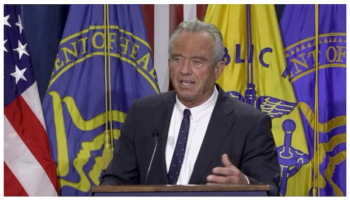
American Academy of Family Physicians Board Chair Jennifer Brull, M.D., FAAFP, was one of physicians on a panel discussion in a two-hour kickoff press conference hosted Sept. 15 by the U.S. Department of Health and Human Services (HHS). The Centers for Medicare & Medicaid Services (CMS) started the 10-year ACCESS model in July for beneficiaries of original Medicare. The name is short for Advancing Chronic Care with Effective, Scalable Solutions, and federal health leaders described it as a new and potentially powerful campaign in the nation’s fight against chronic disease.
“I think the opportunity for ACCESS is pretty straightforward. I think that patients need more support, and primary care specialists need more partners,” Brull said.
Jack Rowe, M.D., M.P.H., acting chief medical officer at the CMS Innovation Center, moderated the discussion, which also included Eduardo Sanchez, M.D., M.P.H., chief medical officer for prevention at the American Heart Association, and Marketa Wills, M.D., MBA, chief executive officer and medical director of the American Psychiatric Association.
A partnership, not a handoff
CMS’ official description calls ACCESS a complement to primary care for patients with high blood pressure, diabetes, chronic musculoskeletal pain and depression. Participating organizations will use technology supported care methods at little or no cost to patients, with pay based on whether patients’ health actually improves.
Brull led her comments by noting everyone present was aware of the nation’s current shortage of primary care, and that shortage is projected to get worse.
“Any program that expands the access to primary care is certainly one that gets my attention and should get the attention of other clinicians,” Brull said. “I think at the same time we have to be careful that more support does not equal more care fragmentation, and certainly when we think about using technology, we think about interacting with outside organizations, that's a very real risk that we have to consider.
“As a family physician, I take care of people, not individual conditions,” she said. She described a sample patient seeking care for diabetes, but also dealing with comorbidities such as high blood pressure, high cholesterol, while taking multiple medicines and caring for someone at home.
Online resources to learn about ACCESS
Where can primary care physicians learn more about Medicare’s new ACCESS model? The Centers for Medicare & Medicaid Services (CMS) have a number of online resources:
“All of those things bring them to my office, but it may not be the thing that they're worried about today when they show up,” Brull said. “I think that the unique role that family physicians and other primary care specialists have is that they are helping the patient connect all those dots.”
Having a trusted organization partner for patient care is “incredibly valuable, especially in those spaces that happen outside the clinic walls,” Brull said, repeating the phrase “trusted organization” for emphasis. Tying reimbursement to patient outcomes could create a beautiful opportunity for physicians and patients, she said.
CMS has built co-management into the ACCESS model and primary care physicians can bill for work with patients, Brull said.
By participating in ACCESS, primary care physicians are not handing off their patients, but instead are adding a team member. Clinicians in ACCESS organizations should know they are taking care of a patient who is a whole person. Primary care physicians know important information about their patients and should have meaningful input in care plans, she said.
When ACCESS becomes the proper extension of primary care, patients get increased support, primary care gets increased capacity, and outcomes improve for the whole patient, she said.
How can guidelines meet patients where they live?
Sanchez pointed to a clinical guideline on cardiovascular-kidney-metabolic syndrome released jointly by the American Heart Association, American College of Cardiology, American Diabetes Association and American Society of Nephrology. The guideline addresses four interacting conditions, obesity, cardiovascular disease, diabetes and chronic kidney disease, that together make it harder for patients to manage their health, he said.
That guideline tells clinicians what to do, Sanchez said, while the ACCESS Model supplies part of the how by giving patients tools and support between office visits.
"CMS Access provides tools and resources that meet people where they are, where they live their lives, and with whom they live their lives in their homes, in their communities, at work, and in the places where they pray or are in worship," Sanchez said.
Does measurement improve behavioral health?
Wills, representing the American Psychiatric Association’s roughly 40,000 members, said the model’s reliance on standardized symptom scores for depression and anxiety marks a shift from paying for visit volume to paying for demonstrated improvement. Research backed by the National Institutes of Health has shown that measurement-based care "leads to better outcomes than clinical judgment alone," Wills said.
She noted that tracking symptoms over time reduces the risk of optimism bias and gives patients a structured way to discuss what they’re experiencing in real time. For clinicians, she said, the approach helps make sure nothing gets missed during a visit.
What does success look like?
Asked to describe what success would look like years from now, the panelists each returned to the same idea: patients barely notice the model is there. Brull said she hopes ACCESS gives her family medicine colleagues more capacity for what she called their "superpower," forming long-term patient relationships, while patients simply experience better-coordinated, more responsive care.
Wills said reducing stigma remains central to that vision.
"Stigma continues to be a major impediment to accessing care for those who live with mental health conditions and substance use disorders," she said. Technology-supported tools like the ACCESS model can let patients get help privately and securely, while still alerting clinicians when something needs attention.
Sanchez described his hope in terms of his own 91-year-old mother, saying he wants her health monitored so seamlessly that she never has to think about the system behind her care.
"When you turn on the water, you don’t really know what the temperature is," Sanchez said. "You just know it feels just right. That’s what it ought to be like for patients."