Ballard Spahr says the Hikma v. Amarin decision makes it harder for brand-name drugmakers to sue over "skinny label" generics — a shift likely to speed generic competition and lower costs for patients
RFK Jr. appoints members to fill a panel that has not met in more than a year, but is influential on primary care.
The U.S. Preventive Services Task Force (USPSTF) has a new leader and a revised roster to offer clinical guidance on primary care.
On Sept. 17, the U.S. Agency for Healthcare Research and Quality (AHRQ)
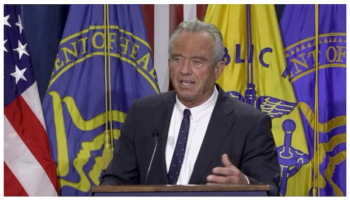
“Prevention is one of our most powerful tools for confronting chronic disease,” Kennedy said in the announcement.
“The Preventive Services Task Force's recommendations influence preventive care across America, and Americans deserve recommendations grounded in rigorous, objective science,” he said. “We are strengthening the task force to ensure it asks hard questions, follows the evidence wherever it leads, and maintains the highest standards of scientific integrity.”
USPSTF is one of the federal government's most influential but least visible health panels. Its recommendations determine which cancer screenings, counseling services and preventive medications insurers must cover at no cost to patients. The voluntary board has not met for more than a year, but even without meeting, USPSTF has had a leadership dispute that has drawn criticism from physician groups and congressional Democrats.
The new members' four-year terms begin this month, and Seth J. Corey, M.D., M.P.H., has been named the task force's new chair.
AHRQ Director Roger D. Klein, M.D., J.D., also welcomed the new appointees.
“We are excited to welcome these new members to the task force,” Klein said in the announcement. “Each brings valuable expertise and a unique perspective to the task force as it develops recommendations that help people live longer, healthier lives.”
The eight new task force members, along with their primary roles, are:
The appointments follow more than a year of upheaval at USPSTF. The eight new members will join eight members already serving on the task force, according to the HHS announcement. Those returning members are Alicia Fernandez, M.D.; Ericka Gibson, M.D., M.P.H.; Marie (Tonette) Krousel-Wood, M.D., M.S.P.H.; Sei Lee, M.D., M.A.S.; Goutham Rao, M.D., FAHA; Joel Tsevat, M.D., M.P.H.; Sandra Millon Underwood, R.N., Ph.D.; and Sarah Wiehe, M.D., M.P.H., according to
Kennedy dismissed two vice chairs, John B. Wong, M.D., MACP, and Esa M. Davis, M.D., M.P.H., in May, and five other members'
Kennedy has said the task force needed an overhaul. Testifying before
“Screening for prevention is absolutely critical,” Kennedy told lawmakers. “We are reforming now the USPSTF, which is the committee that decides on new procedures and interventions that need to get CMS [Centers for Medicare & Medicaid Services] compensation. That committee has been lackadaisical and negligent for 20 years. Now, bringing new members on who have a clear mission, we're going to have much more frequent meetings. We're going to have, for the first time, transparency.”
The new roster marks a shift from the panel's traditional makeup of primary care physicians and preventive medicine specialists. AHRQ's
The shift did not go unnoticed by the American Medical Association. Its president,
“The U.S. Preventive Services Task Force (USPSTF) plays an important role in helping physicians and patients make evidence-based decisions about preventive care,” he said in the statement. “Its credibility has been built on a membership grounded in prevention and primary care — the physicians who routinely deliver preventive services and understand how recommendations translate into clinical practice.
“The composition of this new slate represents a significant departure from the task force's traditional membership. We believe maintaining a strong primary care voice must remain central to its work. As the USPSTF moves forward, its recommendations must continue to be based on a transparent, rigorous, independent scientific process and informed by the perspective of physicians who deliver preventive care to patients every day. This is essential for ensuring that task force recommendations are trusted by clinicians and followed by patients.”
Kennedy's handling of the task force has drawn objections on Capitol Hill for months. In March, 18 U.S. senators led by Sen. Angus King (I-Maine)
In May, Rep. Maxine Dexter, D-Ore., a pulmonologist, led more than 65 U.S. House members in
“I refuse to stay silent as RFK Jr. undermines the work of this critical body in apparent service to his baseless ideological aims,” Dexter said in a news release. “Our communities deserve to know they can access the care they need, driven by science they can trust.”
AMA also condemned
Kennedy's authority to remove and replace task force members was unsettled until June 2025, when the U.S. Supreme Court ruled in Kennedy v. Braidwood Management that USPSTF members are “inferior officers” whose appointment and removal by the HHS secretary is constitutional, according to
For
The task force's revamp follows a similar, more contentious overhaul of the Advisory Committee on Immunization Practices (ACIP), the Centers for Disease Control and Prevention panel that sets