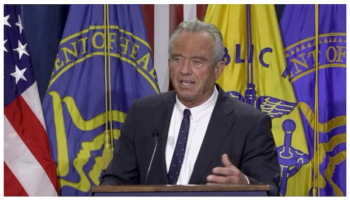
RFK Jr. appoints members to fill a panel that has not met in more than a year, but is influential on primary care.
The top news stories in medicine today.
Barbara Marino, M.D., prescribed opioids to ‘almost every patient she saw,’ including a woman in her third trimester of pregnancy.
A federal jury has convicted a Texas physician for unlawfully distributing
Barbara Marino, MD, 65, of Tomball, was the sole prescribing physician at Angels Clinica, where street-level drug dealers brought patients in exchange for prescriptions that were then filled at local pharmacies and resold on the street. Prosecutors said Marino prescribed the dangerous combination of an opioid and carisoprodol to more than 99% of her patients, almost always in the strongest short-acting doses available and received more than $400,000 in less than a year for writing prescriptions that lacked a legitimate medical purpose. Among her patients was a woman in her third trimester of pregnancy, whose OB/GYN testified at trial about the dangers of the drug cocktail Marino prescribed her. Marino was convicted of one count of conspiracy to distribute a controlled substance and four counts of distributing a controlled substance, each carrying a maximum sentence of 20 years in prison.
A clinical trial found weekly semaglutide reduced heavy drinking days by 41% in patients with obesity and alcohol use disorder.
Weekly injections of semaglutide reduced heavy drinking days by 41.1% in patients with alcohol use disorder and obesity — a 13.7 percentage point greater reduction than placebo — according to the first randomized controlled trial to test a GLP-1 receptor agonist specifically in this population, published in
"Very few medications are currently approved for alcohol use disorder, and these are vastly underutilized," said NIAAA Director George Koob, Ph.D., a study co-author. Larger and longer trials are needed to confirm the findings.
Three passengers died and several others fell ill aboard the MV Hondius, an Atlantic cruise ship, in a suspected outbreak of the rare rodent-borne virus.
A suspected
The virus causes two syndromes: hantavirus pulmonary syndrome, the respiratory form most common in North and South America, carries a fatality rate of roughly 40%; the other primarily attacks the kidneys. Early symptoms resemble influenza and appear one to eight weeks after exposure, making diagnosis in the first 72 hours difficult; respiratory deterioration can follow rapidly.
There is no specific antiviral treatment, care is supportive and severe cases may require mechanical ventilation. Person-to-person transmission is rare.
The World Health Organization (WHO) said the risk to the general public remains low, with one confirmed case identified in a British passenger hospitalized in South Africa and five others under investigation.