

News|Articles|August 5, 2026
Survey: 92% of health care leaders now call APPs essential to staffing
Author(s)Austin Littrell
Fact checked by: Keith A. Reynolds
Listen
0:00 / 0:00
Key Takeaways
- APP importance is nearly unanimous among facility leaders, reinforcing durable care-team redesign rather than short-term staffing supplementation.
- MGMA data show decoupling of pay and productivity, consistent with lower-acuity volume migrating to APPs while physician panels become more complex.
Advanced practice providers have moved from stopgap to permanent staff, and physicians are absorbing the change in patient acuity, productivity benchmarks and rural coverage.
Advertisement
For physicians, the more consequential finding is the one the survey did not go looking for. It asked employers how they intend to deploy APPs. It did not ask physicians what that deployment does to their patient panels, their measured productivity or the supervision and collaboration time that comes with a larger care team, which are the terms on which most physician compensation is still calculated.
CHG has a commercial stake in the findings: its locum tenens brands, CompHealth and Weatherby Healthcare, place nurse practitioners, physician assistants and CRNAs.
What does a bigger APP workforce do to physician productivity numbers?
It shows up first in the benchmarks physicians get paid against. The Medical Group Management Association's (MGMA’s)
Andy Swanson, M.P.A., FACMPE,
That reallocation collides with a payment change already in effect. Under the
Swanson's warning for groups is that the two pressures compound. Practices cannot offset the RVU cut by shifting more volume to APPs indiscriminately. "Make sure that the high-acuity patients find their way to those specialists, and they're not being seen by APPs," he said. He also cautioned against trimming starting salaries to match the adjustment in specialties that are already hard to recruit.
Do physician pay models credit the work of supervising APPs?
Largely not yet, and that gap is where APP expansion quietly becomes a physician compensation problem.
Tynan Kugler, M.P.H., MBA, CVA, a principal at PYA who specializes in provider compensation and valuation,
"Advanced practice provider compensation models have not historically been tied to productivity, so there's kind of a little bit of a lag there," Kugler said. "And then sometimes physician compensation models have not taken into consideration the work effort related to [collaborating with] an APP."
The result is a structural mismatch she described as a push-pull: organizations want both the APP and the physician practicing at the top of their license, "but recognize there's some levers that need to be pulled to manage both compensation and overall professional satisfaction for both."
For physicians negotiating or renegotiating an employment agreement, that is a concrete item to raise, and whether the
Which APP roles are hardest to fill?
Certified registered nurse anesthetists lead nationally, cited by 30% of facilities as the single most difficult APP position to fill.
The pressure is uneven by geography: 49% in rural facilities, compared with 29% suburban and 24% urban. Because many rural hospitals run CRNA-only or CRNA-led anesthesia models, one unfilled position can limit operating room capacity or shutter a surgical service line.
Surgical NPs and PAs come second at 22% nationally, peaking at 27% in suburban settings as surgical volume continues migrating to outpatient and ambulatory sites. Urban facilities report a different bottleneck entirely: 26% name emergency department and urgent care NP/PAs as their hardest hire, against 9% in suburban and 8% in rural markets.
Why are rural sites cutting locums coverage they say they need?
The sharpest
At the same time, 25% plan to reduce APP locums use in 2026, again the highest of any geography, and 38% report using no APP locums at all. Urban facilities are moving the other way, with 23% planning increases against 12% planning reductions.
The rural numbers are small enough to read carefully. The survey was fielded in the fourth quarter of 2025 through CHG's own contact lists and third-party research panels, and its 327 respondents skew urban: 172 urban, 102 suburban and 53 rural. That puts every rural figure on a base of 53, meaning 25% represents roughly 13 facilities. The direction is worth more attention than the precision of the point estimate.
CHG frames the pullback as a budgeting error, arguing that locums coverage functions as access infrastructure rather than a discretionary line item. There is a separate reason for independent owners to take that framing seriously.
Kevin Baker, director of business development at Emergency Care Partners,
Coverage gaps that look like savings on this year's income statement can show up as a discount at the closing table.
Cost pressure is real regardless. Total direct expense per employed provider, a figure that includes physicians and APPs,
What separates an embedded APP program from a working one?
Scale is no longer the differentiator. APPs already
"Not only is it 40% today, it'll probably be half the workforce within the next decade," said Matthew Bates, M.P.H., managing director at Kaufman Hall. "Figuring out effective, efficient models is critical. It's not a nice to do. It's a must do."
What separates the groups getting it right, said Shannon Sims, M.D., Ph.D., chief product officer at Vizient, is caseload design rather than headcount. "I don't think there's a magic formula, but what we see is practices that have a blend of doing that see the most productivity out of both their APPs and their physicians," he said.
Sims also flagged a cost of top-of-license practice that rarely appears in workforce decks. Concentrating physicians exclusively on the most complex patients "does place an interesting increased cognitive load on them," he said. "That can be draining in an interesting way.
And so you do have to be thoughtful about that." That may help explain the softest number in the CHG data: alleviating staff burnout ranked near the bottom of the outcomes measured, at 80%, well behind patient access at 94% and throughput at 92%.
The same caution runs in the other direction. Sims said groups have to ensure APPs "are practicing at appropriate levels of complexity so that you don't introduce unfortunate, inadvertent risks" to the clinician or the organization.
Which raises the question of who is designing these models. CHG's own
"If you're going to do it, do it meaningfully," Bill Heller, chief operating officer at CHG Healthcare, told Medical Economics in December 2025. Too often, he said, physicians are consulted after the decision is effectively made. "It's this late-stage consultation, and it's pretty obvious the decision has been made."
The strategic question is settled. The operational one, meaning who sees which patients, who gets credit for the oversight and whose compensation model absorbs the difference, is still being decided, in most cases without the physicians it lands on.
Advertisement
Related to this article

Revenue per patient is a common way to split practice profit. It’s also the wrong way.
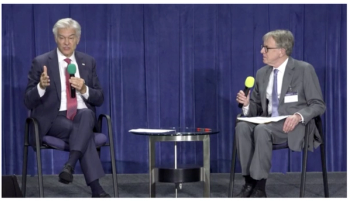
CMS chief says outcomes-based pay can help patients while finally ending physicians' box-checking frustration.
Preparing rural care teams for AI can strengthen care without replacing clinical judgement.

MGMA’s 100th-anniversary conference runs Sept. 27-30 in San Antonio, and these 10 sessions put physician contracts, compensation and legal exposure on the table.

U.S. health care has a patient loyalty problem hiding in plain sight, says a new report based on a survey of 10,000 consumers.

New specialists' schedules fill quickly, the authors of an NEJM Catalyst analysis write, and changing how existing clinicians are used may do more to shorten waits.
Reactions from five leading organizations were among thousands of public comments on the draft document.
Advertisement
Advertisement
Trending on Medical Economics
1
What they're saying about the draft 2027 Medicare Physician Fee Schedule
2
Dr. Oz on ACCESS: Let’s treat patients instead of just checking boxes
3
Hiring more specialists alone won't shorten wait times, NEJM Catalyst analysis argues
4
AI in rural primary care: 6 questions physicians must answer with their nurses and APPs
5