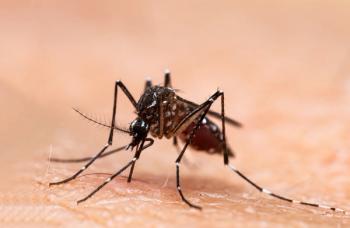
Dengue is no longer just a travel disease in parts of Florida. Here’s how to test, treat and report it.
HHS announces pledges from medical schools, accrediting boards to teach more about health effects of diet.
Nutrition education will be a growing part of
Eight leading accrediting boards are committing to implementing reforms to physician training programs. Meanwhile, 19 additional schools have pledged to require at least 40 hours of nutrition education for a 40-hour competency equivalent, for students starting in fall 2026.
Representatives from the medical organizations gathered in Washington, D.C., where Health and Human Services (HHS) Secretary Robert F. Kennedy, Jr.,
“That means nutrition will no longer sit at the margins of medical education,” Kennedy said. “It will shape what students learn, what physicians master, what licensing boards assess, and ultimately how patients receive care.
“Education drives practice, practice drives outcomes, and outcomes determine the health of a nation,” he said. “That's why today's commitments represent one of the most important course corrections in modern American medicine.”
To accelerate implementation, HHS launched a $2.1 million National Institutes of Health challenge grant to identify and scale effective approaches for integrating nutrition into medical and nursing school curricula. Kennedy called it the first phase of a $5 million NIH initiative. Winning curricula will be made publicly available.
Kennedy cited the urgency of the chronic disease burden: more than 70% of American adults are overweight or obese, approximately one-third of teenagers have diabetes or prediabetes, and roughly 77% of young Americans are ineligible for military service. He said 90% of federal health care spending, or about 48 cents of every tax dollar, goes toward treating chronic disease, much of it diet-related.
Kennedy noted the problem was first identified by the American Medical Association in the 1960s.
"Successive administrations have recognized and acknowledged that problem," he said. The administration of President Donald J. Trump administration “finally did something about it."
Guest speakers included Jessica Snowden, M.D., M.S., M.H.P.T.T., a pediatrician and vice chancellor for research at the University of Tennessee Health Sciences Center. She emphasized that lasting change will require locally tailored solutions and broad collaboration.
Snowden framed nutrition not as a supplementary topic but as central to nearly every major health outcome ranging from healthy pregnancies to child development to cancer, diabetes, heart disease and more. She noted that the communities bearing the greatest burden of chronic disease are often the same ones with the least access to healthy food and preventive care.
"Nutrition is fundamental for all of those things, for any major health outcome that we see," she said.
UT Health Sciences teaches culinary medicine, an approach that combines nutrition science with cooking instruction to help patients make practical dietary changes. It ranks among the most engaging offerings for students and trainees, Snowden said. Learners increasingly understand that improving patient health requires knowing how people shop, cook and live within their communities, not just which medications to prescribe.
Snowden pointed to the university's Tennessee Rural Healthcare Center of Excellence as a model for community-embedded nutrition work, with partnerships spanning state government, local health systems, agricultural extension programs and community organizations. The University of Tennessee Institute of Agriculture, she noted, reaches residents across all 95 of the state's counties through healthy lifestyle and nutrition programming.
She cautioned, however, that solutions developed for urban or coastal communities may not translate to rural or Southern ones.
"As someone who grew up in the Deep South, if I were to come in with a Mediterranean diet today, I would get laughed out of my grandmother's house," she said. “We need to find a way to help bridge those gaps and ease people towards where they need to be.”
As a pediatrician, Snowden said she is especially committed to the initiative's preventive focus. Many of the chronic diseases straining the health care system, she said, begin developing decades before they are diagnosed, making investment in children's nutrition a multigenerational public health strategy.
Federal health officials confirmed that 54 U.S. medical schools have committed to adding at least 40 hours of nutrition education to their curricula beginning this fall. It’s a “generational change” in how physicians are trained, said Sam Watters, counselor, immediate office of the secretary at HHS.
Flanked by HHS Special Medical Adviser Travis Smith, D.O., Watters said the two were tasked by Kennedy to build consensus among medical schools for the initiative. The effort grew out of a roundtable HHS convened 11 months ago, where Kennedy proposed the 40-hour target across four years of medical school.
"As you can imagine, there was a lot of shifting around in chairs," Watters said. “No one was entirely sure what to say, but ultimately the overwhelming response we heard was that change of this magnitude would require the medical schools to lead.”
HHS officials subsequently held more than 100 meetings with medical school deans and field experts before securing commitments. The 54 schools agreed to either 40 hours of dedicated nutrition instruction or a competency-based equivalent, and have published public-facing web pages documenting their commitments.
“With these changes in place, our nation's foremost medical experts paved the way for generational change, change that I am so pleased to have been a part of, and change that I know will have a lasting impact on the health of all Americans,” Watters said.
He credited a broad coalition of federal partners with helping advance the effort, including Centers for Medicare and Medicaid Services (CMS) Administrator Mehmet Oz, M.D., MBA; National Institutes of Health Director Jay Bhattacharya, M.D., Ph.D.; and officials from the NIH Office of Nutrition Research. He also thanked Department of Education Secretary Linda McMahon and several deputies, along with White House advisers Calley Means and Heidi Overton, M.D., Ph.D.
"We let the medical schools lead, we let the science lead," Watters said. "What emerged was a national movement."
He framed the changes as central to the administration's Make America Healthy Again agenda and said the reforms would have a lasting impact on the health of all Americans.
Department of Education Under Secretary Nicholas Kent marked the addition of 19 medical schools to the administration's nutrition education pledge, calling the reforms a "common sense" correction to decades of institutional neglect.
Kent cited striking data to underscore the urgency. On average, medical schools have required only two hours of nutrition education for graduation. A recent study found that approximately 75% of U.S. medical schools have no required clinical nutrition coursework, despite growing evidence that nutrition instruction is an effective tool for preventing disease.
“This isn't a minor training issue,” Kent said. “It's an institutional barrier about their health outcomes, and we have got the power to fix it.”
The consequences, he argued, are measurable. Diet-related chronic diseases contribute to roughly 1 million deaths annually, and 14.7 million school-aged children have obesity. Kent framed improved physician nutrition training as essential to reversing those trends.
The March announcement about 54 medical school commitments to nutritional education was followed by 19 additional schools, Kent said, that came forward on their own in response to peer leadership.
Kent was careful to draw a distinction between advocacy and mandate. The Department of Education, he said, will not dictate curriculum to medical schools or accrediting bodies, but will use its platform to spotlight evidence-based models, convene leaders and celebrate institutions driving reform.
"We respect the independence of medical schools and accrediting bodies, but we will never mandate curriculum," he said. "What we can do is spotlight promising evidence-based models and celebrate institution-driven reforms."
Kent credited McMahon with jointly urging medical education associations to study and elevate nutrition in their programs, calling the commitments "groundbreaking" but also "rooted in common sense."
Oz used a mix of personal history and policy detail to make the case that nutrition has been systematically marginalized in American medicine. He outlined concrete steps CMS is taking to change that.
Oz recalled searching for nutrition coursework as a medical student at the University of Pennsylvania and finding none. He successfully ran for student body president on a platform of adding a nutrition class. “Turns out that was a pretty good campaign platform,” he quipped. But the course that resulted bore little resemblance to what is being proposed currently.
The deeper problem, Oz argued, is cultural. Medical training does not emphasize prevention, whether that means reducing medications or counseling patients on diet. "If we don't learn these things in medical school, they cannot be important," he said.
At CMS, Oz described two major initiatives. First, the agency's Rural Health Transformation Fund, a $50 billion program targeting health care in rural communities, offered states additional funding if they incorporated nutrition criteria into their continuing medical education. Twenty-four states accepted the challenge and received larger grants as a result.
Second, CMS is pushing hospitals to improve the quality of food served to patients. Oz cited Tampa General Hospital, where chef Geoffrey Zakarian revamped food service using whole, minimally processed meals at a budget increase of less than 5%. The savings came in part because roughly a quarter of traditional hospital food goes uneaten.
Oz closed by invoking the concept of "culinary nutrition," understanding not just which nutrients benefit health, but how cooking techniques affect their availability to the body. He offered tomatoes as an example: the antioxidant lycopene, which research links to health benefits, becomes more bioavailable when tomatoes are cooked and combined with fat, as in pasta sauce.
With roughly $800 billion spent annually on prescription drugs nationwide, Oz said the smarter investment is preventing the conditions that require them.
"You can't sprinkle a Lipitor on a kielbasa and expect to save money," he said. “The right way to do it is to get folks to cut down on the kielbasas and other processed meats.”
Kennedy’s tenure has been marked by conflict with major medical organizations, particularly over vaccine policies. In his remarks, Kennedy did not veer into vaccine territory, but noted he grew up in a time of political polarization. His uncle, Sen. Ted Kennedy, remained on good speaking terms with political opponents like Sen. Orrin Hatch.
He acknowledged many of the medical school leaders who have signed on for more nutritional education, also disagree with him and the Trump administration on numerous policies. Kennedy commended them for their stance and suggested the national dialogue around diet might serve as a model for other discussions.
“Clearly, what we need to do is we need to start learning to talk to each other again, even with people with whom we disagree,” Kennedy said. “We can disagree with other people on 90% of the issues, but if there's a place that we can agree, we have an obligation to come forward and do that.”