


News|Articles|July 24, 2026
Pastor sues OpenAI over ChatGPT medical advice; $1B in Medicaid payments frozen; CMS says surprise billing law is being 'gamed' — Morning Medical Update Weekly Recap
Author(s)Austin Littrell
Fact checked by: Keith A. Reynolds
Key Takeaways
- A former pastor alleges ChatGPT shifted from directing clinician consultation to issuing specific diagnoses and treatment plans that dissuaded emergency care shortly before ICU admission for massive pulmonary embolism.
- The lawsuit pleads eight causes of action, including negligence and unauthorized practice of medicine, and requests injunctive relief suspending ChatGPT Health pending an independent safety assessment.
The top news stories in medicine this week.
Advertisement
Pastor sues OpenAI, alleging ChatGPT medical advice nearly killed him
The San Francisco suit says months of chatbot guidance delayed care for a massive pulmonary embolism.
Scott Winters, 55, a former Florida pastor,
On July 13, 2025, when Winters asked about groin pain and whether he should go to the hospital, ChatGPT allegedly called it "very likely another minor piece of the long story" and told him that "God did not design your body to endlessly fail." Hours later he was in intensive care with a massive pulmonary embolism, clots in both lungs that his physicians attributed in part to weeks of inactivity. The complaint brings
The case joins a growing docket over chatbot harms, including the Raine family's wrongful death suit in the same courthouse and complaints from seven more families filed in November. In May, Pennsylvania filed a first-of-its-kind
HHS, CMS defer more than $1B in Medicaid payments to California and Minnesota
Federal officials cite high-risk claims; both states call the move political and unexplained.
HHS and CMS on July 21 deferred about $867.5 million in federal Medicaid payments to California and $199 million to Minnesota pending documentation of claims the agencies flagged as high risk. CMS Administrator Mehmet Oz, M.D., cited billing patterns including claims submitted after beneficiaries' dates of death, and said, "If it smells like fraud, we're not paying for it anymore." Officials characterized the actions as deferrals rather than cuts, released once states document that claims meet federal requirements, and said beneficiary coverage and eligibility are unaffected.
Officials did not provide named examples of fraud, and both states pushed back. The office of Gov. Gavin Newsom called the action a political stunt, and Minnesota's Medicaid director said CMS has not explained how it calculated the deferral amounts. HHS Secretary Robert F. Kennedy Jr. also announced HHS is expanding exclusion authority, the power to bar physicians and companies from federal health programs, to CMS. That power had rested solely with the HHS Office of Inspector General.
Related content:
CMS says No Surprises Act arbitration is being 'gamed' as payouts near $15B
New federal data show cases and awards surging far past what Congress projected.
CMS published new independent dispute resolution data July 22 showing payouts of nearly $15 billion in 2025, up from $4 billion in 2024, though the data include a few entries so large they may be errors. Disputes climbed from 1.4 million to 2.5 million in a system the government projected would handle about 17,000 cases a year, and doctors won more than 85% of them. "The system is being gamed to get higher prices, and CMS is actively working to clean it up," spokesman Christopher Krepich told
Filings are concentrated among a small set of specialties and the billing firms working for them. Under the law's arbitration design, each side submits a final offer and the arbitrator must pick one, with no compromise awards and no appeals; in one case The New York Times documented, an arbitrator chose between an insurer's offer of $105 and a physician's offer of $100,000 for assisting a breast reconstruction, and selected the $100,000. Insurers including UnitedHealthcare and Elevance have told investors the payouts are raising premiums, while physician groups say the win rate reflects years of underpayment for out-of-network care. The only reform bill introduced in Congress would raise penalties on insurers that fail to pay promptly after losing.
The administration's one finalized rule under the law this year was largely technical and lowered the fee to file a case, a change officials estimated would increase filings about 30%. CMS declined to comment on specific next steps.
Advertisement
Related to this article

Physician groups in risk contracts often learn what they owe months or years after the fact. Medical Economics spoke with Najib Jai, M.D., MBA, chief operating officer of Arbital Health, about why settlements turn into disputes and how actuarial AI tracks contract performance while the year is still underway.

Physicians have embraced ambient documentation faster than almost any technology before it. But every note it writes carries your signature, and lawyers, auditors and patients are starting to read those notes closely.

The Kirksville center's grant arrives weeks before maternity care billing splits into separate services Jan. 1.
An FAQ for practices closing gaps in both commercial and Medicare programs
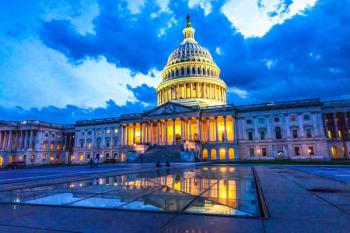
A former congressman and two health policy advocates expect shutdown standoffs to set the terms of any health care deal next year.

A Maryland pathologist and MedChi past president explains how all-or-nothing contracts, anti-steering clauses and private equity deals inflate costs. He also outlines the federal and state reforms that could restore competition.

Coverage confusion could disrupt patient care in 2027
Advertisement
Advertisement
Trending on Medical Economics
1
Florida's dengue outbreak: What physicians need to know now
2
AI system outperforms physicians on diagnostic accuracy in Microsoft study
3
Pay cuts, payer AI and the staff who keep leaving: What we heard at MGMA's 100th annual conference
4
Your AI scribe is saving you time. Is it also building the case against you?
5