How long before every doctor has an artificial intelligence stunt double?
The doctor is still in, and needs to consider what artificial intelligence can and can’t do in the clinic
When Google DeepMind published its
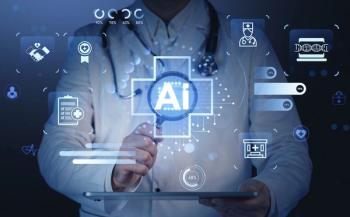
The model DeepMind is building isn’t AI-instead-of-clinician, but a triadic structure in which the AI operates under physician supervision rather than beside or above it. The results of the
What the AI does well is fairly specific, though: Fast evidence synthesis; structured patient intake; and real-time analysis across multimodal inputs, such as video, audio, images, documentation and routine guidance. Those are things that consume hours without necessarily requiring the judgment that took a decade in training to build. Human clinicians are still clearly better at the other stuff: reading a room, catching the detail that doesn’t fit the pattern, guiding a physical examination, the kind of contextual judgment you cannot encode in a model. So the division of labor here is grounded in where genuine complementarity exists.
Here’s what I keep coming back to — it’s less exciting than the AI benchmarks, but it’s more important.
The burnout numbers follow from that ratio almost mechanically. For 2025,
Primary care and chronic disease management are probably the clearest examples, and they’re also the areas under the most pressure right now. AI can run initial consultations via video, evaluate visible symptoms, reconcile medication histories and draft care plans before a physician reviews the case.
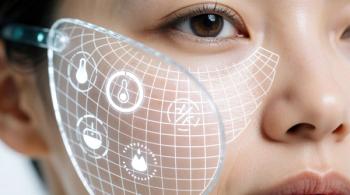
In wound care, a domain Niterra has invested in, the application is quite tangible. The AI analyzes serial images, tracks healing trajectories against clinical benchmarks and flags deviations that justify a specialist’s attention. Instead of a specialist doing a repetitive visual assessment at every visit, regardless of whether anything changed, they intervene when it actually matters. Remote monitoring works on a similar logic: continuous inputs from wearables and sensors feed the AI, enabling proactive adjustments without requiring a clinician to be in the loop for every data point.
Integration with existing clinical workflows is genuinely hard, and the real-world performance of these systems outside controlled evaluations is still being established. But the directional case is solid.
The staffing implications are significant, and I don’t think the industry has fully worked through them yet. If AI tools genuinely multiply clinician output (and the evidence suggests they can), then hospitals and clinics can sustain effective care with physician teams that are smaller in number but sharper in scope. Nurses, midlevel providers and technicians who currently hand off to physicians for things AI can now handle have a real opportunity to take on meaningfully expanded roles. This is a structural correction for roles that have historically been underutilized relative to the clinical judgment they actually carry.
Training will have to change as well. Not just adding an AI literacy module somewhere in year three of residency, but more fundamentally rethinking what clinical training is preparing people for. Judgment under genuine uncertainty. Collaboration with AI systems in live clinical environments. The empathic, relational work that no model is anywhere near replicating.
From an investment perspective, the transition creates opportunity in fairly specific areas. At Niterra, we’re focused on hardware-software convergence: advanced biosensors, edge computing infrastructure for low-latency AI inference at the point of care, secure and auditable data platforms and therapeutics that pair with intelligent monitoring. AI co-clinicians are only as good as the inputs they work with, and the companies that generate rich, real-world, high-fidelity data from remote monitoring, minimally invasive sensing and wound care are building the substrate the AI needs to perform.
The upside case is credible but still somewhat theoretical at the aggregate level, and I think it’s worth being honest about that.
The human role doesn’t shrink in this model. The complex diagnostics, the ethical calls, the therapeutic relationship. That’s where training, experience and genuine clinical talent actually live. Offloading the routine preserves all of that.
The demographic backdrop makes the urgency hard to ignore.
AI co-clinicians won’t solve everything. But they offer a credible path toward bending the cost and capacity curves without sacrificing quality of care. The future here is clinicians who can genuinely do more. The organizations working that out now will have a structural advantage that compounds over time.