A fallback version would make insurers prove upcoding, notify physicians and limit downcoding to 90 days.

At an MGMA Government Affairs town hall, attendees raised extrapolated audits, employer plans beyond state reach and denials with no reason codes.
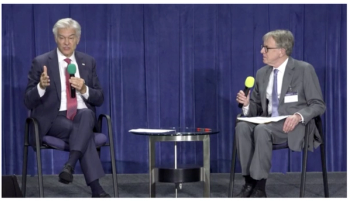
An insurer that audits a practice's charts for downcoding and finds the claims were coded correctly should pay the practice for its time, a practice leader from Alaska said Sept. 29.
The attendee spoke at a government affairs town hall at the
MGMA's government affairs team used the session to gather member feedback on federal policy, including
Related content:
The same attendee said most of the downcoding in Alaska comes from self-funded employer plans governed by the federal Employee Retirement Income Security Act (ERISA). The state insurance commissioner's office sends those complaints to federal regulators.
"Most of our insurance plans aren't even governed by our state," the attendee said.
Anders Gilberg, MGMA's senior vice president of government affairs, said the association is aware of the gap. Taking on self-funded plans would bring the country's large employers into the discussion, and their health care costs are also rising, he said.
MGMA's position is that those plans should not hold down costs by disadvantaging the physicians in their networks, he said.
Another attendee asked whether insurers could use the fallback version's proof-of-upcoding requirement as grounds to audit a practice's charts and extrapolate the results across its patient population for years.
Madison Hynes, M.P.P., an associate director of government affairs at MGMA, said the association is working through those details. If the fallback is the version that advances, MGMA would work to make sure "the burden of proof is not on providers," she said, and that insurers' own metrics are subject to review.
A third attendee questioned how insurers decide a practice is an outlier when the patients aging into Medicare are sicker than the ones who came before. "Well, prove I'm an outlier," the attendee said.
The same attendee argued that insurers should have to attach a claim adjustment reason code to every denial and be fined when they don't. Practices are held to "if we don't put it in our charts, it didn't happen," the attendee said.
The Government Accountability Office recently asked to interview MGMA members about Medicare Advantage, and several took part, Gilberg said. He summarized one account from the CEO of a rural Oregon practice with about 10 physicians.
The practice signed a contract with a Medicare Advantage plan that simply did not pay. After the practice dropped the plan, patients in a community where it was largely the only option were left out of network.
"We're kind of in this AI arms race in terms of who can figure out what the other one is doing and circumvent it in some way, shape or form," said an attendee who works in oncology in Portland, Oregon.
The attendee was describing payers' use of artificial intelligence (AI) on claims and prior authorization.
Samantha Meklir, an associate director of government affairs at MGMA, said the association is reviewing two recently introduced bills, one aimed at self-funded ERISA plans and the other at Medicare Advantage.
Neither would bar plans from using AI in prior authorization, she said. Both would require clinical judgment in the review of denials and transparency about how AI is used, with that information made available to providers.
Gilberg said MGMA will likely support both. The association's government affairs council considered them "pretty much no-brainers," he said.
The Medicare Advantage bills introduced this summer include the
MGMA will fold feedback from the session into its advocacy and report back on what it heard in an upcoming Washington Connection, Gilberg said.
Medical Economics is in San Antonio at the MGMA Annual Conference, Sept 27-30, celebrating 100 years of MGMA, attending sessions and speaking with industry leaders. Follow our coverage on our