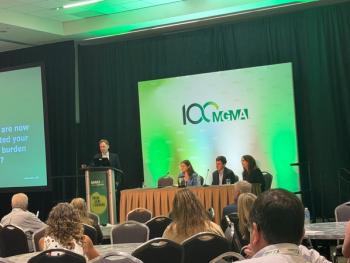
From a same-day payment cut to AI-run prior authorization in traditional Medicare, MGMA's government affairs team laid out what Washington has in store for physicians next year.
Executive faces up to 20 years in prison for collecting more than $450M for unneeded durable medical equipment.
A federal jury convicted the founder and owner of software platform HealthSplash for his role in the scheme to swindle $1 billion from Medicare and other government programs.
Brett Blackman, 42, of Johnson County, Kan., was convicted on multiple counts following a trial in the U.S. District Court for the Southern District of Florida, according to a
Blackman owned, controlled and served as CEO of HealthSplash, which acquired Power Mobility Doctor Rx LLC (DMERx) in September 2017. DMERx was an internet-based platform that generated false and fraudulent doctors' orders for durable medical equipment (DME) items such as wheelchairs, braces and other medically prescribed devices.
“The Department of Justice crushed one of the most egregious fraud schemes in Florida history,” Acting Attorney General Todd Blanche said in the news release. “This illegitimate operation stole more than $1 billion from American taxpayers — including hundreds of thousands of Medicare beneficiaries.
“This was cold, calculated, industrial-scale theft targeting the sick and elderly, coercing vulnerable people into buying unnecessary medical equipment,” he said. “We will not rest until every fraudster ripping off the American people is held accountable.”
The announcement follows other federal declarations and actions against health care fraud. In recent months, DOJ, the U.S. Department of Health and Human Services Office of Inspector General (HHS-OIG) and other federal agencies all have doubled down on efforts to root out pseudo-health-care-organizations that exist to rip off Medicare and other health care payers.
This week, Vice President J.D. Vance and Medicare Administrator Mehmet Oz, M.D., MBA, announced a six-month, nationwide enrollment moratorium for new
In February, Vance and Oz announced
And in the last few years, Medicare billing for skin substitutes ballooned, prompting new examinations of procedures and costs.
As for Blackman, according to court documents and evidence presented at trial, he and his co-conspirators used the platform to aggressively target hundreds of thousands of Medicare beneficiaries, pressuring them to accept medically unnecessary orthotic braces and other equipment. The conspirators then arranged for telemedicine doctors to sign fraudulent prescription orders for these items so that suppliers could bill Medicare for them.
At the center of the scheme was a fraudulent arrangement connecting pharmacies, DME suppliers and marketers with telemedicine companies willing to accept illegal kickbacks and bribes in exchange for signed doctors' orders produced through the DMERx platform. Blackman and his co-conspirators collected referral fees in the process, according to the DOJ news release.
The doctors' orders generated by DMERx falsely represented that a physician had examined and treated the Medicare beneficiaries. In reality, physicians were simply paid to sign orders and prescriptions with little or no meaningful interaction with patients, and in some cases, no interaction at all. Physicians signed these orders without regard to whether the equipment was medically necessary for the individual patient, according to the DOJ news release.
An undercover federal agent posing as a Medicare beneficiary documented the scheme firsthand. According to trial testimony and evidence, the agent was contacted by a foreign call center that pushed them to accept multiple braces. A physician then signed bogus orders for those braces using the DMERx platform. In one instance, a doctor's order claimed that various tests had been performed in person, even though the physician never spoke with the undercover agent at all.
To avoid detection, Blackman and his co-conspirators used sham contracts and manipulated doctors' orders in an attempt to evade Medicare audits.
The DME suppliers and pharmacies paying illegal kickbacks for these fraudulent orders billed Medicare and other insurers for more than $1 billion. Medicare and other insurers paid out more than $450 million based on those claims before the scheme was uncovered, according to DOJ.
The jury convicted Blackman on three counts: conspiracy to commit health care fraud and wire fraud, conspiracy to pay and receive health care kickbacks, and conspiracy to defraud the United States and to make false statements in connection with health care matters.
Blackman faces a maximum penalty of 20 years in prison on the health care fraud and wire fraud conspiracy conviction, five years on the kickbacks conviction and five additional years on the conspiracy to defraud the United States conviction. A sentencing hearing is scheduled for Aug. 26, 2026.
A co-defendant in the case, Gary Cox, was convicted in a prior trial and has already been sentenced to 15 years in prison for his role in the conspiracy.