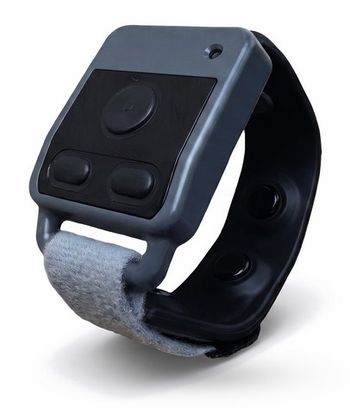
Encora X1, an FDA-cleared wrist device, uses mechanical rather than electrical neurostimulation, giving VA clinicians an option for patients who can't tolerate medication or have implanted electrical devices.
System replaces handwritten labels with a barcode-scanning process that prints standardized, color-coded adhesive labels for infusion lines
The IV Verify Line Labeling System replaces handwritten labels with a barcode-scanning process that prints standardized, color-coded adhesive labels for infusion lines. The system is intended to help clinicians more easily identify medications and track administration and tubing change times at the bedside, particularly in high-acuity settings where multiple infusions may run simultaneously.
Medication errors tied to unclear or inconsistent IV labeling remain a persistent concern in hospitals. In one 10-hospital study of intensive care units, 60% of IV infusion labels did not comply with hospital policies, underscoring the potential for line tracing mistakes and incorrect medication administration.
With the IV Verify system, clinicians scan a medication barcode and generate a three-part label that can be applied along the tubing, including near the infusion pump and patient connection points. The labels are designed to be legible in demanding clinical environments and include color coding to indicate tubing change schedules.
“Frontline clinicians manage complexity every day, and even small inefficiencies can create risk,” said Athar Mirza, U.S. and Canada general manager of Baxter’s Infusion Therapies and Platforms division. “The IV Verify system replaces handwritten labels with easy-to-use technology that supports consistency, saves time and helps clinicians confidently trace IV lines so they can spend more time focused on their patients.”
Baxter said the system can help improve compliance with labeling protocols and may contribute to reductions in complications such as central line-associated bloodstream infections when used as part of broader safety initiatives. The company also cited studies indicating clinicians saved one to two minutes per IV setup using the system.
The product includes a printer, adhesive labels and ink-free printing technology. It is being distributed under an exclusive agreement with Vigilant Software, a medication safety technology company. Baxter said the system is now available in the United States.
Efforts to improve
One of the most significant developments has been the expansion of barcode medication administration (BCMA) systems, which allow clinicians to verify patient identity and medications at the bedside. These systems have increasingly been integrated with electronic health records and smart infusion pumps, creating closed-loop medication management environments that reduce the likelihood of human error.
Smart infusion pumps themselves have evolved, with advanced drug libraries, dose error reduction software and interoperability features that allow automatic programming based on physician orders. This reduces the need for manual input and helps ensure adherence to standardized dosing protocols.
Artificial intelligence is also beginning to play a role, particularly in identifying patterns that may signal potential medication errors or adverse drug events. Predictive analytics tools can flag unusual dosing patterns or high-risk scenarios, enabling earlier intervention.
In parallel, human factors engineering has gained prominence, influencing the design of devices and workflows to reduce cognitive burden on clinicians. Standardization—whether through labeling, tubing organization or interface design—has been a central theme, aimed at minimizing variability that can lead to mistakes.
There has also been increased focus on infection prevention tied to infusion practices. Enhanced protocols for line maintenance, improved materials and better monitoring have contributed to declines in complications such as bloodstream infections in many settings.
Taken together, these advances reflect a broader shift toward system-level solutions that combine automation, data integration and workflow redesign to improve patient safety while addressing the time pressures facing clinicians.