Four forces created the perfect storm to sink physician-owned medicine. There are policies that could help keep it afloat.
CMS wants information on how physician-owned hospitals can participate in new payment model.
Physician advocates are grateful for federal acknowledgement that doctors who own hospitals can shepherd patients through the health care system with good outcomes at a reasonable cost.
They hope that nod turns into something more: a chance to influence health care for the better through more market competition and a sense of duty to local communities.
The Affordable Care Act set new rules in place about expansion for physician-owned hospitals. It appeared the U.S. Centers for Medicare & Medicaid Services (CMS) may be willing to
Carlos Cardenas, M.D., a Texas gastroenterologist, is president of
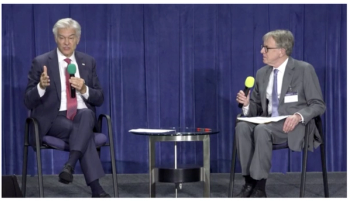
Cardenas spoke to Medical Economics about CMS’ request for information and what it could mean for the financial and clinical sides of U.S. health care.
As for the TEAM model and CMS’ inpatient rule, a public comment period runs through June 9. More details are
Medical Economics: In a recent video published by PHA, you used the phrase “a landmark moment” to describe a development happening within the rules of Medicare's TEAM model. What is that?
Carlos Cardenas, M.D.: The landmark moment is the fact that for the first time, it appears that CMS is not asking whether physician-led hospitals or physician-owned hospitals should be included, but rather, how do we include them in the delivery of care and in how we can better serve our patients, and at the same time provide the resources that help us to save money, deliver high-quality care and continue to lead patients at the center of what we do.
Medical Economics: This issue revolves around rules that have been in place for years with the Affordable Care Act. There are some doctors in practice who may have never really known it another way. Can you explain how the Affordable Care Act regulated physician owned hospitals?
Carlos Cardenas, M.D.: With the passage of the Affordable Care Act, the area that you're referring to is Section 6001. That prohibited new physician-owned hospitals from being built, and it significantly restricted the ability to expand. And to a certain extent, I think what that really did is put in a restraint that forbade free market competition.
Medical Economics: In your own words, how would you describe the economic environment for medical practice over the last 15 years?
Carlos Cardenas, M.D.: The Affordable Care Act basically froze competition in hospital markets. The last 15 years have demonstrated, I think, increasing costs and consolidation, and I think that's what we're reckoning with now as a health care system. And what we have provided all of this time is the opportunity to consider innovation and to consider that physician-led care, physician-owned care can be part of the solution. We're not saying that we should be the replacement, but we should be part of what's allowed. That allows us to work in the marketplace, increase competition. It's at the heart of being American and that leads to innovation, that leads to the betterment of models that I think will help us to, again, continue to focus on the patient, and what we can do for our patients to enhance the delivery of care, maintain high quality and reduce cost by putting physicians who are at the bedside to work in the boardroom to make choices and decisions that help their patients. We can build systems around that, that lead to increased savings, increased use of resources in a way that makes sense and allows us to be able to continue to deliver high-quality care, and this has been demonstrated already in studies that have been done now looking at our models.
Medical Economics: I'm glad you brought in some of the clinical and patient relation conditions too. We write a lot about dollars and cents, but the heart of health care is caring for people.
Carlos Cardenas, M.D.: Absolutely. This all begins and ends at the bedside, and when we think about our position in our communities as health care facilities and as physicians and providers of health care, how we fit into our communities, what I like to call the greater bedside is. It's integral and it has to continue that way. Healthy communities are healthy not only when we deal with preventing disease and or treating illness and disease in our communities, but the other aspects of what happens. With a strong health care system and a healthy population is a better community and an ability for a community to continue to develop and grow. I see them as intricately linked and our ability to enhance the delivery of care and find ways to do it that are fiscally responsible, that at the same time, allow for innovation and keeping the patient at the center of what we do — I think everybody wins.
Medical Economics: Given how influential Medicare is over elements of United States health care, when Medicare makes this request for information, why is that so important?
Carlos Cardenas, M.D.: It's about being included. It's about being at the table to help craft policy, provide ideas about innovation, to be able to provide our government with the same tools that we have that we use at the bedside when we care for our patients. It helps to bring the two together, and that's why I like to refer to our community as the greater bedside, because it's like we're treating a patient, and the patient is our community, but it begins from the same principles that we have and we care for every single person who comes to us as physicians. We take those things that made us go into the field to begin with and apply them to the community at large. That is fertile ground for innovation and finding better ways to do things. These recent events, I think, are an affirmation that we're on the right track.
Medical Economics: The notion of applying those healing principles to the community sounds like it can create an environment where fair competition just leads to better overall results for everyone.
Carlos Cardenas, M.D.: I think that competition is an interesting concept in and of itself. I think most people try to think of it in a fiscal sense, but I like to think of it more than just the fiscal sense. The fiscal sense is very, very important, don't get me wrong. I mean, that's what leads to economies of scale. It's what leads to being responsible and fiscally conservative about how you spend your dollars. And I think we were alluding to this earlier, that it's really responsible now in an era where we've had shrinking resources to be able to do the most with what we have. And so we've got to think about better ways to deliver care, and that keeps our communities whole and our patients healthy. And so all the strategies are important that are being looked at. The physician ownership model provides one aspect of how we can do this, and how we can improve the dialogue and find innovation where we can work together to make a healthier greater bedside.