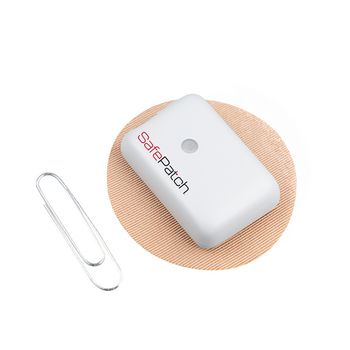
Cerna Healthcare's SafePatch is a wearable skin patch that detects falls, tracks activity and sends emergency alerts to family or professional monitors, with shipping set to begin in October.
The procedure at the Hospital of the University of Pennsylvania used a faster, more maneuverable version of the company's vCLAS Ultra-Low Temperature Ablation system to treat a patient whose ventricular tachycardia had resisted radiofrequency and alcohol ablation.
Adagio Medical Holdings, Inc. (Nasdaq: ADGM) said a physician at the Hospital of the University of Pennsylvania has treated the first patient with the company's next-generation vCLAS Ultra system, an Ultra-Low Temperature Ablation (ULTA) device, under Expanded Access authorization from the U.S. Food and Drug Administration.
The patient had non-ischemic cardiomyopathy and a history of ventricular tachycardia (VT) that had not responded to radiofrequency ablation or coronary venous alcohol ablation, according to the company. Gregory Supple, MD, director of inpatient electrophysiology services at HUP and an investigator in Adagio's FULCRUM-VT pivotal investigational device exemption (IDE) trial, performed the procedure. The company said the patient has remained free of VT recurrence for approximately two months since treatment.
The vCLAS Ultra system builds on Adagio's proprietary ULTA platform, which delivers single-freeze ablations at approximately -170 degrees Celsius. The company said preclinical data show the next-generation device can cut ablation time by 50% to 75% and shorten procedures by up to 30 minutes compared with its first-generation system, while retaining a more flexible, maneuverable catheter design.
The FDA has also granted the company IDE approval to
Supple said the periaortic origin of the patient's VT, an area characterized by thick myocardium and proximity to the coronary arteries, has historically challenged other ablation technologies. He said the vCLAS Ultra system's proven safety profile allowed him to ablate near those critical structures with confidence, and that the single-freeze design and improved catheter flexibility reduced procedure time compared with the first-generation device while still producing durable, transmural lesions. Supple added that he sees potential for a single catheter capable of addressing the full range of substrates encountered in everyday practice.
Todd Usen, Adagio's chief executive officer, called the milestone a proud moment for the company, its physician partners and the patients they treat. He pointed to pivotal data presented at Heart Rhythm 2026 showing a 2.4% rate of major adverse events, 84% freedom from implantable cardioverter-defibrillator shocks at six months, and a 78% relative reduction in amiodarone use, across what the company describes as the broadest patient population studied in any VT ablation trial to date.
Usen said FDA approval of Adagio's first-generation ULTA system is expected in the coming months. The company
The treatment adds to a broader shift underway in electrophysiology, where clinicians and device makers are increasingly looking beyond traditional radiofrequency energy to manage ventricular tachycardia in patients with structural heart disease. Ventricular tachycardia is often driven by scar tissue deep within the heart muscle, particularly in patients with prior heart attacks or non-ischemic cardiomyopathy, and conventional ablation approaches can struggle to reach or fully treat that diseased tissue. That has left a meaningful share of patients with recurrent arrhythmias despite prior procedures, often requiring repeat ablations, escalating antiarrhythmic drug regimens or implantable defibrillator therapy to manage ongoing risk.
Interest in ultra-low temperature and other alternative-energy ablation platforms has grown as electrophysiologists look for tools that can create deeper, more durable lesions while maintaining an acceptable safety margin near sensitive cardiac structures, such as the coronary arteries or phrenic nerve. Shorter procedure times are also increasingly viewed as clinically meaningful, both for reducing patient exposure to anesthesia and for improving throughput in busy electrophysiology labs facing growing referral volumes.
The FDA's Expanded Access pathway, sometimes referred to as compassionate use, allows physicians to treat individual patients with investigational devices or drugs outside a formal clinical trial when no comparable therapy is available and the patient's condition warrants it. Use of that pathway alongside an active pivotal trial, as in this case, is one route device makers can pursue to gather early real-world experience with next-generation technology while a formal regulatory submission is still pending. For physicians managing patients with treatment-refractory VT, the continued expansion of ablation options, paired with ongoing outcomes data from pivotal trials, is likely to shape referral and treatment decisions in the coming years.