






Better technology is good for patient health and the financial health of physicians’ practices.

Better technology is good for patient health and the financial health of physicians’ practices.

The latest health care and technology news

Virtual care revolutionizes healthcare with better treatment, improved efficiency, and reduced costs.

New solutions with AI and machine learning are developing for challenges that once seemed insurmountable.

Survey shows how little faith patients have in technology – and the companies that provide it -- to protect their information
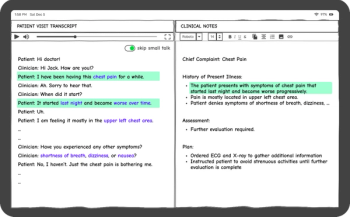
Online giant rolls out AWS HealthScribe so doctors can spend more time with patients and less time in electronic health records.

The app has some videos that promote self-diagnosis of mental health, which could have serious effects for young people.

Small practices can take advantage of telehealth to benefit their patients and their bottom line.

Digital giants have discovered that technical know-how alone isn’t enough

Act stalled in Congress in 2022, but similar provisions move forward in legislation this year.

Here are lessons for primary care physicians to consider about the future of telemedicine.

Software Bill of Materials required by the FDA will help thwart cybersecurity threats

Health care continues to lead all sectors with the most expensive data breaches

Worker shortage and changing dynamics mean both employers and employees need to adjust expectations
Effects of the Telehealth Benefit Expansion for Workers Act of 2023.

Researchers analyze ChatGPT for summarizing medical records.

Social media platform used for self-diagnosis varies by generation.

Federal experts cite survey of expert predictions in new report.

Company denies wrongdoing as feds investigate whistleblower claims.

Health care continues to be a top target for hackers

With healthcare data breaches approaching a boiling point, care providers need to adopt an approach that prioritizes operational continuity.
Expect hackers and network managers to employ AI in a ‘cat-and-mouse’ game to steal or protect patient records.
What is the status of telehealth after the COVID-19 pandemic?