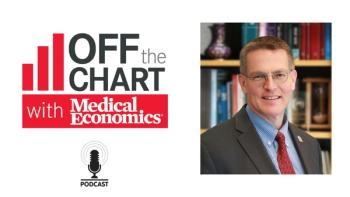
Furman S. McDonald, MD, incoming president of ABIM, joins the podcast to discuss his plans for the organization and the evolution of certification maintenance.
Furman S. McDonald, MD, incoming president of ABIM, joins the podcast to discuss his plans for the organization and the evolution of certification maintenance.
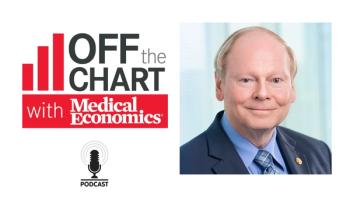
Steven P. Furr, MD, FAAFP, president of AAFP, joins the podcast for a wide-ranging conversation covering the Medicare Physician Fee Schedule, rural health care access, and cybersecurity.
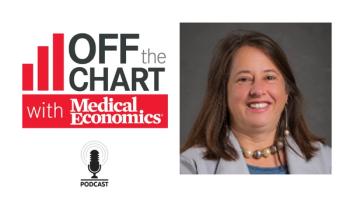
A discussion of available food insecurity programs.
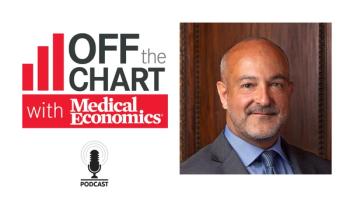
Joseph Betancourt, MD, president of the Commonwealth Fund, sits down with Medical Economics to discuss health care consolidation.
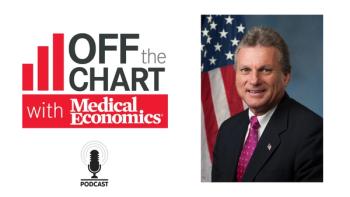
U.S. Rep. Earl L. "Buddy" Carter gives his views on the Affordable Care Act, Medicare, and why physicians should get involved with policy decisions.
How Cleveland's University Hospital Health System has made mental and behavioral health services available in its primary care practices, and why that has improved clinical outcomes while enhancing health equity.
How do we balance AI's potential for advancing medical research against the need to safeguard the privacy of individuals' health information?
Why has innovation in health care not kept pace with other sectors of the economy? Harman Dhawan, founder and CEO of Bikham Healthcare, offers his take and some possible solutions.
Scott Rivkees, M.D., former head of the Florida Department of Public Health, describes how distrust of scientific expertise is undercutting state and local laws designed to improve public health.
How can the learning capabilities of artificial intelligence algorithms be used to complement primary care doctors' training and analytical skills to produce the best outcomes for patients?
Kamala Green, MA, social drivers of health program manager for National Government Services, discusses how her organization's work with social service agencies and nonprofits is producing better outcomes for Medicare beneficiaries.
In this episode of Off the Chart Vivek Garg, MD, MBA, chief medical officer and senior vice president, primary care for Humana, explains why the company uses value-based payment models to improve outcomes and reduce costs at its CenterWell Senior Primary Care and Conviva Care Center facilities.
A Cleveland, Ohio internist tells how he collects and ships supplies to care for the sick and wounded in war-torn Ukraine

Sanjay Rajagopalan, MD, the Herman K. Hellerstein, MD, chair in cardiovascular research at University Hospitals of Cleveland Harrington Heart & Vascular Institute, discusses the link between cardiovascular disease and air pollution and how primary care doctors can help patients lower their risk of cardiovascular disease caused by air pollution.
Deven McGraw, co-founder of the health data platform Ciitizen, sits down with Medical Economics to explain the information blocking rule and why there are still issues for patients to access their health data.
How can medical practices reduce the chance of employees resisting, or successfully suing over, vaccine mandates? Health care attorney Michelle Greenberg explains that the keys lie in explaining vaccine policies clearly, ensuring that all employees understand them, and applying them equally and fairly.
Shawn Purifoy, MD, a family doctor in rural Arkansas, says hearing the facts from trusted sources is key to dispelling patients' fears about vaccination.
Samuel Edwards, M.D., discusses his recent study in Health Affairs of why burnout levels differ among primary care practices and what practices can do to reduce burnout among doctors and staff. The study focuses on common traits among practices where burnout is minimal or nonexistent. The study found that these are often small, physician-owned practices where teamwork is emphasized, and where providers have a great deal of autonomy.
Micky Tripathi, Ph.D, the newly-appointed National Coordinator for Health Information Technology, describes his office's role in addressing the COVID-19 pandemic, improving EHR interoperability, and more.
Tim Sullivan, Pharm. D., director of pharmacy market solutions for UnitedHealthcare, describes a real-time benefit check solution that’s integrated into the electronic medical record (EMR) to give prescribers patient-specific information and simplify the prior authorization process at the point of care. For more information, please visit UHCprovider.com/pcms.
Dr. Gidi Stein, cofounder of the Israeli company MedAware, joins Off the Chart to talk about the growing potential of artificial intelligence in medicine, and how it can be used to help avoid diagnostic and prescribing errors.
Pharmacy Benefit Managers, or PBMs, have a major say in determining prescription drug prices and availability, but few people—including doctors—understand these organizations or what they do. Health care attorney Jonathan Levitt, JD, explains PBMs and how they've acquire so much importance in the health care system.
Leon McDougle, MD, president of the National Medical Association, explains why Black Americans have been hit especially hard by the COVID pandemic, and policy changes needed to improve health care access and outcomes for Blacks and other traditionally underserved communities.
If telehealth is here to stay, it could bring major financial and operational changes for medical practices. Ron Holder, COO of the Medical Group Management Association, offers advice on how practices can prepare for what may lie ahead.
What has the COVID-19 pandemic taught us about the role of remote monitoring devices in helping doctors track patient health data and improve outcomes? Josh Claman, CEO of medical software developer Rimidi, discusses the clinical and financial benefits of remote monitoring with Medical Economics editorial director Chris Mazzolini.
We tackle common practice finance questions, including tips for borrowing money, buying or leasing equipment, and more.
On November 10 the Supreme Court will hear arguments in a case challenging the constitutionality of the Affordable Care Act. What would it mean for health care if the Court overturns the law? In the second of two episodes addressing that question, Jacqueline Fincher, MD, discusses the impact from her perspective as a practicing internist and president of the American College of Physicians.