

Google Health says the Project Nightingale partnership is aimed at creating and testing a new EHR interface.
Google Health says the Project Nightingale partnership is aimed at creating and testing a new EHR interface.

Kentucky hospital will pay millions to settle allegations it submitted false claims to Medicare.

Summary: Buying medical malpractice insurance independently requires substantial investigation into the specifics.

Three red-flags a doctor is about to quit.

Sutter Health and the Sacramento Cardiovascular Surgeons Medical Group agree to pay more than $46 million to settle allegations rising from claims made to Medicare

AMA expands policy aimed at medical students and residents being trained in healthcare economics.

Streamlining how physicians collect and share directory information can save physician practices more than $1.1 billion.

AMA voted to back state and federal conversion therapy bans, fully inclusive EHRs for transgender patients and training on health issues tied to sexual and gender identity

Can EHRs be fixed? The government thinks they can. We talk to Andrew Pecora, MD, about how to improve EHR usability

HHS releases requirements aimed at lowering drug prices and healthcare costs.

As physician practices work to understand what’s changed, there are certain aspects of which they need to be aware. The following sections provide key takeaways and offer strategies for meeting the coming year’s requirements.

The first place winner for the physician writing contest.
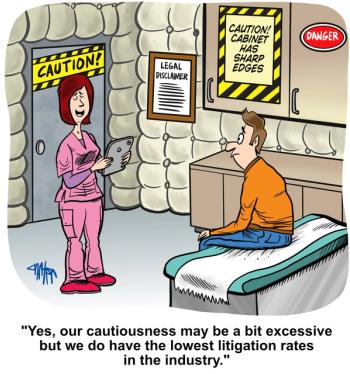
Trying to prevent malpractice suits is one thing, but this is ridiculous.

There are common misconceptions patients have about the disease that physicians can address

Addressing social determinants is where our health care system falls short.

The proposed rules released by the Department of Health and Human Services Office of Inspector General (OIG) and the Centers for Medicare & Medicaid Services (CMS) in October 2019 include new exceptions and safe harbors, as well as clarifications to the Physician Self-Referral (Stark) Law, the Anti-Kickback Statute and the civil monetary penalty prohibition against beneficiary inducements.

ACP made recommendations to address prices in two new policy papers

Gender bias in healthcare can be dangerous for women’s health

What’s next for bundled payment models?

Even though physicians have been able to bill CCM since 2015, they still run into problems in terms of getting paid.
The search giant’s secretive Project Nightingale gathering millions of health records from Ascension hospitals.

Tips for primary care physcians

What it is, what these firms want, and why your practice might be a target

Private practices have the most to lose when it comes to revenue cycle management.

A pair of HIPAA violations garnered more than $4 million in penalties.

While vaccination is mostly identified with immunizing children against diseases, providing vaccination services in a clinically and economically efficient way is foundational to the health of all patients and can add to a practice’s income stream.

Practices will need to step up their recruitment game to capture the attention of this year’s new physicians, says a new survey of final-year medical residents.

Experts say it’s too early to predict the severity of the flu season, or how effective the vaccine will be

The flu vaccine can help protect against more than just the flu. A new study reveals extended benefits, especially for the elderly.

Boston Scientific seeks to add to the arsenal of tools available to help manage chronic conditions at home via its fifth annual Connect Patient Challenge.