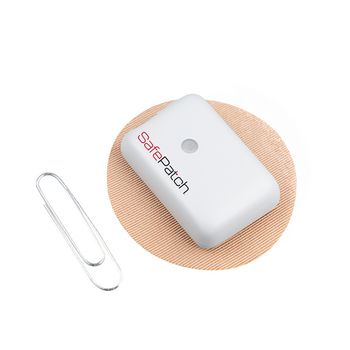
Cerna Healthcare's SafePatch is a wearable skin patch that detects falls, tracks activity and sends emergency alerts to family or professional monitors, with shipping set to begin in October.
Pattern Bioscience's Urine ID/AST Panel, which is not yet cleared or available for sale, is designed to compress the days that conventional urine culture requires into a single shift.
Pattern Bioscience, an Austin, Texas-based developer of rapid diagnostics for bacterial infections, announced that the U.S. Food and Drug Administration has granted Breakthrough Device Designation to its Urine ID/AST Panel. The test is designed to identify the organism causing a urinary tract infection (UTI) and report which antibiotics will treat it, directly from a urine specimen and in hours rather than the days culture requires.
The
The panel is the company's second assay to receive the designation, following its Pneumonia ID/AST Panel. Pattern said the designation reflects its strategy of building a menu of rapid, direct-from-specimen assays on a single platform.
"Pneumonia and urinary tract infections (UTIs) are the two most common infection types that progress to
The turnaround time is central to that argument. Sarah E. Turbett, MD, director for antimicrobial stewardship and a clinical microbiologist at Mass General Brigham in Boston, said the conventional urine workflow has not fundamentally changed in decades: culture overnight, identify the organism, then set up susceptibility testing and wait again.
"A direct-from-specimen result would compress two to three days into a single shift," Turbett said. "This has the potential to impact what the lab can offer the clinicians and patients that it serves."
That delay has clinical consequences, according to the company. UTIs affect millions of patients in the U.S. each year and are a common reason antibiotics are prescribed. Treatment often begins empirically while culture results are pending. A substantial proportion of urine cultures are negative, yet many of those patients have already started antibiotics that could have been avoided or stopped sooner. When cultures are positive, the turnaround time of conventional culture can delay optimal antimicrobial therapy.
The Urine ID/AST Panel is designed to deliver the answers laboratories and clinicians rely on from culture: what organism is causing the infection and which antibiotics will treat it. It detects, identifies and quantifies pathogens and provides same-day phenotypic antimicrobial susceptibility directly from urine specimens.
The assay uses the same single-cell microbiology platform as the Pneumonia ID/AST Panel, which Pattern describes as the first and only direct-from-specimen platform designed to provide these results in hours. Pattern's products are for Investigational Use Only and have not been cleared by the FDA.
Pattern Bioscience is a privately held company led by diagnostic industry veterans. The company says its single-cell microbiology technology is the first and only direct-from-specimen, rapid phenotypic testing platform to deliver clinically actionable results in hours, compared with the days required by traditional culture-based methods.
The designation comes as laboratories and health systems look for ways to shorten the interval between collecting a specimen and acting on the result. For common infections, that interval has long been governed by the time it takes organisms to grow in culture and then be tested for susceptibility in a separate step.
For physicians, the practical effect is that early treatment decisions are often made without knowing the organism or its susceptibility. Empiric therapy is a reasonable response to that uncertainty, but it can mean patients receive broader or longer antibiotic courses than they ultimately need. It can also mean that patients with resistant organisms remain on ineffective therapy until culture results return.
Antimicrobial stewardship programs have increasingly focused on this gap. Faster identification and susceptibility data can support earlier de-escalation from broad-spectrum agents, help avoid unnecessary prescribing when cultures are negative and get patients on effective therapy sooner when they are positive. Those goals also intersect with ongoing concern about antibiotic resistance and with the need to recognize infections that can progress to sepsis before they do.
Laboratory workload is part of the picture as well. High-volume specimen types, including urine, place sustained demands on microbiology staff and workflow. Technologies that return actionable results in a single shift could change how labs allocate that effort, though real-world performance, workflow integration and reimbursement typically become clear only after regulatory review and clinical adoption.
For now, breakthrough designation signals that the FDA sees potential in the approach. It does not establish that the test works as intended in clinical use.