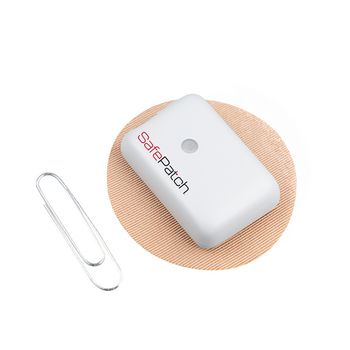
Cerna Healthcare's SafePatch is a wearable skin patch that detects falls, tracks activity and sends emergency alerts to family or professional monitors, with shipping set to begin in October.
The next-generation implantable tibial neuromodulation device treats urgency urinary incontinence, with a limited U.S. launch planned for the fourth quarter of 2026.
BlueWind Medical Ltd. announced Aug. 5 that the U.S. Food and Drug Administration has granted 510(k) clearance for Revi Extend, the next-generation version of its implant for treating urgency urinary incontinence (UUI). The device carries an extended implant life of 15 years, up from the current-generation Revi System.
BlueWind plans a limited U.S. launch of Revi Extend in the fourth quarter of 2026.
The company describes itself as a leader in
"FDA clearance of our next-generation implant reflects our continued commitment to meaningful innovation for patients and physicians," Kerry Nelson, BlueWind Medical's chief executive officer, said in a statement. "Extending implant durability coupled with our remotely enabled software advancements allows patients to receive the latest therapy innovations for fifteen years into the future."
Revi Extend is implanted near the ankle in a single outpatient procedure performed under local anesthesia, according to the company. It works with a lightweight external wearable that patients use to activate therapy once daily at home. The device does not require internal batteries or leads, which the company said avoids complications such as lead fracture, migration or battery depletion. The procedure requires no trial phase before implantation.
BlueWind said Revi Extend builds on clinical outcomes previously reported for the current
BlueWind positions the Revi System's core appeal around patient control and personalization, saying the therapy adapts to each patient's individual and changing UUI symptoms rather than delivering a fixed stimulation pattern. The company frames this, along with the device's minimally invasive implantation and lack of an internal power source, as central to reducing the long-term treatment burden associated with a chronic condition like UUI.
UUI, a form of overactive bladder marked by a sudden, strong urge to urinate that can lead to involuntary leakage, affects a substantial share of adults, with prevalence rising with age. Patients have traditionally had a limited set of options — behavioral therapy, oral medications or more invasive surgical interventions — each carrying its own trade-offs in efficacy, side effects or durability. Tibial neuromodulation has emerged over the past decade as a middle-ground option, and device makers in the space have increasingly focused their R&D on extending implant longevity, refining wearable components and adding remote software capabilities, all with an eye toward lowering the maintenance burden for patients managing a lifelong condition.
BlueWind's announcement follows a broader pattern of activity in the ITNM space, where other device manufacturers have also brought new tibial neuromodulation systems to market for UUI in recent months, underscoring growing physician and patient interest in minimally invasive, long-term bladder control therapies as alternatives to pharmacologic or surgical management.